If there is one wardrobe hero that earns its place in a plus-size closet, it is a great pair of high-waisted jeans. The right pair smooths, supports, and balances your outfit without squeezing, digging, or demanding constant adjusting. It gives you a clean waistline to build on, whether you are tucking in a blouse for work, throwing on a tee for the weekend, or dressing up for dinner out.
This guide covers everything that matters: finding your ideal rise, choosing between stretch and rigid denim, what makes a waistband truly comfortable, which leg shape suits your style, and how to style the same pair three different ways. No confusing jargon, no impossible standards — just practical, flattering advice you can use the next time you shop.
Finding Your Perfect Rise
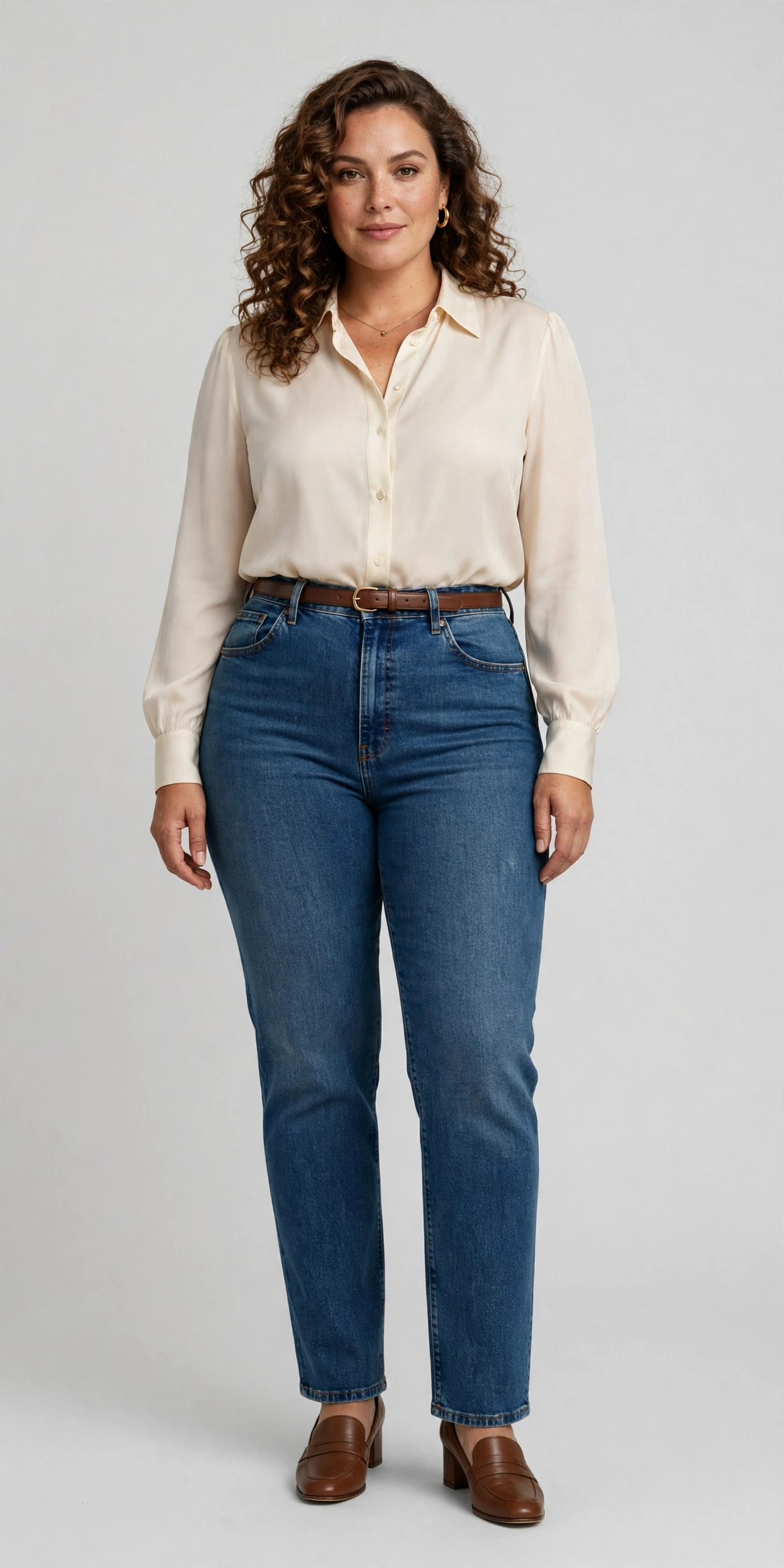
High-waisted does not mean one single measurement. A high rise generally sits at or just above your natural waist — the narrowest part of your torso, usually around your belly button or slightly higher. A true high rise typically measures 11 inches or more from the crotch seam to the top of the waistband, while a mid-high rise sits a little lower. Both can look wonderful; the best choice is the one that feels secure when you sit, bend, and walk.
Try this simple check. Notice where the waistband settles when you sit down. If it slides down or gaps at the back, the rise is probably too low for you, or the waistband is too loose. If it presses into your ribs or folds over when you sit, the rise may be too high or the waistband too tight.
Proportions matter more than a size label. If you have a shorter torso, a mid-high rise may feel more comfortable and give your legs a longer look. If you have a longer torso, a true high rise anchors your outfit beautifully and keeps tucked-in tops in place.
Stretch vs. Rigid Denim: Choosing Your Comfort
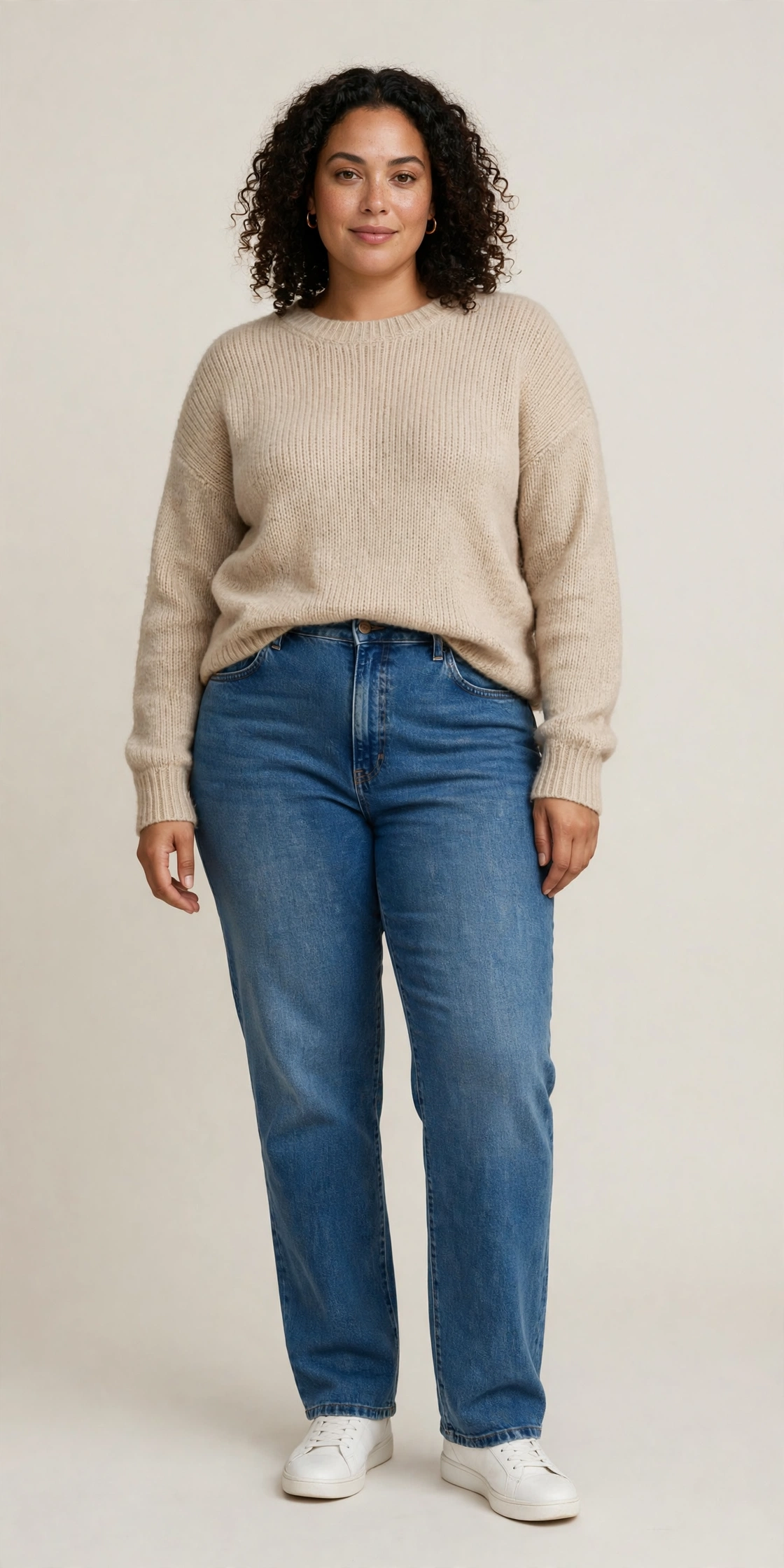
Stretch denim, usually cotton with 2 to 4 percent elastane, is the most forgiving option for everyday wear. It moves with you, recovers its shape after sitting, and stays comfortable from morning to evening. Look for a substantial fabric weight rather than thin, flimsy stretch — a good stretch jean should feel like denim, not like leggings, and should hold its shape at the knees and waistband by the end of the day.
Rigid denim, made from 100 percent cotton with no stretch, offers a more structured, vintage-inspired look. It softens and molds to your body over time, but it needs a break-in period and gives less when you sit. If you are new to rigid denim, start with a straight or wide leg and size up if the waist feels snug.
A smart middle ground is comfort-stretch denim, with around 1 percent elastane. It keeps the authentic look and structure of rigid denim while offering just enough give for all-day comfort.
Waistband Comfort That Actually Works
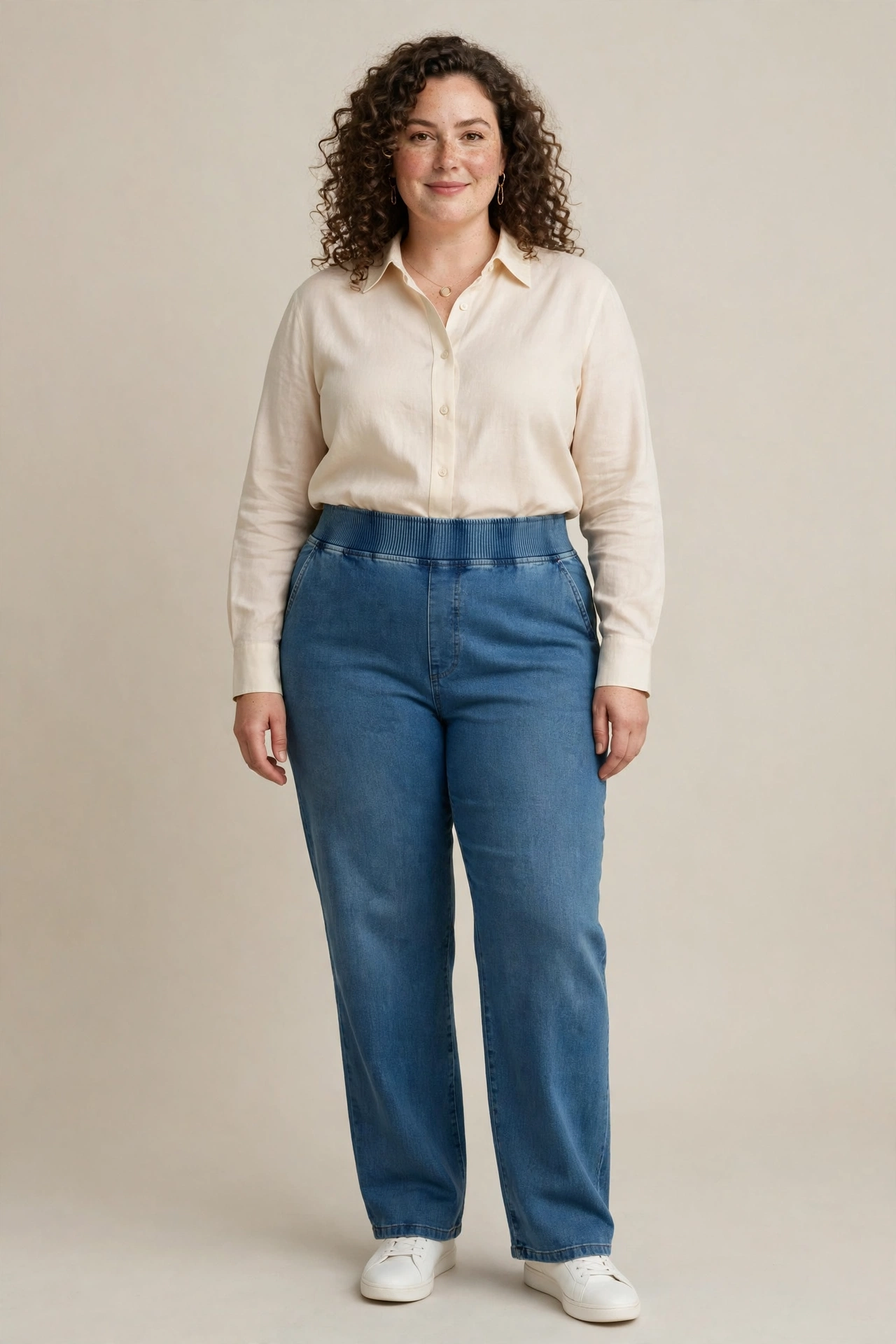
The waistband is where high-waisted jeans either win or fail, so it deserves your full attention. A well-designed plus-size waistband is wide enough to distribute pressure evenly — a narrow, thin band is far more likely to roll, dig, or cut in. Contoured waistbands, cut higher at the back than at the front, follow your natural curves and help prevent back gaping when you sit or bend.
Look for thoughtful details: a sturdy button, a smooth inner facing, and usable belt loops if you like to wear a belt. Some jeans include a hidden elastic panel or stretch waistband insert, which can be a game changer for comfort, especially after a meal or during a long day at a desk.
When you try jeans on, do the sit test. Sit down, cross your legs, and lean forward. The waistband should stay smooth and comfortable, without pinching, rolling, or creating a sharp line under a fitted top.
Leg Shapes Explained: Straight, Wide-Leg, Skinny, and Bootcut
Straight-leg jeans are the most versatile starting point. They fall in a clean line from the knee down, balance the hips beautifully, and work with everything from sneakers to ankle boots.
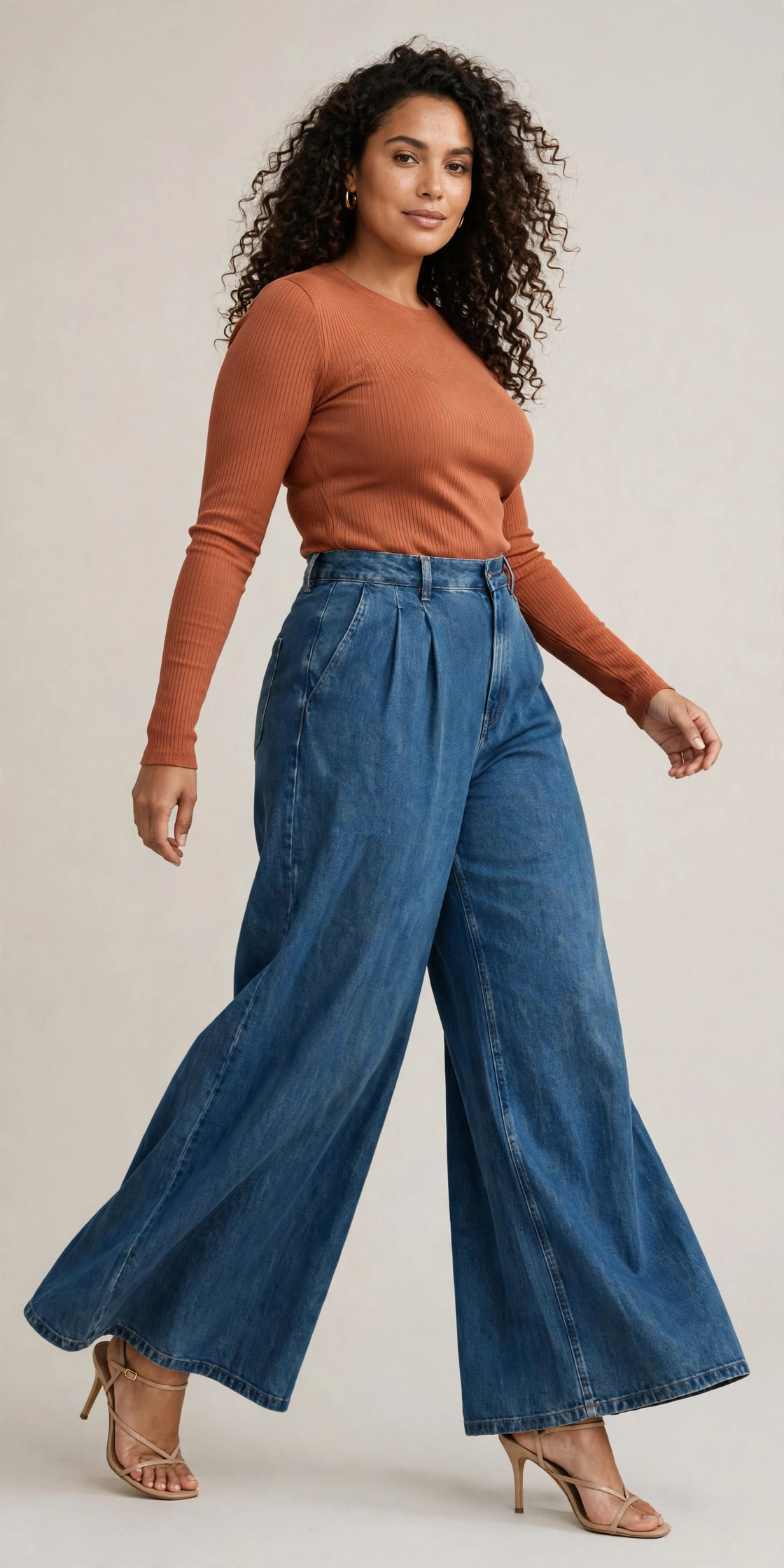
Wide-leg jeans are wonderfully comfortable and elegantly dramatic. The extra volume through the leg balances a fuller hip and creates a long, flowing line, especially with a heeled shoe or platform peeking out beneath the hem. Keep your top more fitted or tucked in to define your waist, so the outfit stays balanced rather than boxy.
Skinny jeans, in good stretch denim, offer a sleek, streamlined silhouette that pairs perfectly with longer tops, tunics, and boots. Bootcut jeans, which flare gently from the knee, are a classic balancer: they add retro polish, lengthen the leg with a heel, and pair beautifully with fitted tops and blouses.
Styling for Work, Casual Days, and Date Nights
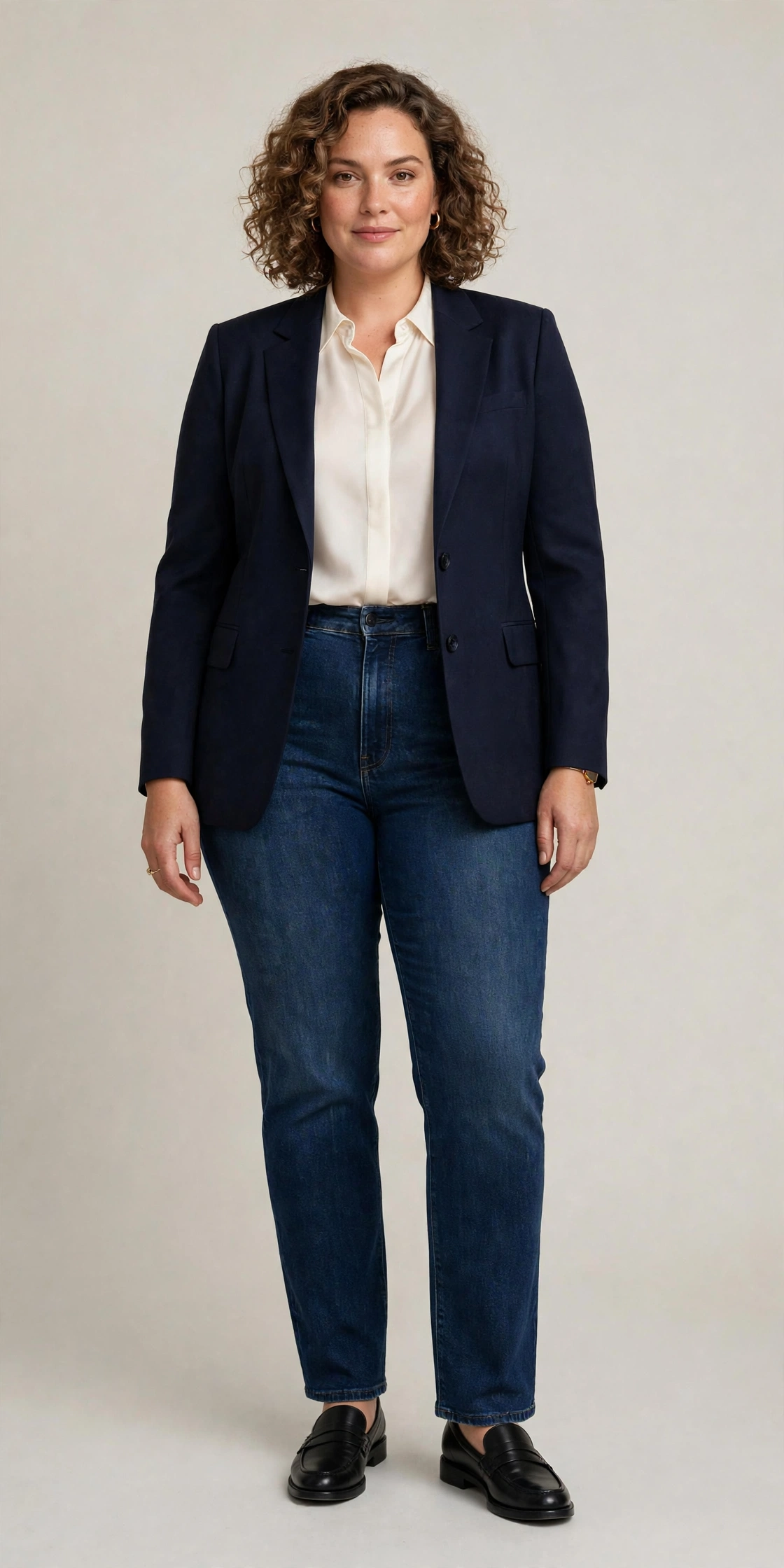
For work, pair dark-wash high-waisted jeans with a crisp button-up shirt tucked in, a structured blazer, and loafers or block heels. The high waist creates a polished line, while the blazer adds structure.
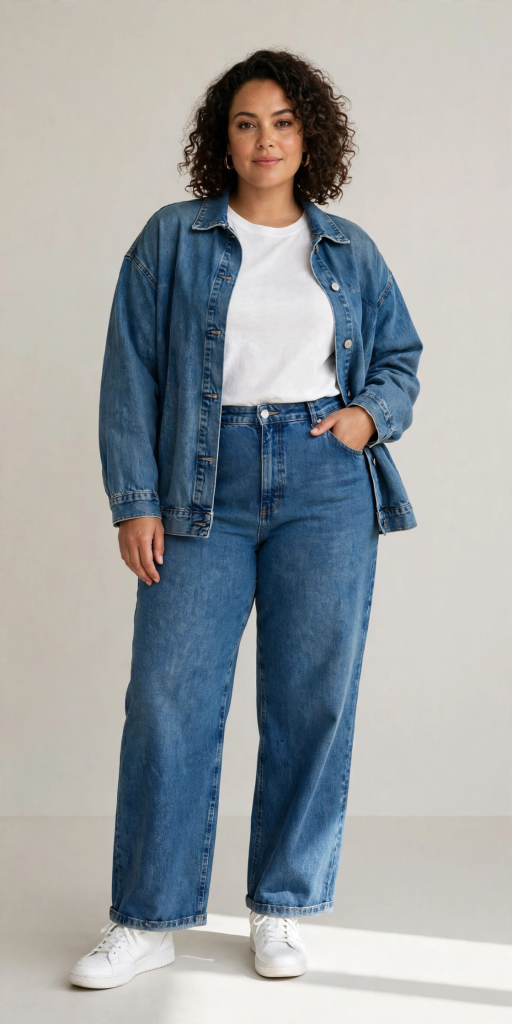
For casual days, comfort comes first. Try a soft striped tee or relaxed knit with a front tuck, white sneakers, and a denim jacket or open cardigan. A light-wash straight-leg jean feels fresh and easy here, and a crossbody bag keeps the look effortless.
For a date night or evening out, lean into a darker wash or black jean with a silky camisole or fitted wrap top, heeled sandals, and one statement piece — a bold earring, a beautiful clutch, or a swipe of red lipstick.
Tucking, Layering, and Proportions That Flatter
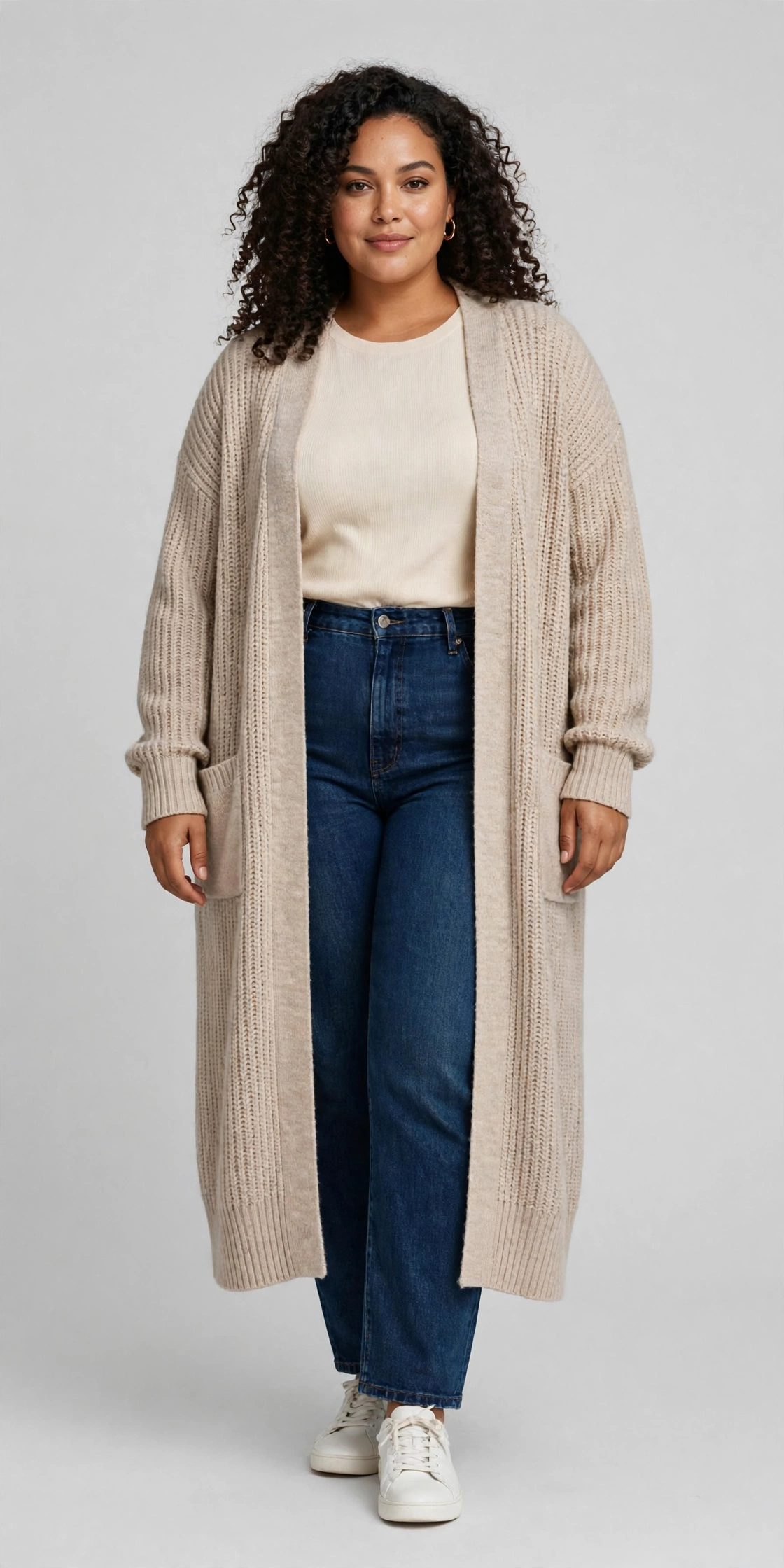
Tucking is the secret weapon of high-waisted jeans, because it shows off the waistline you chose them for. A full tuck works beautifully with blouses and fitted knits, while a French tuck — tucking in just the front of a looser top — gives a relaxed, modern feel without hiding the waistband completely.
Layering is all about length and balance. A long cardigan or duster worn open over a tucked-in top creates a long vertical line that is both elegant and slimming. A cropped jacket or blazer that ends at the waistband keeps your proportions clear and avoids cutting your body in half at an awkward point.
Proportions are simpler than they sound: if your jeans add volume, as with a wide leg, keep your top more fitted. If your top has volume, as with a billowy blouse, a straighter or slimmer leg keeps the outfit balanced. A belt can also define the waist beautifully — just make sure it sits flat and does not add bulk under a fitted top.
What to Avoid, Plus Your Shopping and Try-On Checklist
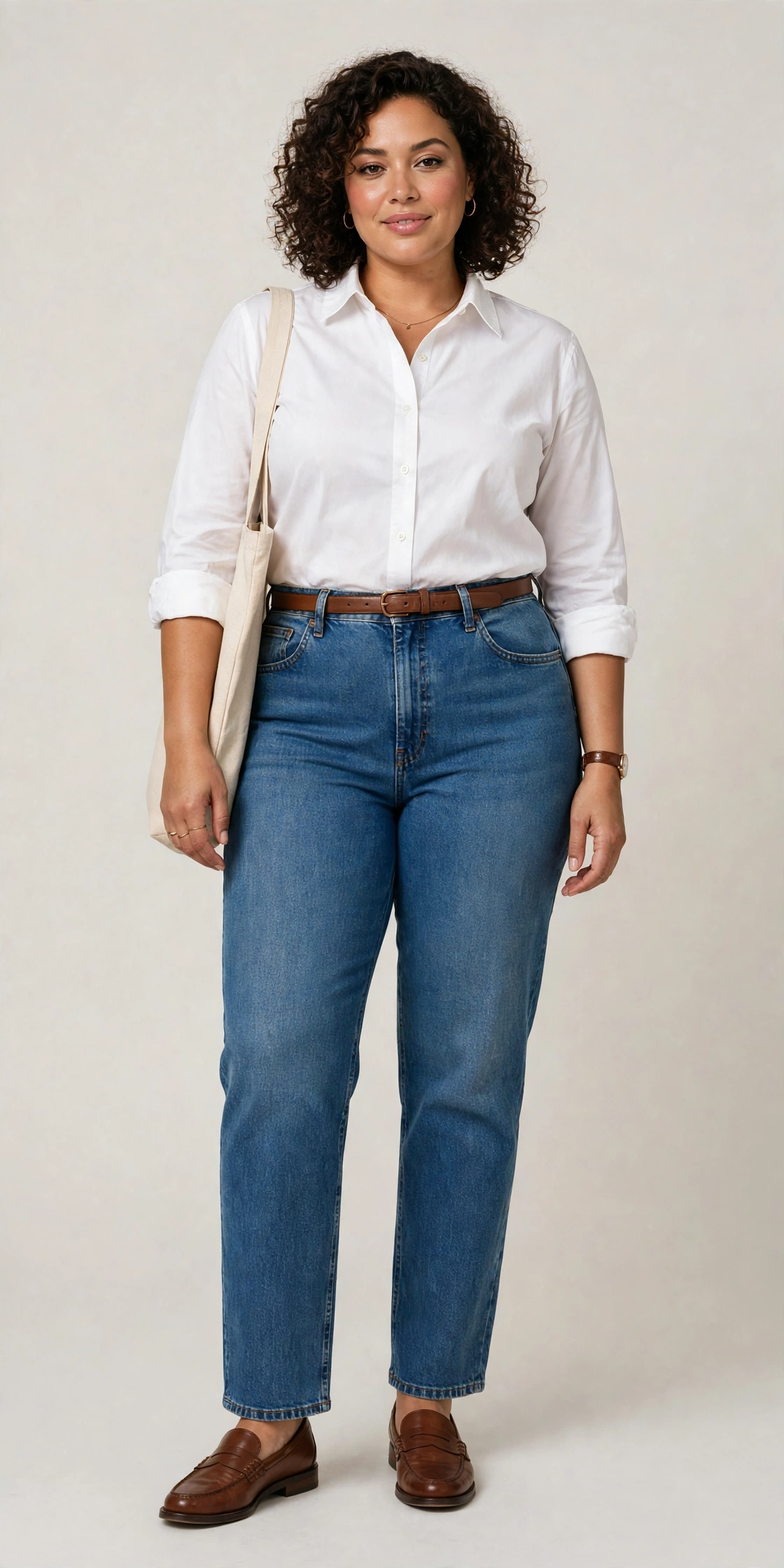
A few common pitfalls are easy to avoid once you know them. Skip jeans with a waistband that gaps badly at the back, no matter how good the front looks — that gap only becomes more noticeable as you move. Avoid very thin, low-quality stretch denim that bags at the knees by midday, and be cautious with extreme distressing or heavy whiskering across the hips, which can draw the eye to one area rather than creating a smooth line.
Use this checklist when you shop. First, check the rise and fabric content on the label. Second, do the sit test and the walk test in the fitting room — sit, bend, and walk a few steps. Third, check the back view for gaping and the front for a smooth waistband. Fourth, test the jeans with the shoes you will actually wear, since hems and proportions change with footwear. And fifth, try the jeans with a tucked-in top, because that is how high-waisted jeans are meant to shine.
Your High-Waisted Jeans Capsule Wardrobe
You do not need a closet full of jeans — a small, thoughtful capsule covers almost every occasion. Start with one dark-wash straight-leg pair for work and evenings, one medium-wash pair for everyday casual wear, and one black pair for dressier moments. Add a white or cream blouse, a striped tee, a soft knit sweater, a structured blazer, and a long open cardigan, and you can build dozens of outfits from just a few pieces.
Finish the capsule with versatile shoes: white sneakers for casual days, loafers for work, and heeled sandals or ankle boots for evenings. A classic leather belt, a crossbody bag, and a tote complete the set.
Style Principles to Remember
- Fit first, trends second: a well-fitting classic always beats a trendy pair that pinches or gaps.
- Define your waist: tuck, half-tuck, or belt your top so the high rise can do its job.
- Balance volume: pair fuller legs with fitted tops, and fuller tops with slimmer legs.
- Choose quality fabric: substantial denim holds its shape and looks better for longer.
- Wear what feels good: confidence is the most flattering thing any outfit can offer.
Frequently Asked Questions
Are high-waisted jeans flattering for plus-size figures?
Yes, absolutely. A well-fitting high rise defines the waist, supports the midsection comfortably, and creates a balanced, elongated silhouette.
What rise should I look for in plus-size high-waisted jeans?
Look for around 11 inches or more for a true high rise, or a slightly lower mid-high rise if you have a shorter torso. The best test is comfort: the waistband should sit securely at your natural waist without digging in or sliding down when you sit.
Should plus-size high-waisted jeans have stretch?
Stretch is wonderful for everyday comfort, especially in skinny or straight styles. Look for 2 to 4 percent elastane in a substantial denim weight. If you love a vintage look, comfort-stretch denim with about 1 percent elastane gives structure with just enough give.
How do I stop my high-waisted jeans from gaping at the back?
Choose a contoured waistband cut higher at the back, and make sure the waist fits snugly without being tight. A belt can help, and jeans with a hidden elastic panel or stretch insert at the waistband can close a small gap without changing the fit.
Can I wear high-waisted jeans to work?
Yes, in most workplaces. A dark-wash, non-distressed straight or wide-leg pair with a tucked-in blouse, blazer, and smart shoes looks polished and professional, and dark denim styled this way is widely accepted in business-casual settings.
What shoes go best with plus-size high-waisted jeans?
It depends on the leg shape. Sneakers and loafers suit straight and skinny legs, heeled sandals or platforms balance wide legs, and a block heel or boot completes a bootcut. Try jeans on with your real shoes to get the hem length exactly right.
Conclusion
The perfect pair of plus-size high-waisted jeans is not about chasing a trend or fitting a mold — it is about finding a rise, fabric, waistband, and leg shape that feel as good as they look. Once you have that foundation pair, styling becomes easy: tuck, layer, and balance your way to outfits for work, weekends, and evenings out, all from one wardrobe hero.
If this guide helped you, save it to your Pinterest board so you can find it again the next time you shop for jeans — and pin your favorite outfit idea to inspire your next look. Happy styling, and enjoy finding the pair that makes you feel like your very best self.