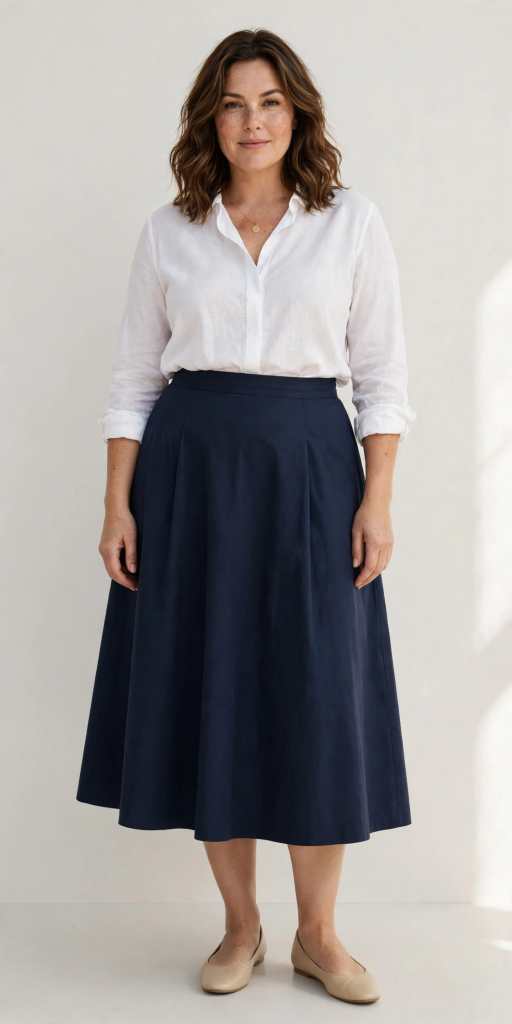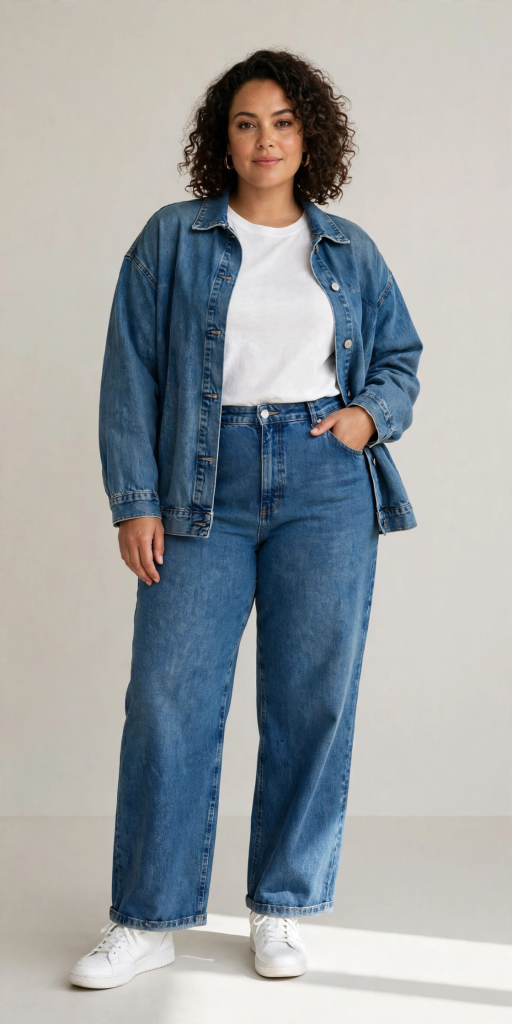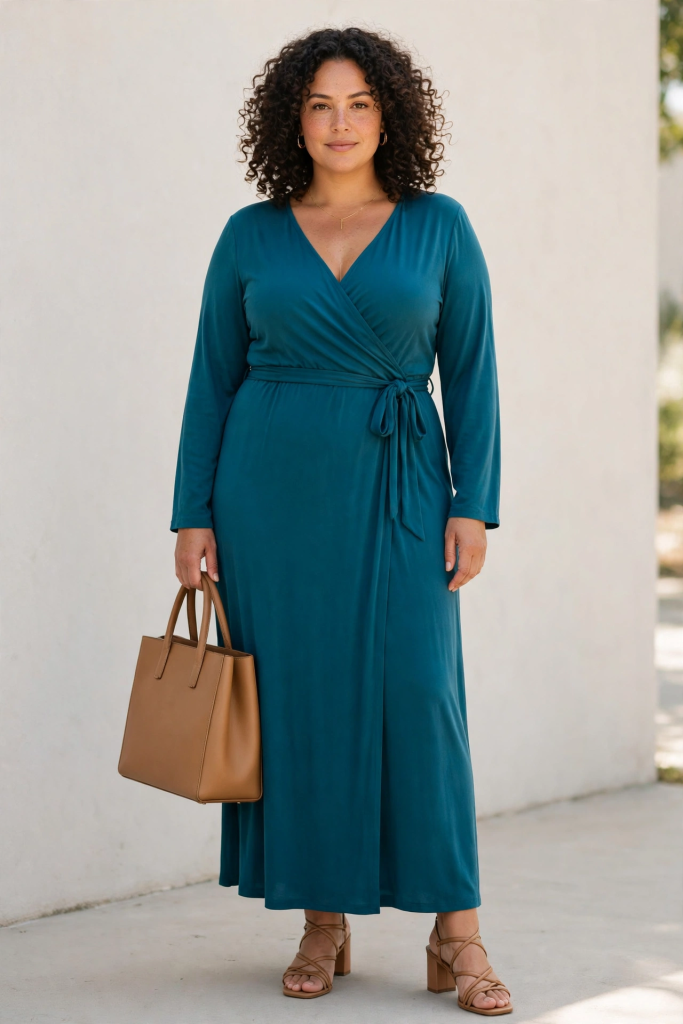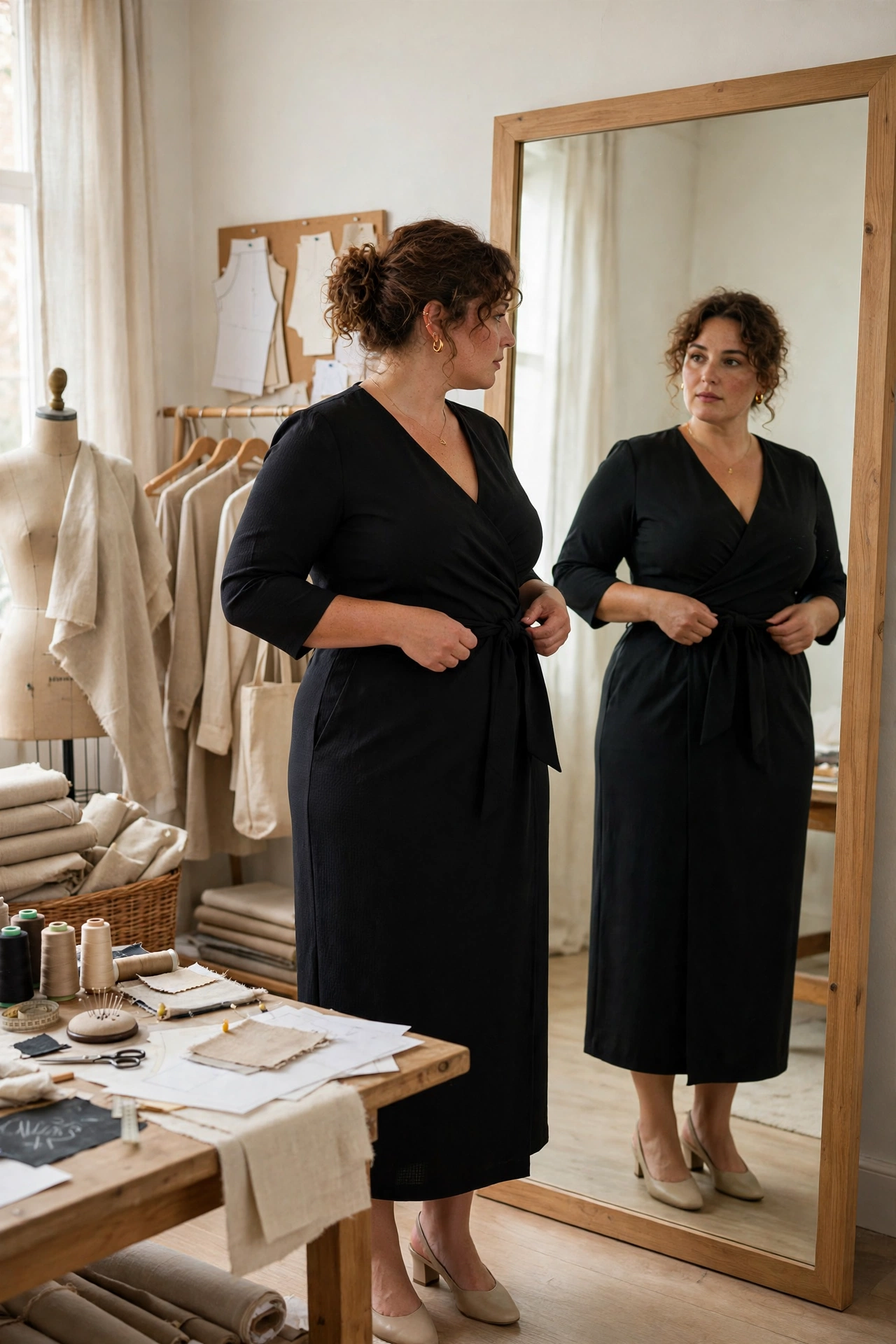
Curvy women do not need to hide their shape at work — they need clothes that celebrate it. The most polished curvy work outfits are not about covering up or squeezing in. They are about fit: waist definition, fabrics that drape instead of cling, and proportions that let your curves do the talking while the outfit stays completely professional.
This guide walks you through everything that matters — from choosing the right fabrics and silhouettes to building a work capsule that actually fits. Whether you are dressing for a boardroom, a classroom, or a creative office, these are the styling rules that make curvy work outfits look effortless.
Start with Fit, Not Size
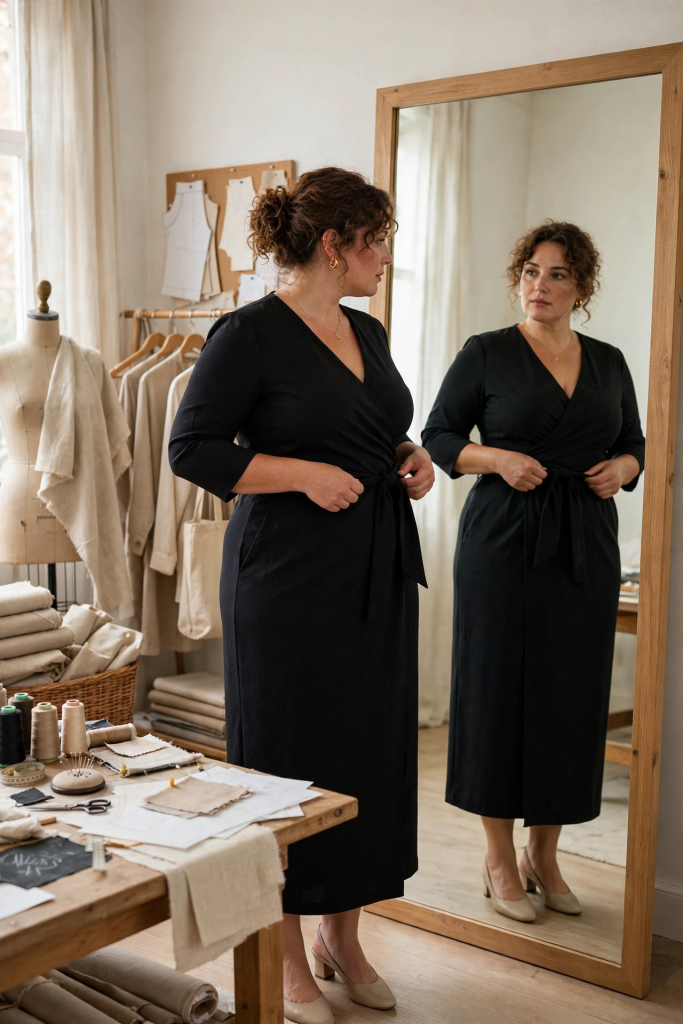
The single most important rule of curvy work style is this: fit matters more than the number on the label. A size 16 blazer that fits your shoulders and skims your waist will always look better than a size 14 that pulls at the bust. When you try on work clothes, check three places first: the bust, where buttons should lie flat without gaping; the waist, where the garment should follow your shape without squeezing; and the hips, where skirts and trousers should skim, not cling.
For curvy women, the most flattering fit is one that follows the body. Look for princess seams, darting, and wrap styles — these are cut to follow curves rather than fight them. Avoid boxy, shapeless pieces: they do not hide curves, they just add visual bulk. And remember that tailoring is your best friend — a twenty-dollar hem or waist adjustment can make an affordable blazer look custom-made.
Choose Fabrics That Drape, Not Cling
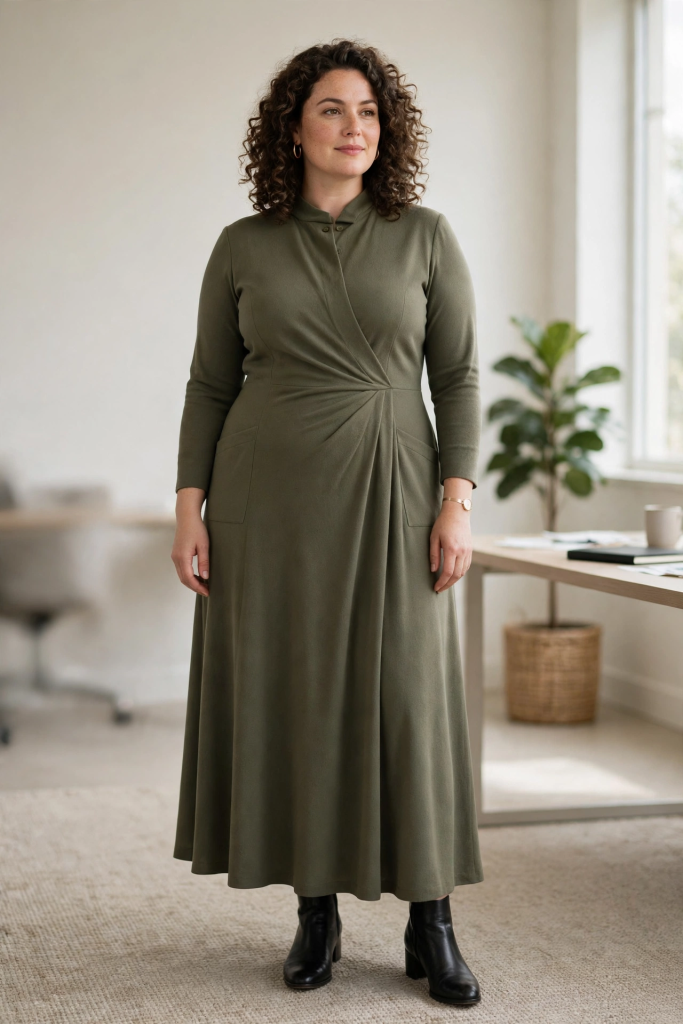
Fabric choice makes or breaks a curvy work outfit. The best fabrics for curves are the ones with weight and drape: ponte knit, crepe, soft wool blends, and midweight jersey. These fabrics fall smoothly over the body, skim the waist and hips, and hold their shape through a long day. They move with you instead of sticking to you.
Avoid thin, clingy jerseys and stiff, non-stretch cottons. Thin fabrics show every line underneath and cling at the bust and hips, while stiff fabrics gap at the bust and pull at the waist. A good test: hold the fabric up and let it fall. If it drapes in soft folds, it will flatter your curves. If it stands stiff or clings to your hand, it will do the same on your body.
Define Your Waist Every Time
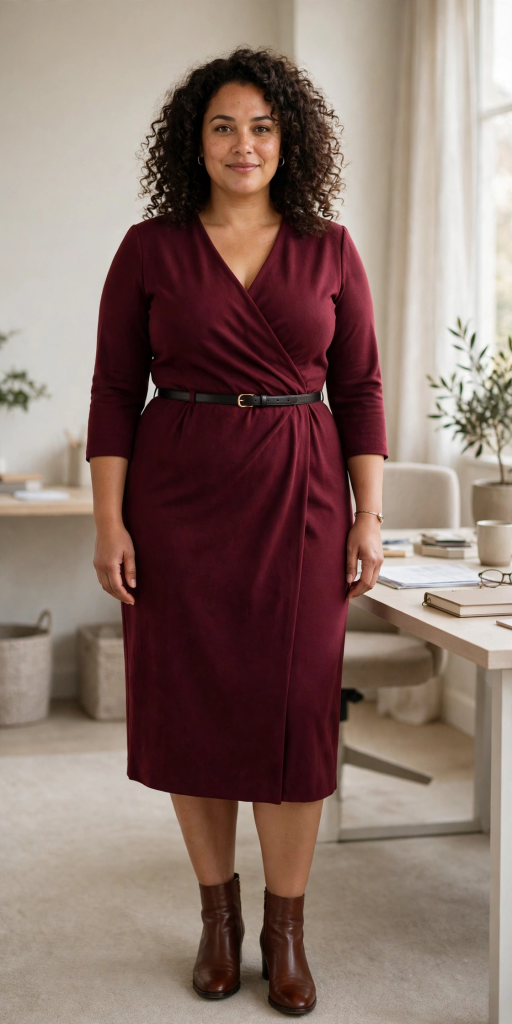
Waist definition is the foundation of curvy work style. Your waist is the smallest part of your torso, and showing it — even softly — creates the hourglass silhouette that makes every outfit look intentional. The easiest ways to define it: a wrap dress that ties at your natural waist, a belt worn over a blazer or dress, a half-tuck that shows the waistband of your trousers, or a top with an empire seam.
The key word is softly. A wide, stiff belt cinched tight can look forced and uncomfortable. A slim belt, a wrap tie, or a top that follows the waist naturally gives the same definition without the squeeze. For work, aim for definition you can sit in comfortably all day — if you have to loosen it at your desk, it is too tight.
Master the Art of Layering
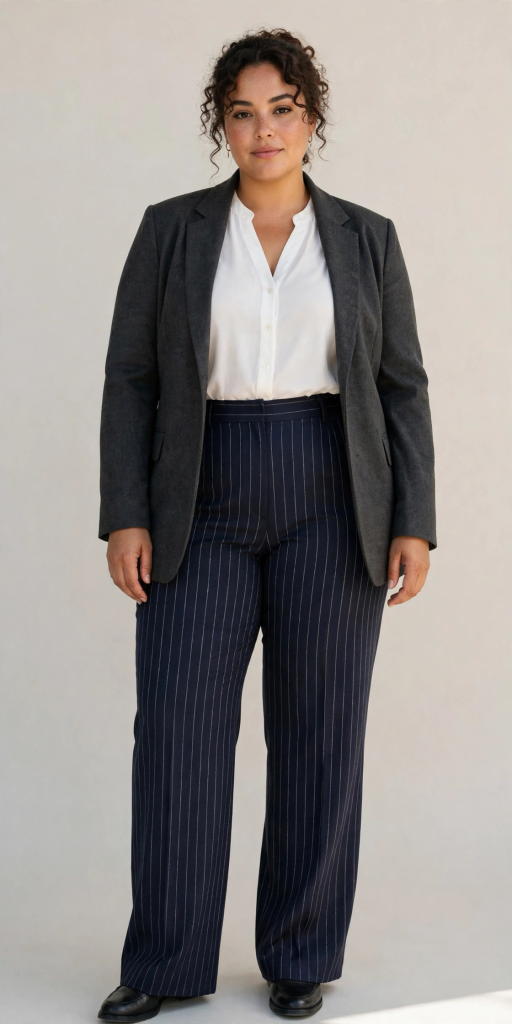
Layering is a curvy woman’s secret weapon at work. A well-chosen layer adds structure, covers the upper arms, and creates long vertical lines that lengthen the body. The best layers for curves: an unstructured blazer worn open, a long cardigan that ends at the hip, or a duster that falls to the knee. Worn open, each one creates two vertical lines down the front of the body — and vertical lines are slimming on everyone.
The rule for layering is simple: one layer at a time, and it should be open. A closed blazer over a fitted top can add bulk, but the same blazer worn open over the same top creates a long, lean line. Keep the layer in a darker or tonal shade than the top underneath, and make sure it ends at the hip or below — a layer that ends at the waist cuts the body in half.
Pick Silhouettes That Work With Curves
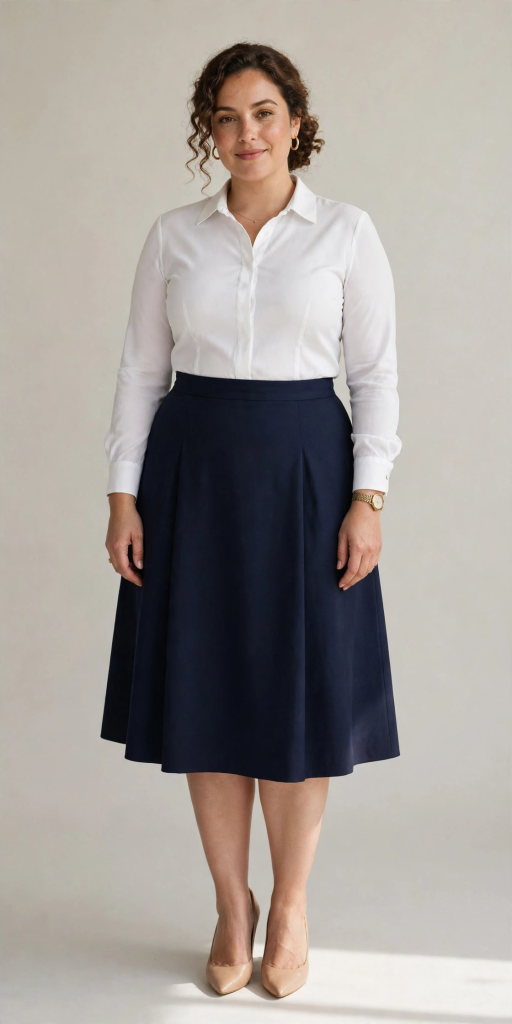
Some silhouettes are simply made for curvy bodies, and knowing them saves hours of frustrating try-ons. The wrap dress is the classic: the diagonal line flatters the bust, the tie defines the waist, and the skirt skims the hips. A-line skirts are another winner — they fit at the waist and flow over the hips without clinging. Wide-leg trousers with a high waist balance the hips and create a long, elegant line.
Pencil skirts work beautifully too, as long as they have stretch and a back vent for walking. The silhouettes to approach with care: shift dresses, which can look boxy on curves unless they have waist shaping; skinny trousers with a low rise, which cut the body at the wrong place; and oversized, shapeless tops, which hide your shape instead of flattering it.
Build a Curvy Work Capsule
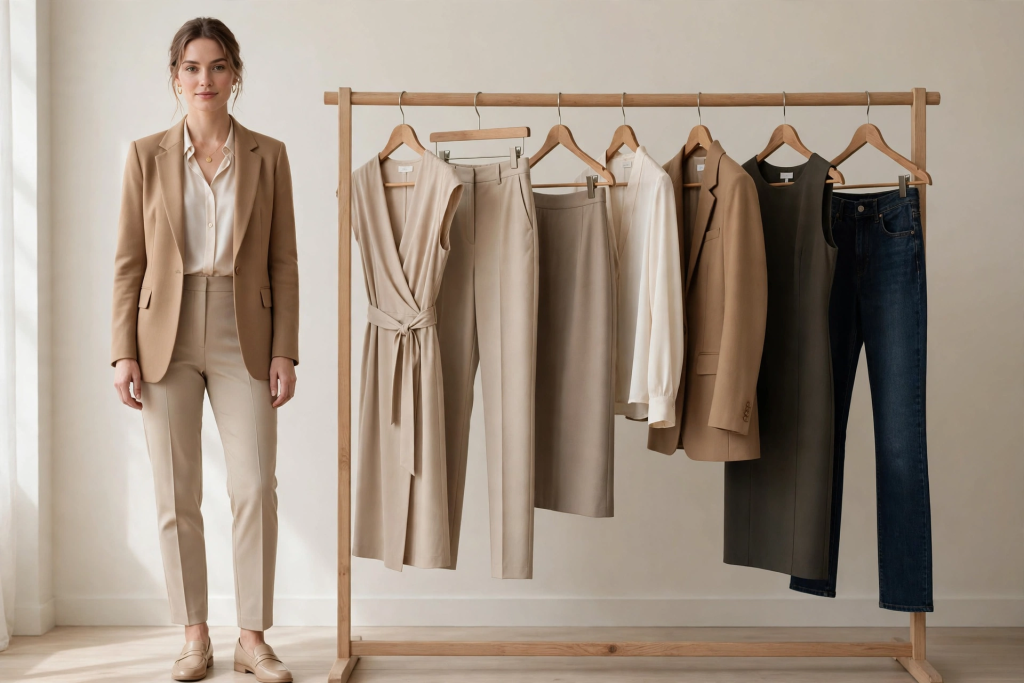
A small capsule wardrobe makes curvy work dressing easy, because every piece is chosen to fit and flatter. Start with these seven pieces: a black wrap dress, navy high-waisted trousers, a grey pencil skirt with stretch, a white blouse with a little elastane, an unstructured blazer in charcoal, a teal sheath dress, and a pair of dark straight-leg jeans for casual days.
Add a camisole, a fitted tee, and one good pair of pointed flats, and you have weeks of outfits. Keep the palette tight — navy, charcoal, black, and one accent colour — so every piece works with every other. And buy the capsule in your real size, not the size you wish you were: clothes that fit are always more flattering than clothes that are too small.
Shoes, Bags and the Finishing Touches
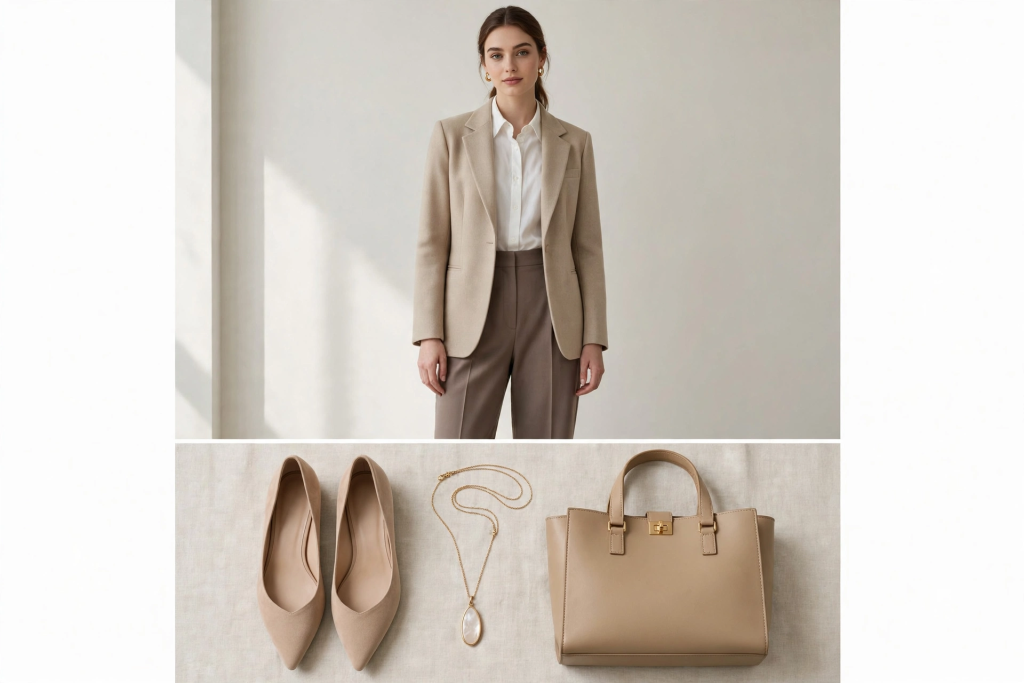
The finishing touches are where a curvy work outfit goes from good to polished. Shoes matter most: pointed-toe flats and low block heels lengthen the leg line and keep you comfortable through long days. Avoid ankle straps, which visually shorten the leg, and very high heels, which are punishing by mid-afternoon.
A structured tote in a warm neutral pulls the whole outfit together and reads as professional. For jewellery, a long pendant necklace creates a vertical line down the torso, and simple studs or hoops keep the focus on the outfit. The final rule: step back and look at the whole outfit, not the individual pieces. If one thing draws the eye for the wrong reason — a gaping button, a too-tight waist, a clashing colour — fix that one thing, and the whole outfit falls into place.
Capsule Wardrobe
A small curvy work capsule makes getting dressed easy: a black wrap dress, navy high-waisted trousers, a grey pencil skirt with stretch, a white blouse, a charcoal unstructured blazer, a teal sheath dress, and dark straight-leg jeans. Add a camisole, a fitted tee, and one good pair of pointed flats, and you can mix and match for weeks. Keep the palette warm and tonal, and every piece will work together.
Style Principles
- Fit over size: Choose clothes by how they fit your bust, waist, and hips — not the number on the label. Tailoring beats sizing every time.
- Define the waist softly: Wrap ties, slim belts, and half-tucks give gentle shape; never squeeze, and never hide your waist entirely.
- Drape, don’t cling: Ponte, crepe, and midweight jersey fall smoothly over curves; thin, clingy fabrics show every line.
- Layer open, not closed: An open blazer or duster creates long vertical lines that lengthen the body; a closed layer adds bulk.
- Balance proportions: Pair wide legs with a fitted top, or a flowing skirt with a defined waist, so one part gives structure while the other moves.
FAQ
What is the most flattering work outfit for curvy women? A wrap dress is the classic answer: the diagonal line flatters the bust, the tie defines the waist, and the skirt skims the hips. A high-waisted trouser with a tucked-in blouse is a close second — both create an hourglass silhouette that looks polished and professional.
How do I stop my work blouses from gaping at the bust? Choose blouses with stretch — a cotton-elastane blend — or with a hidden snap between the buttons. Wrap tops and peplum styles avoid the problem entirely, since they have no button placket. If you love a particular blouse, a tailor can add a small snap in minutes.
Can curvy women wear fitted clothes to work? Yes — fitted is not the same as tight. Clothes that follow your shape and skim the body are more flattering than shapeless ones, which add visual bulk. The test: if you can sit comfortably and the fabric does not pull or gape, the fit is right.
What is the best work trouser for curvy women? High-waisted, wide-leg or straight-leg trousers with a flat front and a side zip. The high waist defines the waist, the wide leg balances the hips, and the flat front stays smooth under tops. Avoid low rises and gathered elastic waistbands, which add bulk at the waist.
How do I layer without adding bulk? Wear one layer, worn open: an unstructured blazer, a long cardigan, or a duster. Keep it in a darker or tonal shade than the top underneath, and make sure it ends at the hip or below. Open layers create vertical lines that lengthen the body instead of widening it.
Do I need to buy a whole new wardrobe for work as a curvy woman? No — start with seven pieces: a wrap dress, high-waisted trousers, a pencil skirt, a white blouse, a blazer, a sheath dress, and dark jeans. In a tight colour palette, these mix into weeks of outfits. Add tailoring to the pieces you already own before buying new ones.
Conclusion
Styling curvy work outfits is not about hiding your shape — it is about dressing it well. Fit first, fabrics that drape, a softly defined waist, and one good open layer will carry you through any workday looking polished and feeling comfortable. Start with the capsule, find the silhouettes that love your curves, and let your shape do the talking.
If you loved this guide, save it to your Pinterest board for work outfit inspiration — and pin your favourite tip for a friend who is curvy too.