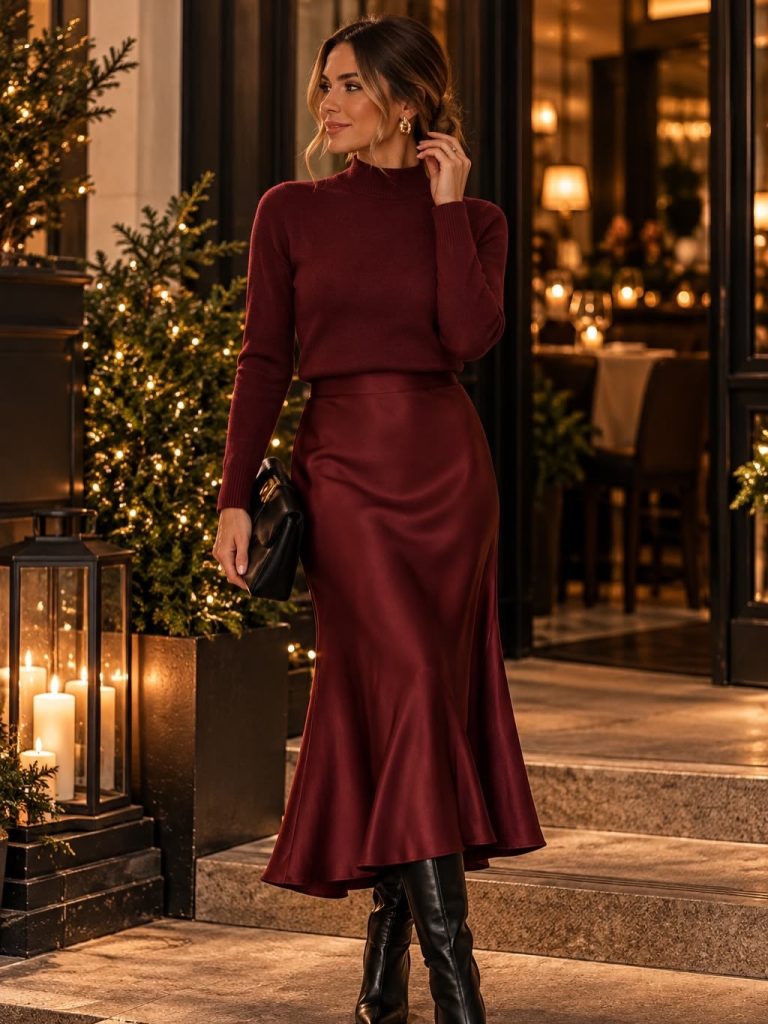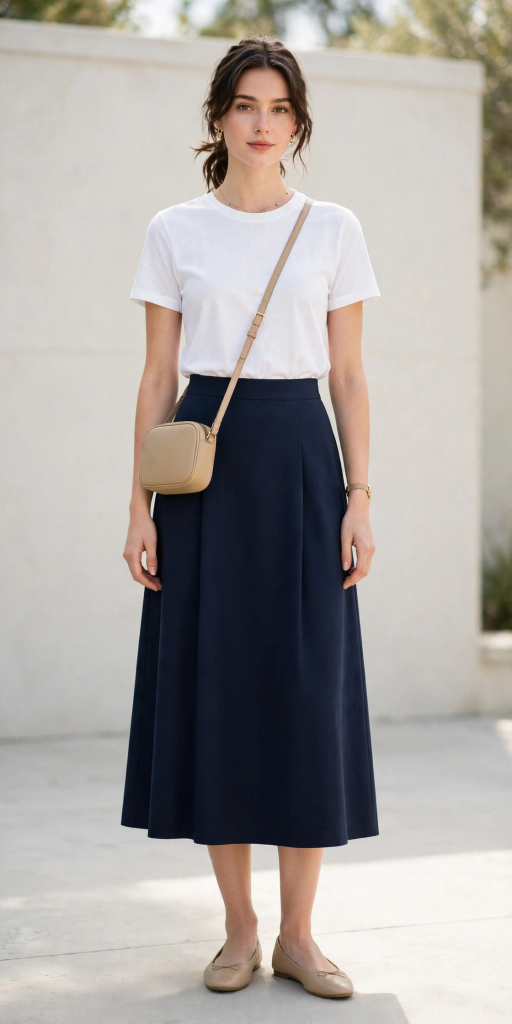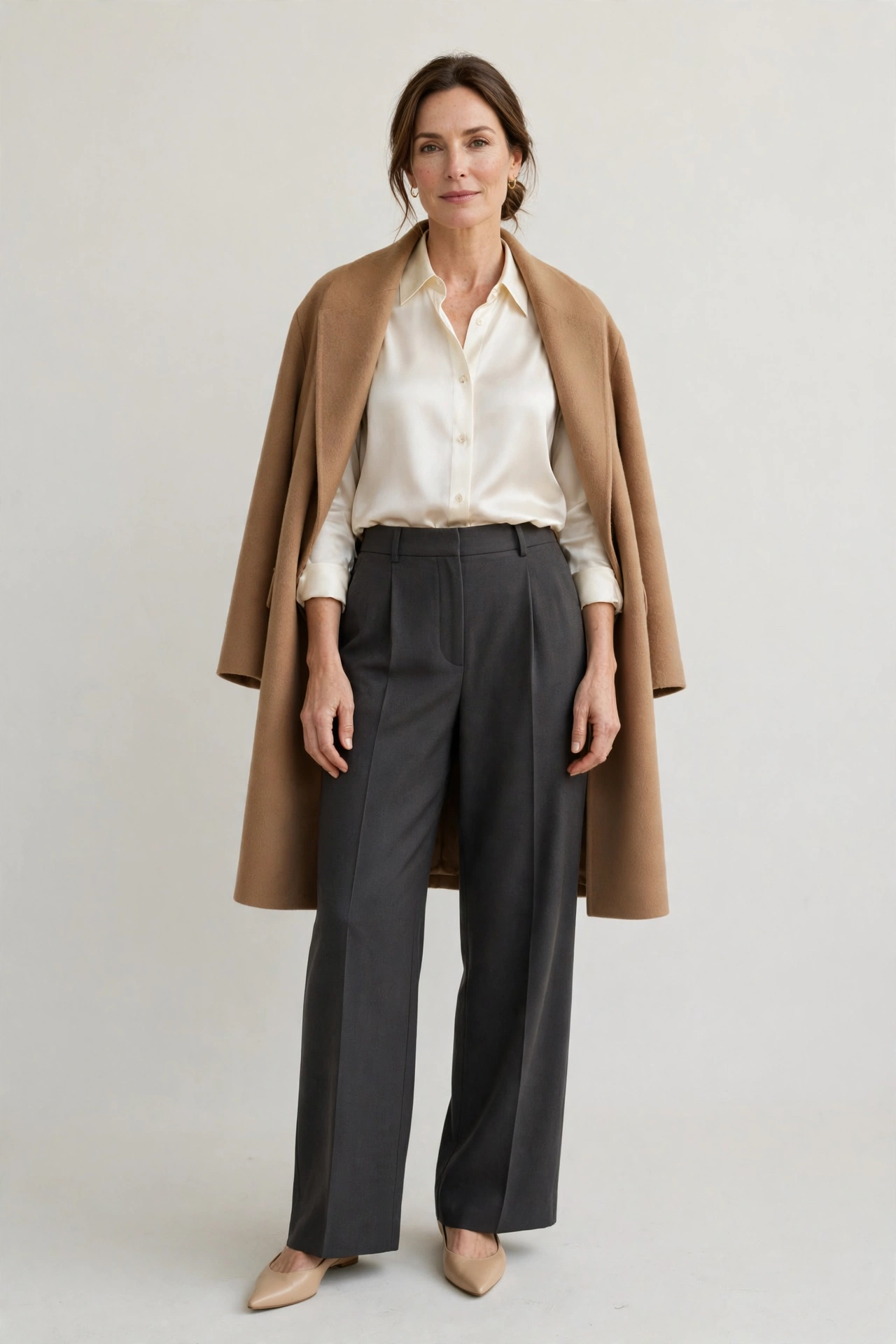
There comes a point, usually somewhere in your early forties, when the closet stops feeling exciting and starts feeling noisy. You open the doors and see plenty of clothes, yet somehow nothing feels quite right. Minimalism after forty is not about wearing plain clothes or giving up personality. It is about choosing fewer pieces that fit beautifully, feel wonderful against your skin, and make you look polished without trying too hard.
The best part of dressing this way is how much easier your mornings become. When every piece in your wardrobe works with the others, getting dressed stops being a puzzle and starts being a pleasure. You reach for a soft knit, a pair of well-cut trousers, and shoes you can actually walk in, and you look like yourself on your best day.
Start with a Neutral Foundation
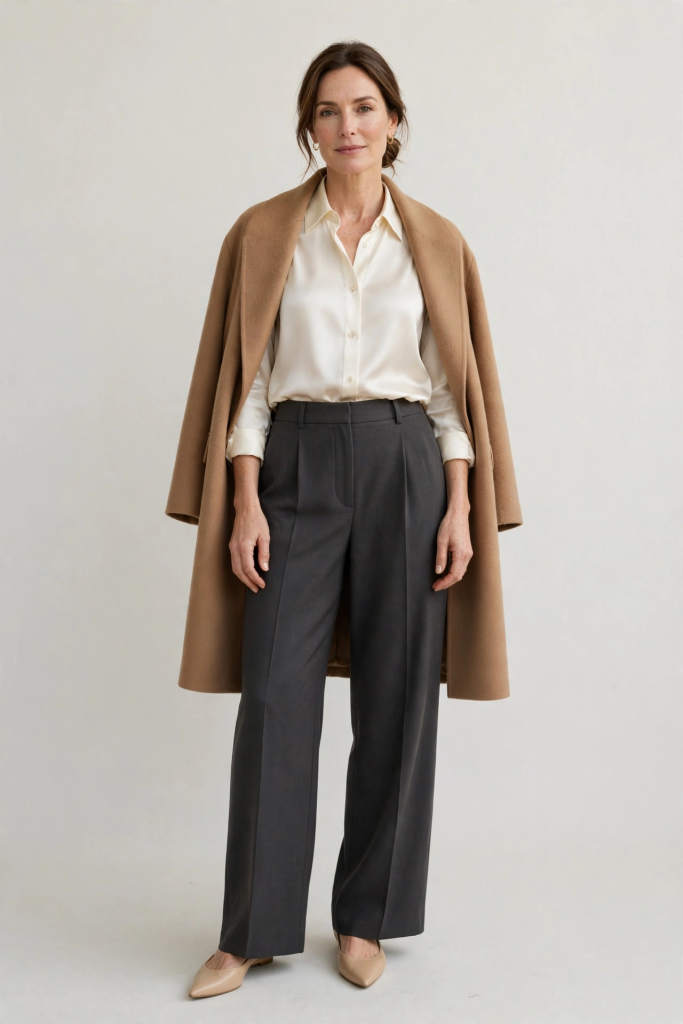
Every great minimalist outfit begins with a calm base, and neutral colours are the quiet heroes of that base. Think ivory, soft white, warm beige, camel, stone grey, navy, and black — shades that sit comfortably next to each other without competing for attention. Pick two or three neutrals that suit your skin tone and build most of your wardrobe around them, with one accent shade you love for a scarf, a bag, or a pair of shoes.
A simple way to put this into practice is the two-neutral plus one rule. Choose, for example, ivory trousers and a camel knit, then add a navy blazer or tan leather flats. The outfit reads as intentional rather than random, and you can repeat the same formula with different pieces all week. Keep your neutrals in the same temperature family — warm with warm, cool with cool — and the combinations will almost always work.
Choose Quality Fabrics That Drape Well
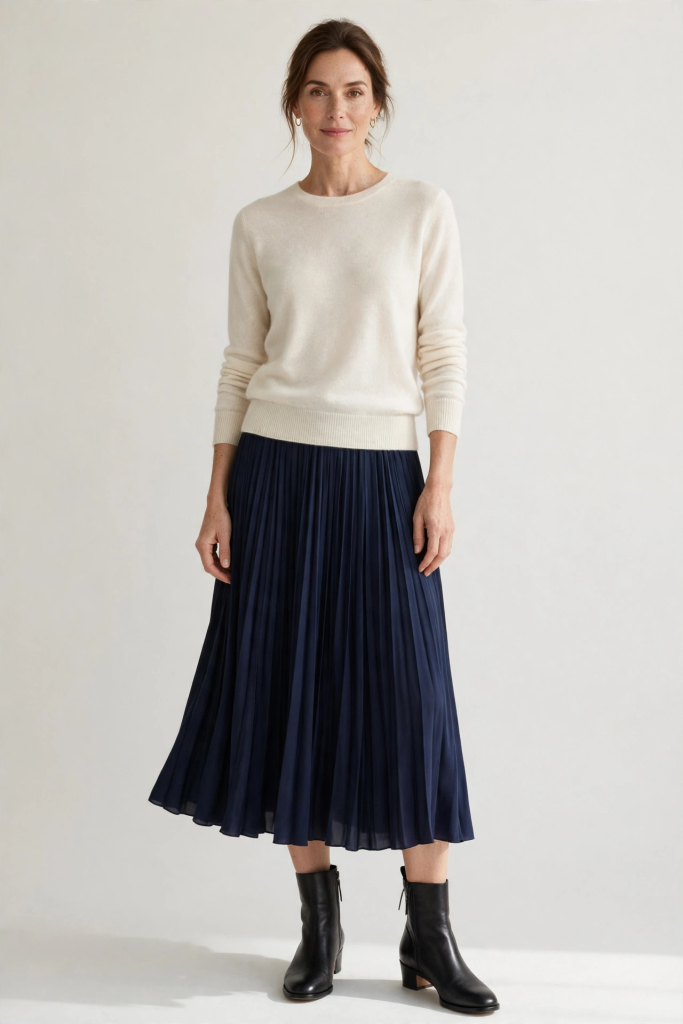
Minimalist dressing lives or dies on fabric, because when an outfit has no ruffles, prints, or embellishments to hide behind, the material itself is the design. Cheap, stiff fabrics tend to bunch, pull, and create unflattering lines, while good fabrics drape smoothly and move with you. Look for natural fibres and quality blends: a soft merino or cashmere knit, a fluid silk or Tencel blouse, a cotton poplin shirt with a little weight to it, and trousers in a wool blend that holds its shape through the day. Run your hand over a garment before you buy it. If it feels scratchy, papery, or strangely stiff, leave it on the rail.
Pay attention to how a fabric drapes around the middle, hips, and bust. A knit with a gentle stretch will skim rather than cling, a bias-cut skirt will move gracefully when you walk, and a shirt in a fluid weave will not gap at the buttons. A well-cared-for cashmere jumper will look better in its third year than a cheap one did on its first day.
Get the Fit Right Every Time
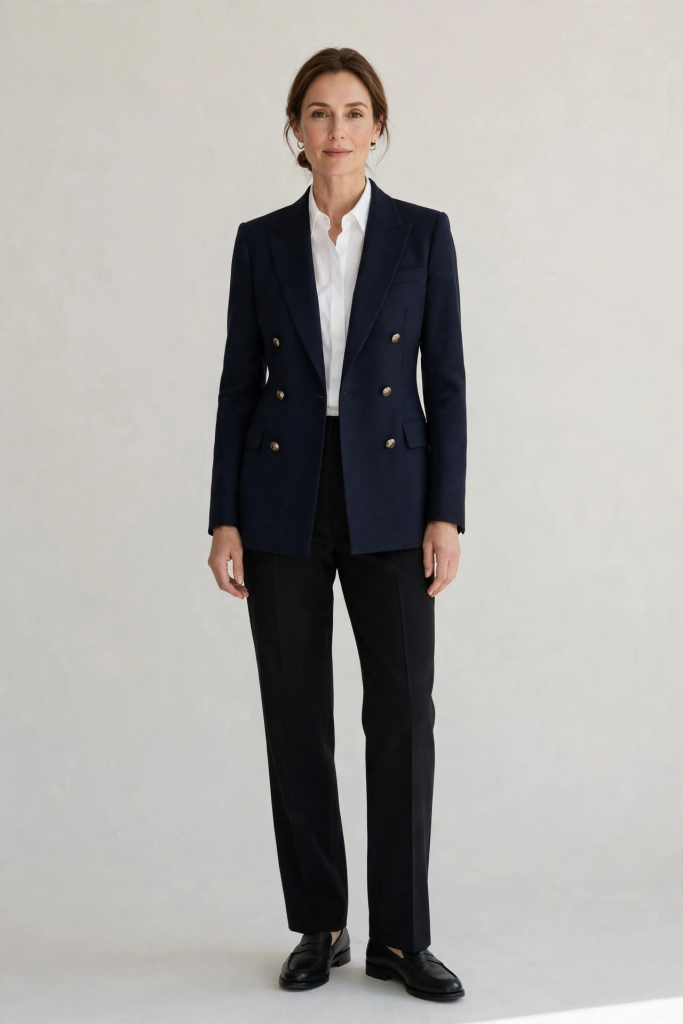
If there is one secret to looking polished after forty, it is fit. A minimalist outfit in the perfect size looks expensive; the same outfit a size too small or too big looks tired. Start by knowing your real measurements rather than the size on a label, because sizes vary wildly between brands. If a shirt pulls across the bust, a waistband digs in, or a sleeve ends at an awkward spot, it is not your body that is wrong. It is the garment.
A good tailor is a minimalist’s best friend. Shortening trousers so they just graze the top of your shoe, taking in a blazer at the waist, or adjusting a dress hem by a couple of centimetres can transform an ordinary piece into one that looks made for you. When an outfit fits well, you forget you are wearing it, and that quiet confidence shows.
Build Around One Hero Piece
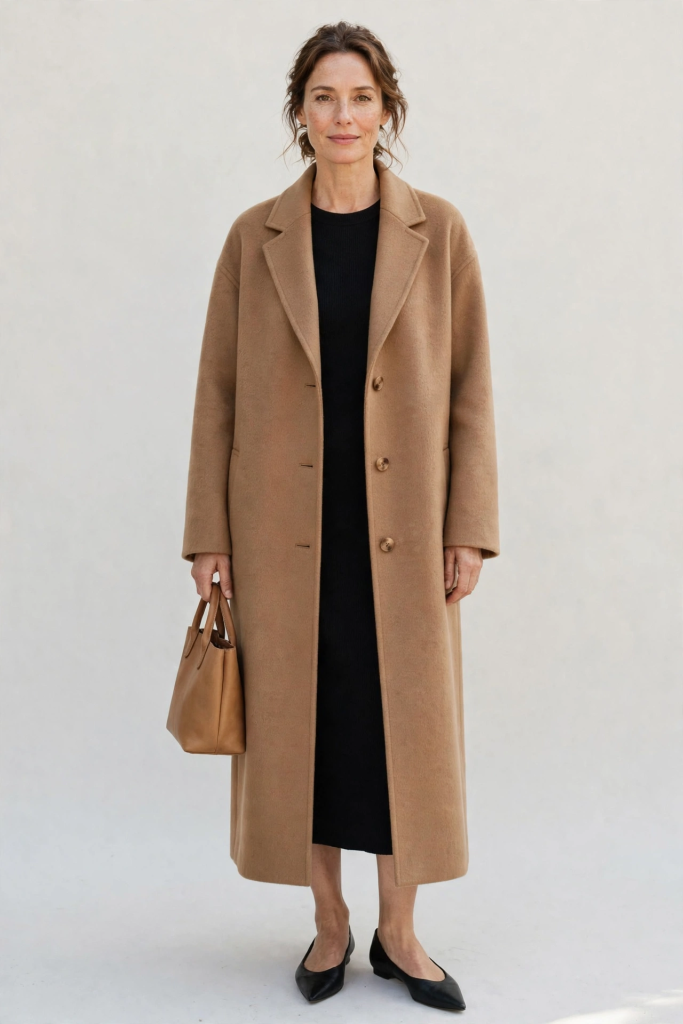
Minimalist outfits work best when one piece leads and everything else supports it. That hero piece might be a beautifully tailored blazer, wide-leg trousers in a rich camel, a silk midi dress, or a long wool coat with a beautiful line. Start your outfit with the hero piece, then add simple, quiet companions: a plain tee, a fine knit, straight-leg trousers, or a simple skirt in a neutral shade. The supporting pieces should never compete with the hero.
This approach also makes shopping much simpler. Instead of buying five average items, invest in one excellent piece each season and build outfits around it. A cream double-breasted blazer can dress up dark trousers and a silk camisole for an evening out, or soften straight trousers and white trainers for a daytime look. The key is restraint: one star per outfit, and the rest of the cast stays calm.
Master Simple Layering
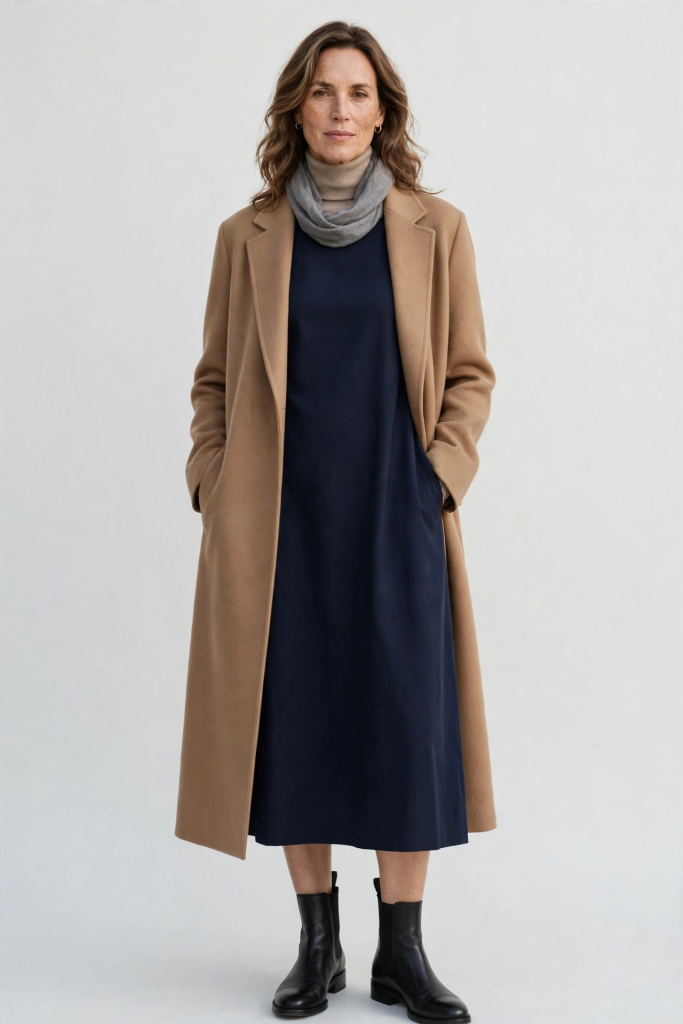
Layering is where minimalist dressing becomes genuinely useful, because it lets you adjust to temperature changes and add depth without adding clutter. The trick is to layer with purpose: each layer should be visible and add something, whether that is warmth, texture, or a longer line. A good formula is a fine base layer, a mid layer with a little structure, and an outer layer that finishes the silhouette. Keep the layers in the same neutral family so the look stays calm.
Length matters more than most people realise. Avoid layers that all end at the same point, which can chop your figure into blocks, and avoid piling on so many pieces that you feel bulky. Two or three layers are usually enough. When you take a layer off indoors, the outfit underneath should still look complete on its own.
Shoes and Bags That Finish the Look
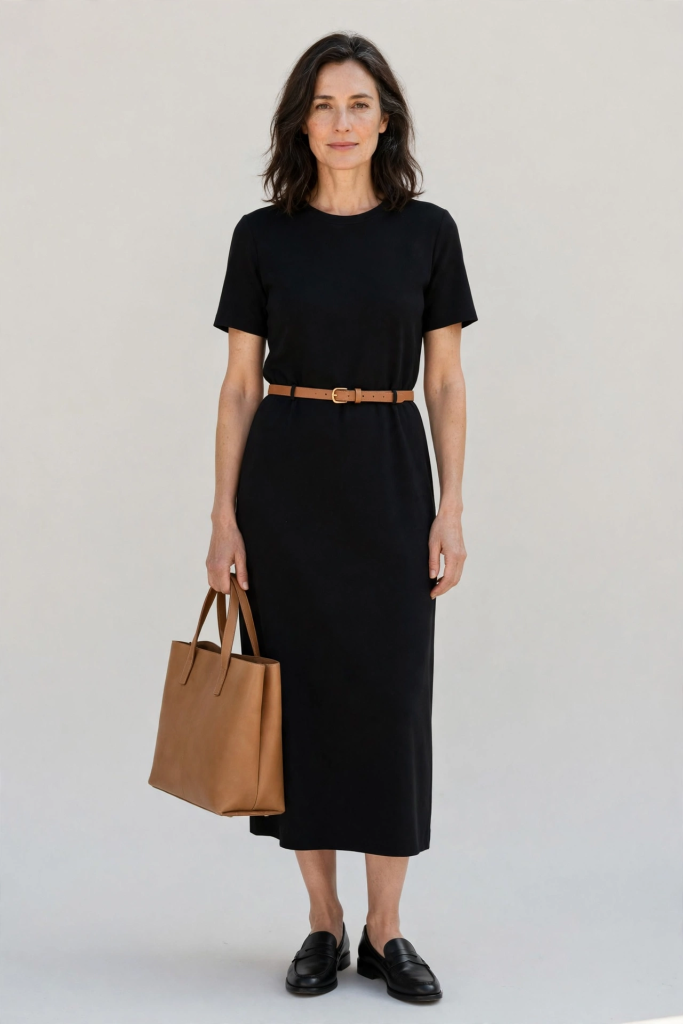
Shoes and bags do more work in a minimalist outfit than almost anything else, because they are the finishing touches that either lift the whole look or let it down. With a simple outfit, a beautiful pair of shoes becomes a focal point, so choose styles that are clean, comfortable, and well made. Match the shoe to the mood of the outfit: sleek loafers sharpen tailored trousers, soft suede boots warm up a midi skirt, and clean white trainers keep a long coat looking modern and relaxed.
Your bag follows the same rule — one good bag beats three mediocre ones. A structured tote in tan or black leather, a small crossbody for hands-free days, and a simple clutch for evenings are all most minimalist wardrobes need. Keep the hardware simple and the shape clean, and let the leather quality speak. Finally, look after your shoes and bags: polish leather regularly, stuff bags to hold their shape, and replace worn heels before they damage the shoe.
Build a Minimalist Capsule That Works Hard
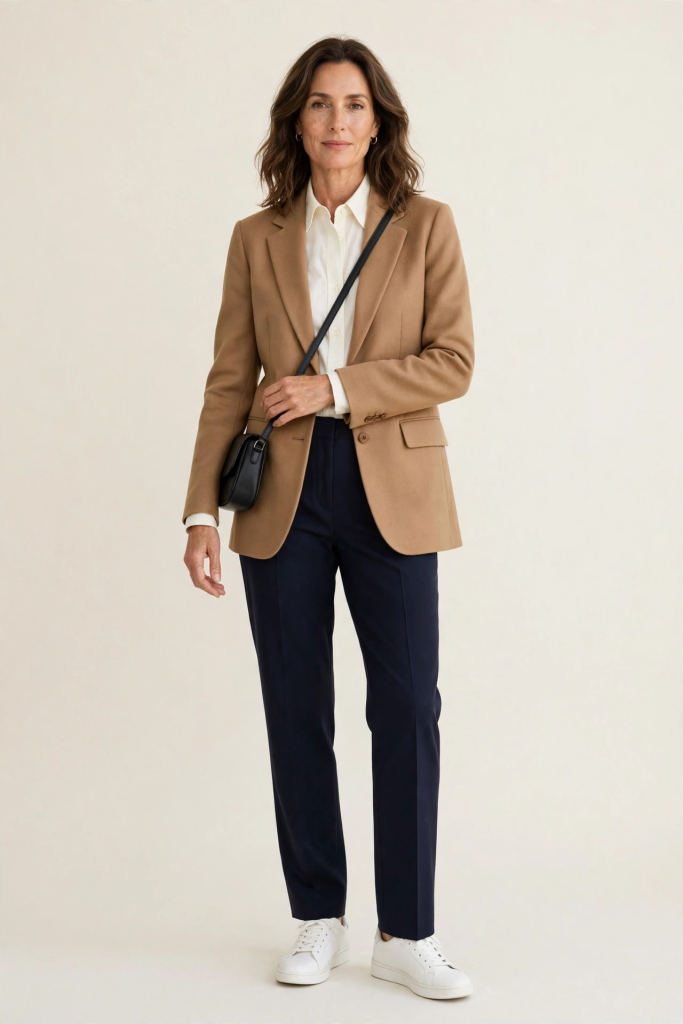
A capsule wardrobe is simply a small collection of pieces that all work together, and it is the natural endpoint of everything in this guide. Start with around twenty to twenty-five pieces, not counting underwear and sleepwear: a mix of tops, bottoms, dresses, outerwear, shoes, and bags in your chosen neutrals. Be honest about what you actually wear — the beautiful blouse that never leaves the hanger is taking up space that a useful one could fill.
Build the capsule gradually rather than all at once. Replace worn-out items with better versions, fill the gaps you notice when getting dressed, and let the collection settle over a few months. When your wardrobe is small and every piece earns its place, getting dressed becomes quick, calm, and genuinely enjoyable, and you will find you reach for your favourites again and again.
Capsule Wardrobe
A practical minimalist capsule for a woman over forty might hold a silk blouse and a cotton shirt in ivory, two fine-knit jumpers in camel and navy, a tailored blazer, a long wool coat, straight-leg trousers in black and navy, a pleated midi skirt, a simple A-line dress, dark straight trousers, pointed flats, ankle boots, white trainers, a leather tote, and a small crossbody. With those pieces alone you can build dozens of outfits, from a polished work look to a relaxed day out, simply by changing the hero piece, the layering, and the shoes.
Style Principles
- Less, but better: Own fewer pieces and choose each one carefully, so everything you wear feels considered rather than crowded.
- Fit before fashion: A simple outfit that fits beautifully always looks better than a trendy one that pulls, gaps, or needs adjusting.
- Neutrals first, accents second: Build your wardrobe on calm neutrals, then add one accent at a time — a scarf, a bag, a pair of shoes.
- One hero per outfit: Let a single piece lead and keep the rest quiet, so the look reads as intentional and polished.
- Comfort is non-negotiable: If you cannot walk, sit, and move easily in an outfit, it does not belong in your wardrobe, no matter how good it looks on the hanger.
FAQ
Is minimalist dressing boring after forty? Not at all — minimalism is about editing, not erasing your personality. The interest comes from beautiful fabrics, excellent fit, interesting textures, and one strong hero piece per outfit.
How many pieces do I need for a minimalist wardrobe? Around twenty to twenty-five core pieces is a comfortable starting point, plus shoes and bags.
Can I wear colour in a minimalist wardrobe? Yes, absolutely. Minimalism is not a ban on colour — it is a habit of using colour deliberately. Keep most of your wardrobe neutral and add one accent shade you love, such as deep burgundy, olive, or teal, in a scarf, a bag, or a single garment.
What fabrics should I look for? Natural fibres and quality blends are your best friends: merino and cashmere knits, silk and Tencel blouses, cotton poplin shirts, and wool-blend trousers. Look for fabrics that drape smoothly, feel soft against the skin, and hold their shape through the day.
How do I make simple outfits look polished rather than plain? Focus on the details that show: a good fit, a clean shoe, a structured bag, and one hero piece. Press or steam your clothes, keep your shoes polished, and finish with a simple belt or a piece of jewellery you love.
Should I get my clothes tailored? If you can, yes — tailoring is one of the best investments in minimalist dressing. Shortening a hem, taking in a waist, or adjusting a sleeve can turn an ordinary high-street piece into something that looks made for you.
Conclusion
Minimalist dressing after forty is not about having less fun with clothes. It is about having more clarity — knowing what suits you, choosing pieces that fit and feel wonderful, and building a wardrobe where everything works together. Add simple layering, shoes and bags you love, and a small capsule that works hard, and getting dressed becomes the easiest part of your day. If this guide gave you a fresh idea for your wardrobe, save this post to your Pinterest board and pin your favourite look so you can find it again whenever you need a little outfit inspiration.