There is a reason the blazer never really goes out of style. It is the one piece that can make jeans look considered, turn a dress into an outfit, and give you a polished feeling without much effort. For women over 40, a good blazer is less about following a trend and more about owning a wardrobe staple that works hard for you — flattering your shape and sharpening your silhouette.
The trick is knowing how to choose and wear one. A blazer that fits beautifully can make you look confident and comfortable, while one that fits badly can pull, gape, and make even the prettiest outfit feel wrong. In this guide, we will walk through everything that matters: finding the right fit, choosing between styles, and building outfit after outfit around the blazers you own.
Finding the Right Blazer Fit for Women Over 40
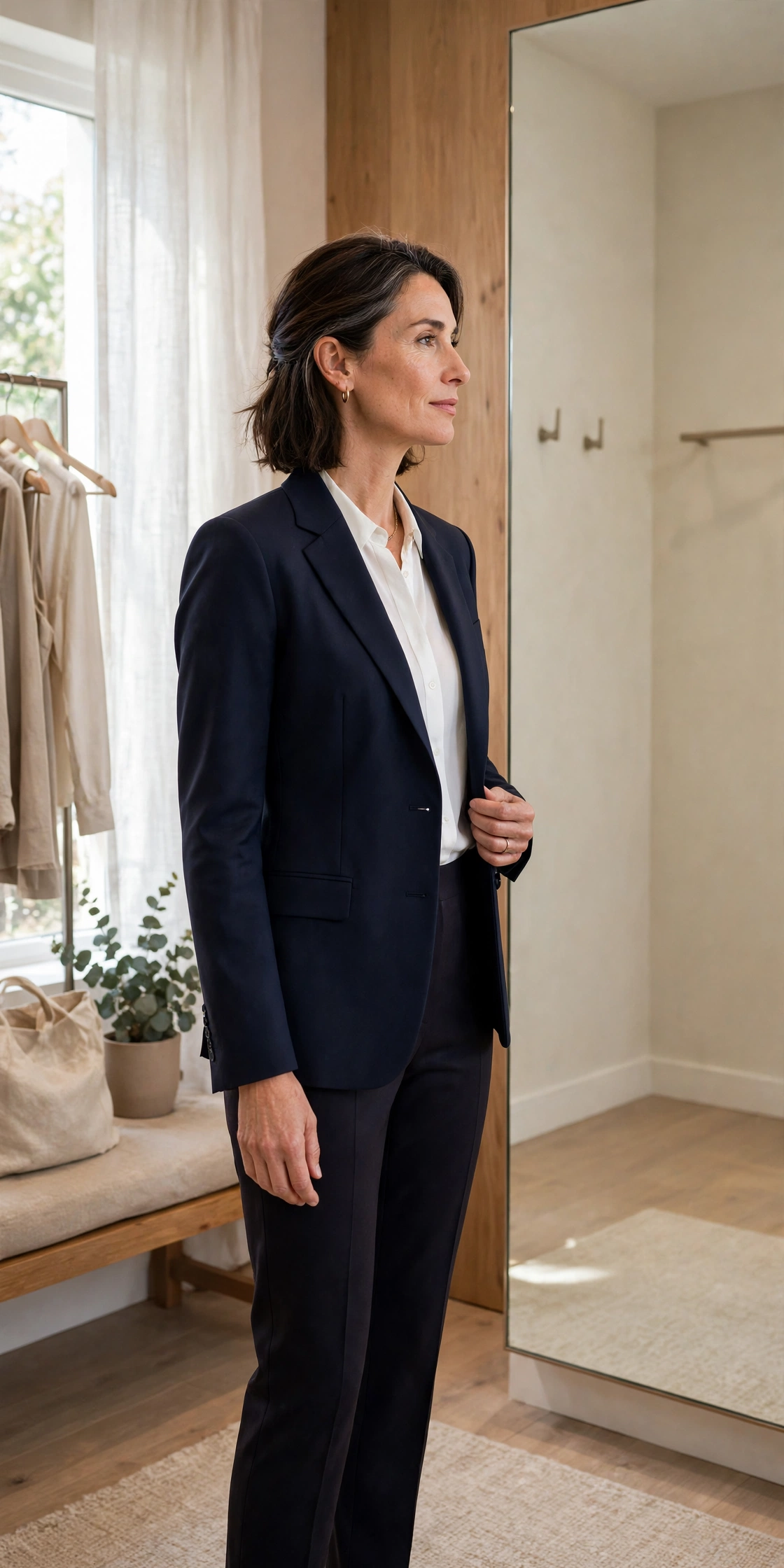
Fit is everything with a blazer, and it starts at the shoulders. The shoulder seam should sit right at the edge of your own shoulder — not drooping down your arm and not pulling inwards. If the shoulders fit, the rest can usually be adjusted by a tailor. A tailor can also narrow the waist, so never dismiss a blazer that is nearly right.
Next, check the button. When you fasten the top button, the fabric should lie flat across your chest without pulling or gaping. If it strains, go up a size rather than forcing it — a slightly roomy blazer can be tailored in at the waist, but one that is too tight cannot be made bigger. The sleeves should end at your wrist bone, showing just a sliver of cuff or wrist. Too-long sleeves make the whole look sloppy, so do not be afraid to have them shortened.
Single vs Double-Breasted and Other Blazer Styles
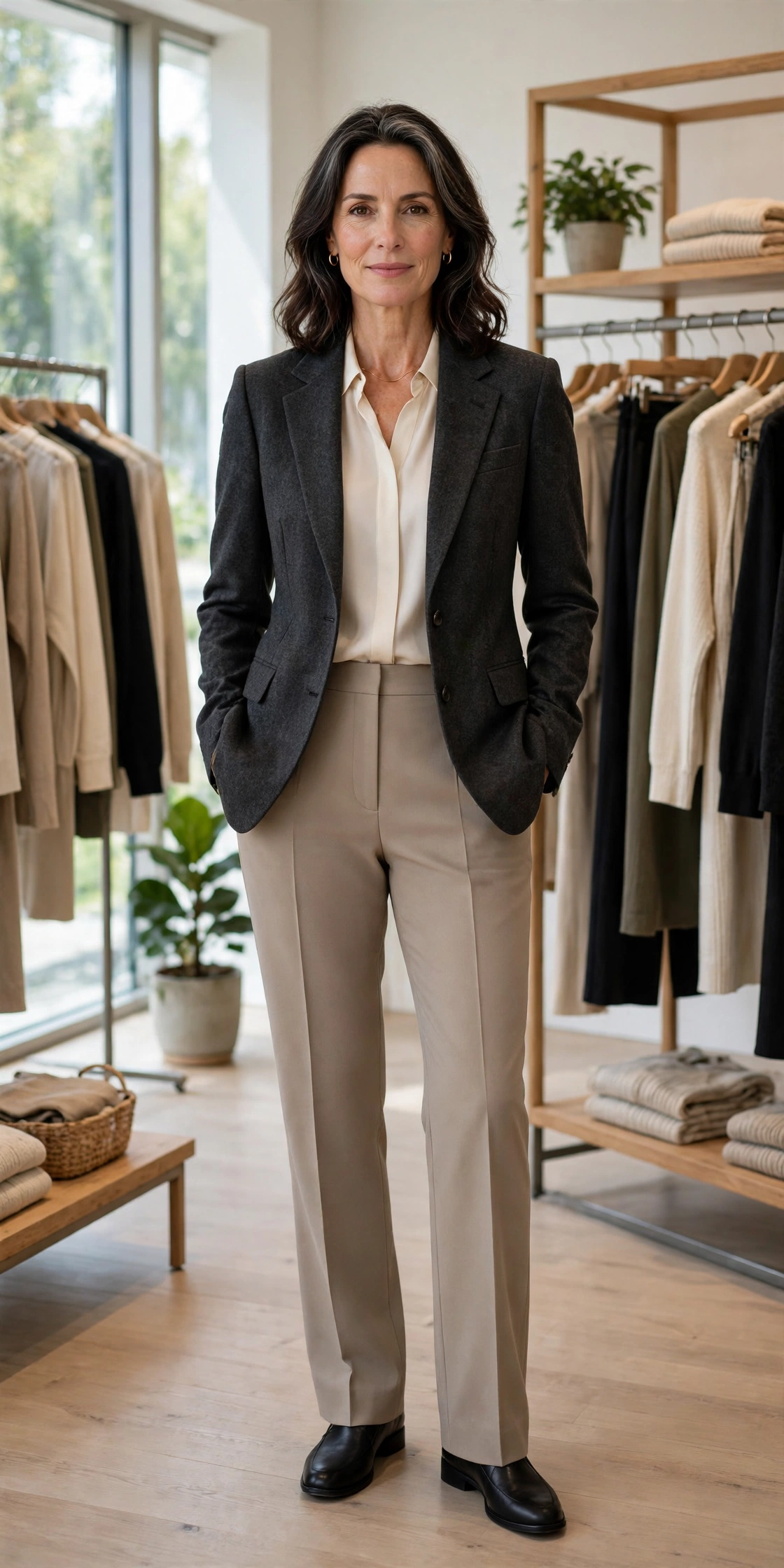
The single-breasted blazer is the workhorse of most wardrobes. With one column of buttons, it creates a long, lean line down the front of the body, which is flattering on almost everyone. A one- or two-button single-breasted blazer is the easiest starting point, pairing with everything from jeans to work trousers.
A double-breasted blazer, with two columns of buttons and a wider overlap, has a more structured, statement feel. It suits taller women and straighter figures, adding shape and presence. If you are petite or fuller through the bust, it can add bulk, so look for a narrower overlap — or keep it open over a simple top.
Beyond buttons, think about the style that suits your life. A relaxed, unstructured blazer in soft fabric feels like a cardigan but looks like you tried — perfect for weekends. A sharp, tailored blazer is your office piece. A boyfriend blazer, worn slightly oversized, looks effortlessly chic over a slim dress or skinny jeans. Own one tailored and one relaxed style, and most situations are covered.
How to Wear a Blazer With Jeans
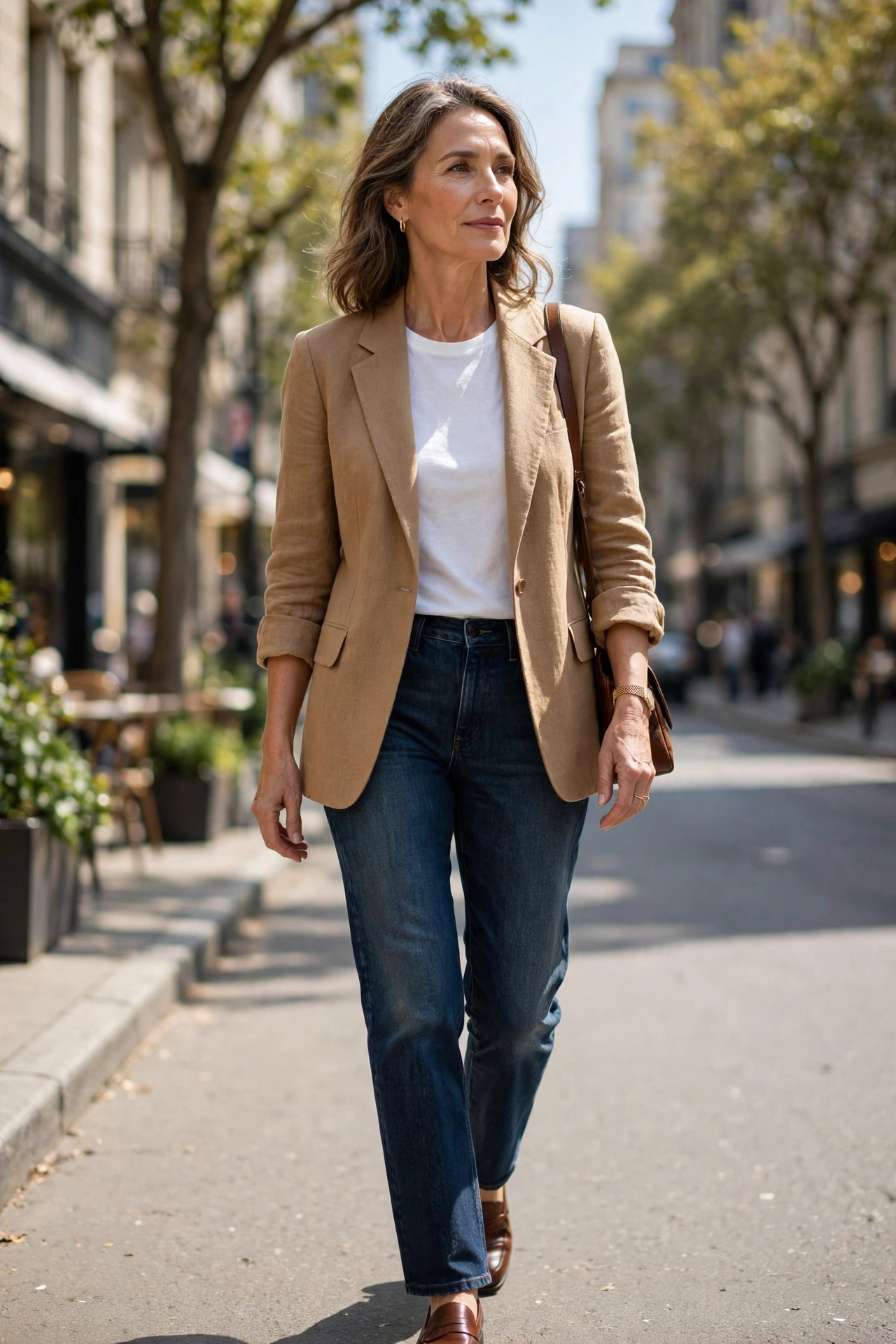
The blazer-and-jeans combination is the easiest way to look polished without feeling dressed up, and it suits women over 40 beautifully. Start with dark-wash straight-leg or slim jeans — the darker denim keeps the outfit feeling smart rather than scruffy. Add a simple top underneath, like a white tee, a fine-knit sweater, or a silk camisole, and throw the blazer over the top. It is that simple, and it works every single time.
Colour is your friend here. A black blazer over blue jeans is classic, but camel, navy, or soft grey adds warmth and interest, while a checked or textured blazer makes the whole outfit feel considered. Roll the sleeves to just below the elbow for a relaxed, lived-in feel, and finish with loafers, white trainers, or heeled ankle boots depending on where you are going. The contrast between the structured blazer and the casual denim is what makes the outfit feel modern and effortless.
How to Wear a Blazer With Dresses and Skirts
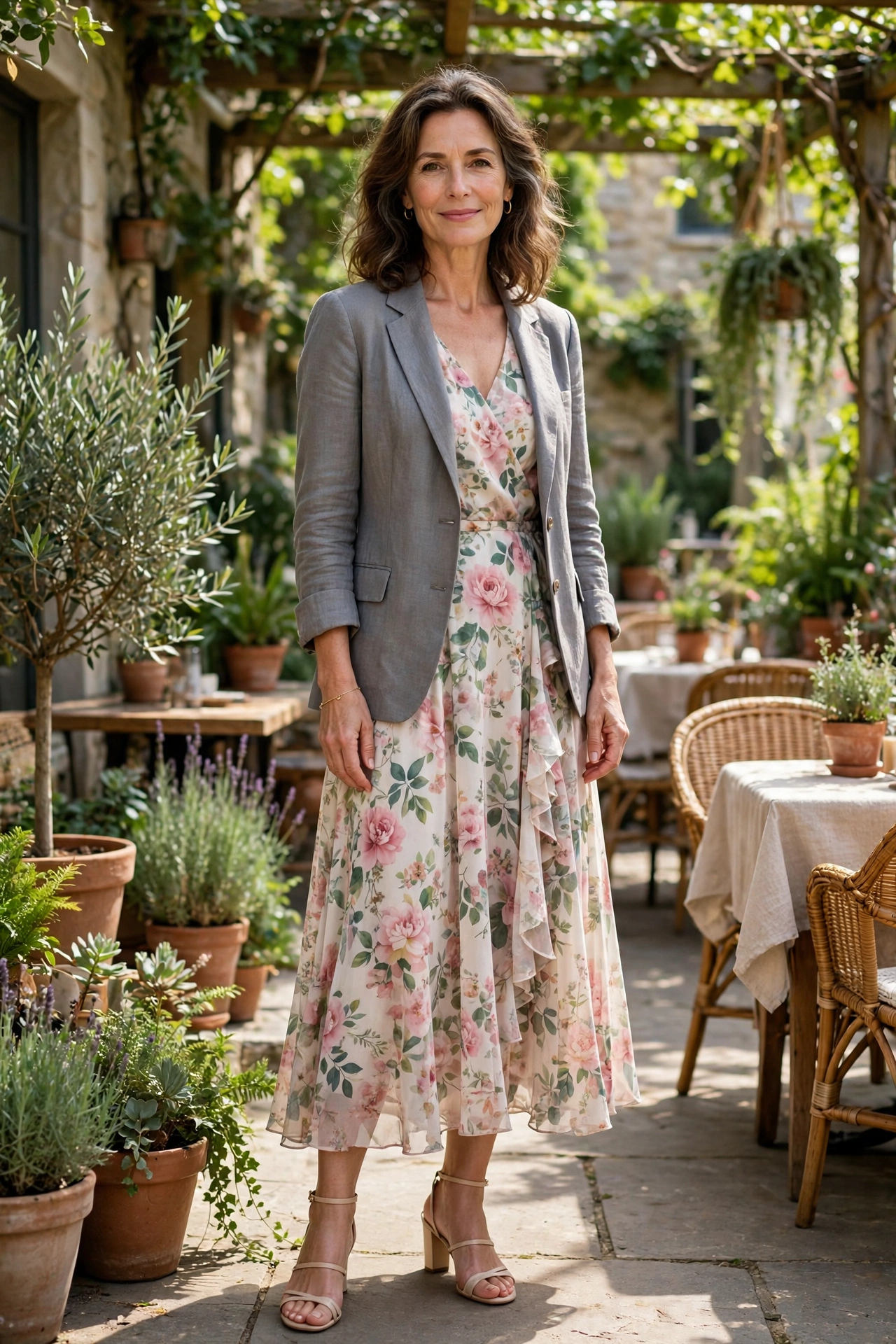
A blazer over a dress is one of the most flattering combinations you can wear. It adds structure to soft, flowing fabrics and turns a simple dress into a complete outfit. A midi dress in a solid colour or a gentle print works beautifully under a blazer — choose one that ends at or just above your hip so the dress can still show its shape, and let the hem peek out below. The result is elegant, feminine, and completely effortless.
Skirts work just as well. Pair a blazer with a pleated midi skirt for a soft, graceful look, or with a pencil skirt for something sharper and more office-ready. The key is contrast: a structured blazer against a flowing skirt creates balance, while matching the blazer and skirt in the same colour or fabric gives you a suit-like outfit that looks incredibly chic. A belt at the waist, worn over the blazer or under it, can define your shape and tie the two pieces together.
Styling a Blazer for Work

For work, a blazer is your best friend. It signals professionalism in an instant and gives you a layer of confidence that a blouse alone rarely provides. It also hides a multitude of sins on busy mornings — throw it over any top and you look ready. The classic work outfit is simple: a tailored blazer, a smart blouse or fine-knit top, and tailored trousers or a pencil skirt. Stick to a neutral palette — navy, charcoal, black, or camel — and let the quality of the fit do the talking.
If your workplace is more relaxed, you can soften the look without losing the polish. Try a blazer in a textured fabric like bouclé, or swap the trousers for dark straight-leg jeans with smart shoes. A blazer in a muted colour, like sage or soft burgundy, adds personality while still looking professional. Keep your accessories simple and neat: a classic watch, small earrings, and a structured bag will always look right.
Layering a Blazer Through the Year
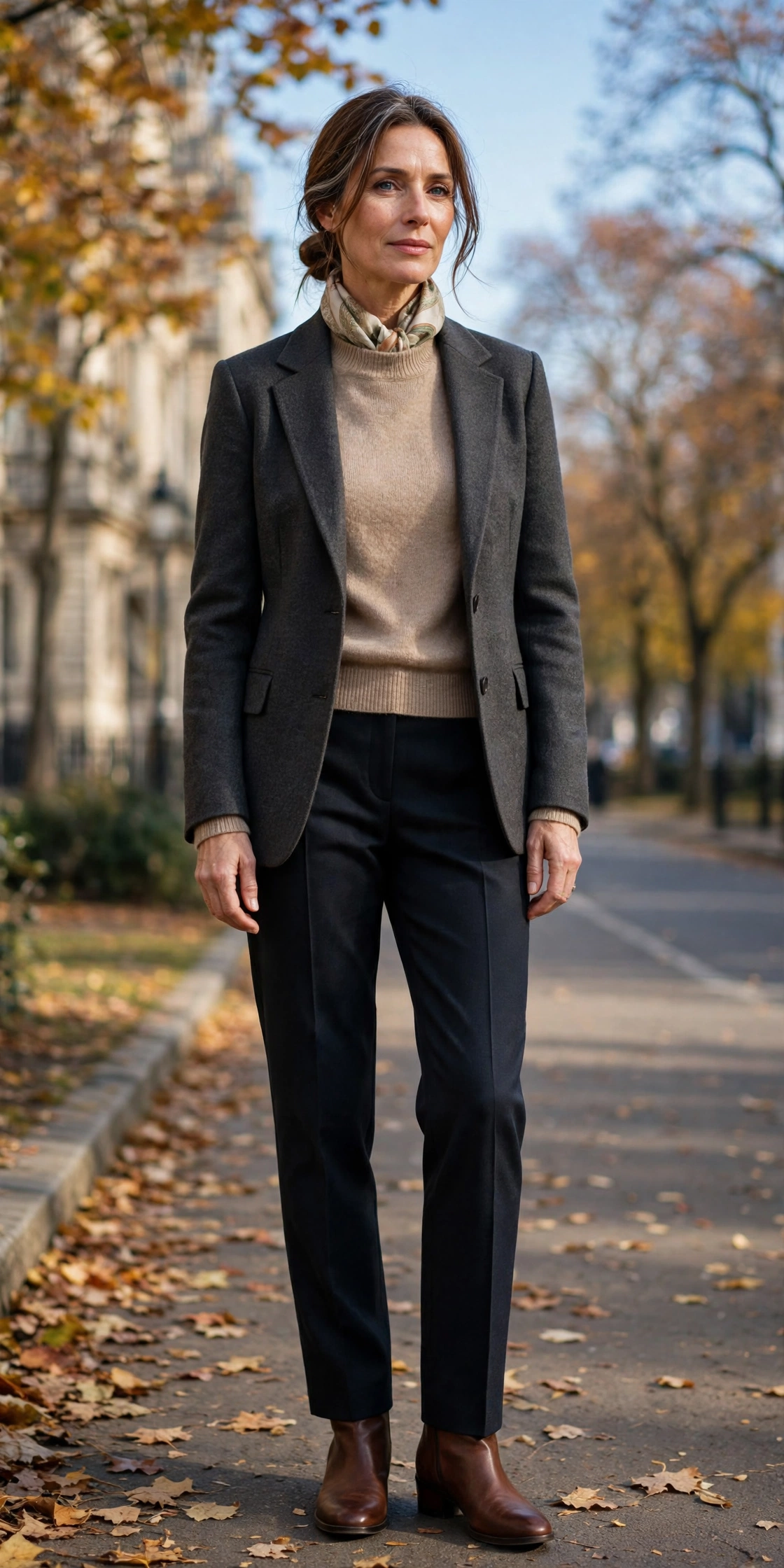
Layering is where a blazer really earns its place in your wardrobe, because it works as a middle layer as well as a top layer. In cooler weather, wear a fine-knit roll-neck or a thin sweater under your blazer — the extra layer adds warmth without bulk, and the high neckline looks wonderfully elegant peeking out from the collar. A silk scarf tucked into the neckline adds both warmth and a touch of colour.
For a more relaxed layered look, try wearing your blazer under a longer coat. A blazer beneath a trench coat or a long wool coat creates a beautiful, structured silhouette, and it means your outfit still looks polished when you take the coat off indoors. Just make sure the blazer is not too bulky underneath — a slim, unlined blazer works best for this kind of layering. A longer coat also protects your blazer from rain and keeps the outfit neat on the journey.
Colours and Fabrics to Choose
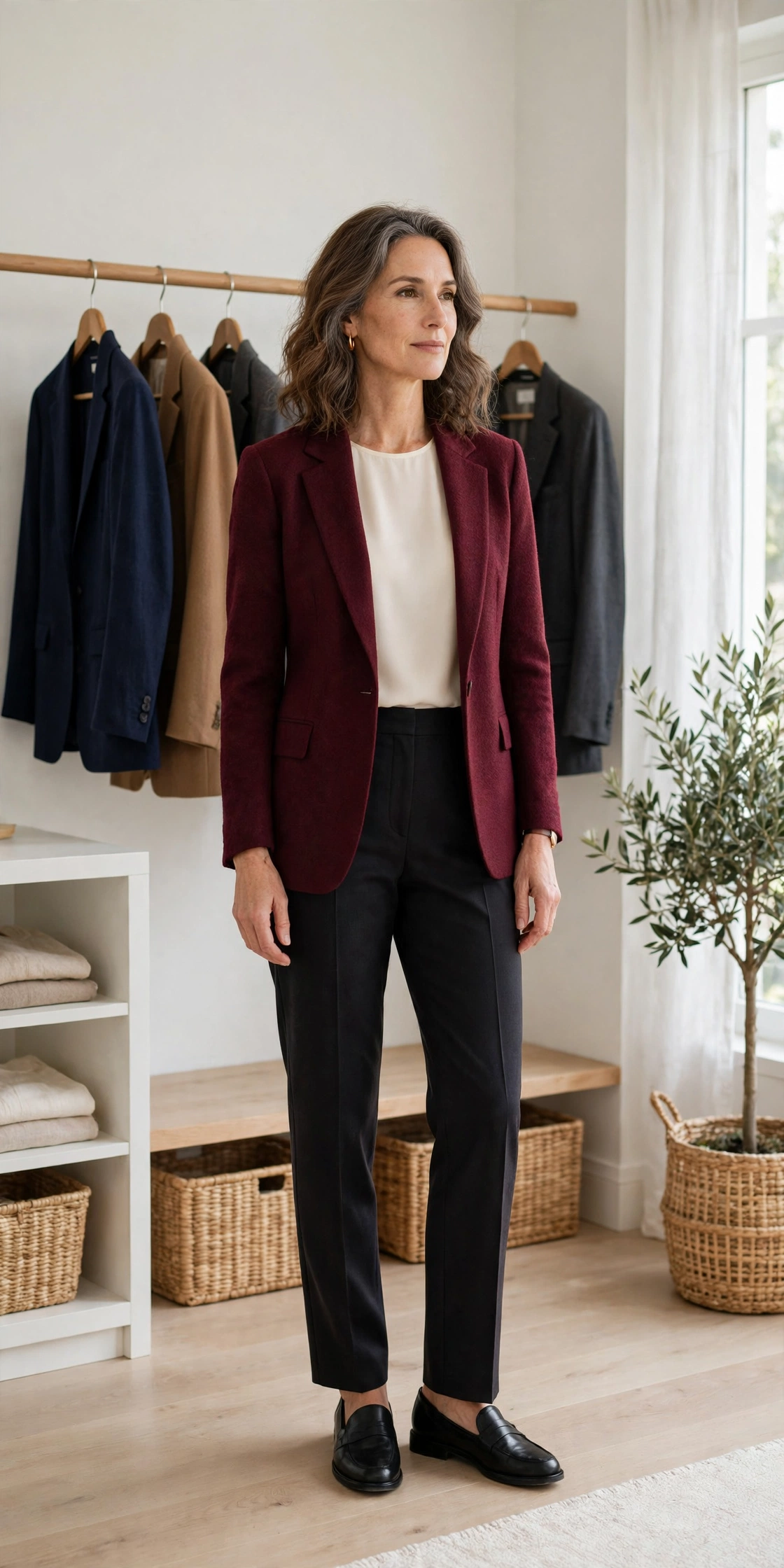
The colour of your blazer makes a bigger difference than you might think. Navy is the most useful blazer colour of all — softer than black, flattering on every skin tone, and easy to pair with almost anything. Charcoal and soft grey are equally versatile, while camel and warm beige add a lovely warmth, especially if you have warm undertones in your skin. Black remains a classic, but a softer black or a very dark navy often looks more flattering close to the face.
Once you have your neutrals covered, consider adding one blazer in a colour you love. A deep burgundy, a forest green, or a soft dusty blue can lift your whole wardrobe, because it turns a plain outfit into something special with a single piece. Choose a colour that makes your face light up when you try it on — if you smile when you see yourself in the mirror, that is the right one.
Common Blazer Mistakes to Avoid
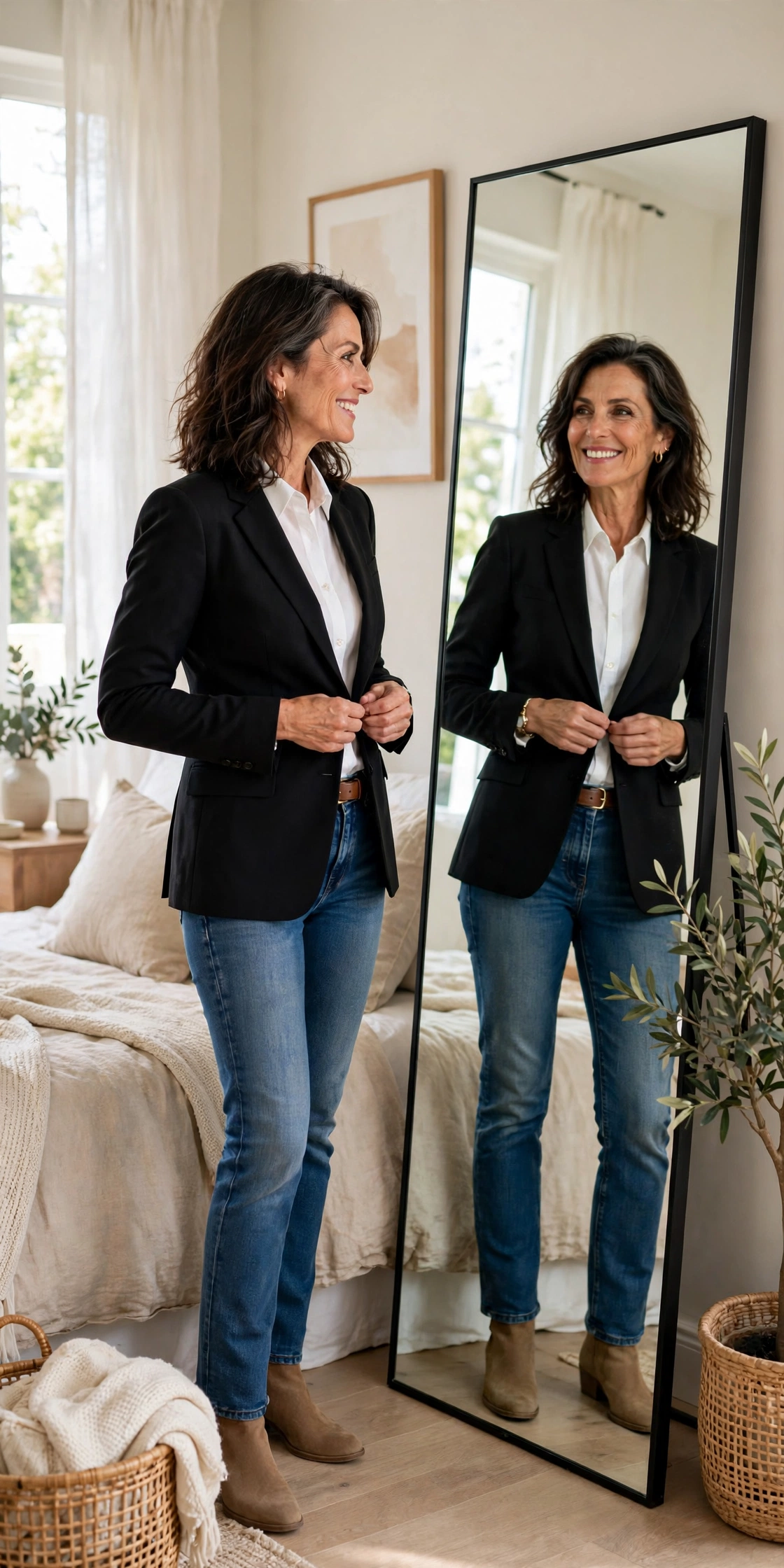
The most common blazer mistake is wearing the wrong size. A blazer that is too tight will pull at the button and crease across the back, while one that is too big will swallow your shape and make you look untidy. If you are between sizes, go up and have it tailored — a good tailor can take in the waist, shorten the sleeves, and transform an almost-right blazer into a perfect one for very little cost.
Another mistake is buttoning every button. A blazer is designed to be worn with only the top button fastened — or, on a two-button blazer, the top one only. Fastening the bottom button pulls the fabric awkwardly and breaks the line of the blazer. And when you sit down, unbutton it altogether so the fabric can fall naturally. These small habits make a surprising difference to how polished you look. It is a small detail, but it is the difference between a blazer that looks made for you.
Capsule Wardrobe
A blazer becomes even more powerful at the centre of a small capsule wardrobe. Start with one tailored blazer in navy or charcoal and one relaxed blazer in camel or grey. Add a white shirt, a silk camisole, a fine-knit roll-neck, dark straight-leg jeans, tailored black trousers, and one midi dress in a solid colour. With just these pieces, you can create more than a dozen outfits: blazer and jeans for the weekend, blazer and trousers for work, blazer over the dress for dinner, and the roll-neck under the blazer. Add loafers, ankle boots, and simple jewellery, and your capsule is complete.
Style Principles
- Fit comes first: shoulders that sit right and a button that closes without pulling will flatter you more than any trend ever will.
- Balance structure with softness: pair a tailored blazer with flowing fabrics, and a relaxed blazer with slim, neat pieces underneath.
- Keep your palette simple: one neutral blazer plus one colour you love gives you endless outfits without a crowded closet.
- Define your waist: a tuck, a half-tuck, or a belt keeps a blazer outfit from looking boxy and shapeless.
- Wear it often: a blazer earns its place by being worn weekly, not saved for special occasions — the more you wear it, the better it looks on you.
FAQ
Can women over 40 wear a blazer with jeans?
Absolutely — it is one of the most flattering combinations you can wear. Choose dark-wash straight-leg or slim jeans, a simple top, and a well-fitting blazer.
What length blazer is most flattering after 40?
A blazer ending at your hip bone is the most versatile length for most women, because it creates a clean line without cutting your figure in half.
Should I wear single-breasted or double-breasted?
Single-breasted blazers suit almost everyone, because the single column of buttons creates a long, lean line.
How do I stop my blazer from looking too formal?
Roll the sleeves to just below the elbow, pair it with jeans or trainers, and choose a relaxed fabric like linen or a soft knit.
What should I wear under a blazer?
A white shirt, a silk camisole, a fine-knit roll-neck, or a simple tee all work beautifully under a blazer. Choose something smooth and fitted so it layers neatly without bunching.
How many blazers do I actually need?
Two good blazers will cover most of your life: one tailored blazer in a neutral like navy or charcoal for work, and one relaxed blazer in camel or grey for everyday wear.
Conclusion
A blazer is one of the simplest ways to feel polished and put together — and once you know how to choose the right fit and style it your way, it becomes the piece you reach for again and again. Start with a blazer that fits beautifully, build your outfits around it, and wear it everywhere.
If this guide helped you, save it to your Pinterest board so you can come back whenever you need outfit inspiration — and pin your favourite blazer look to share it with a friend too.