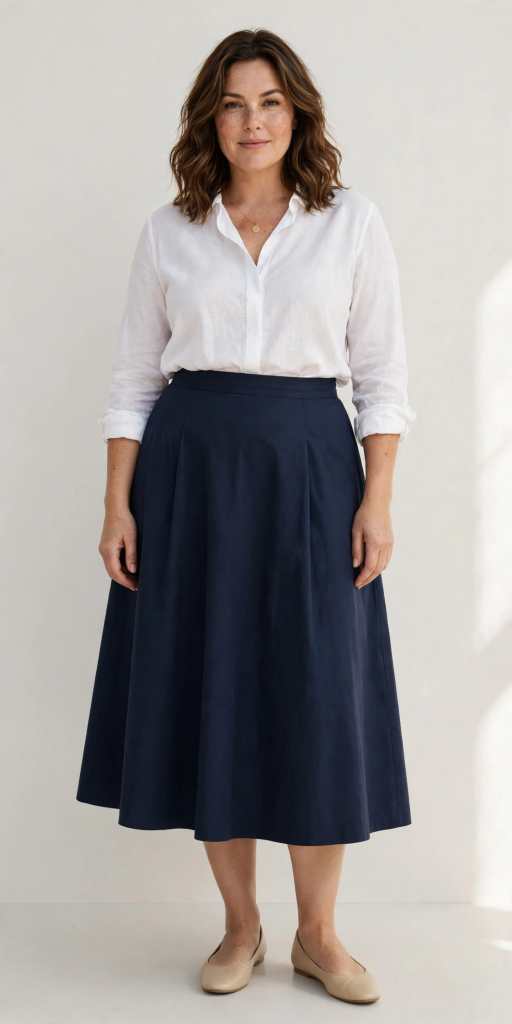
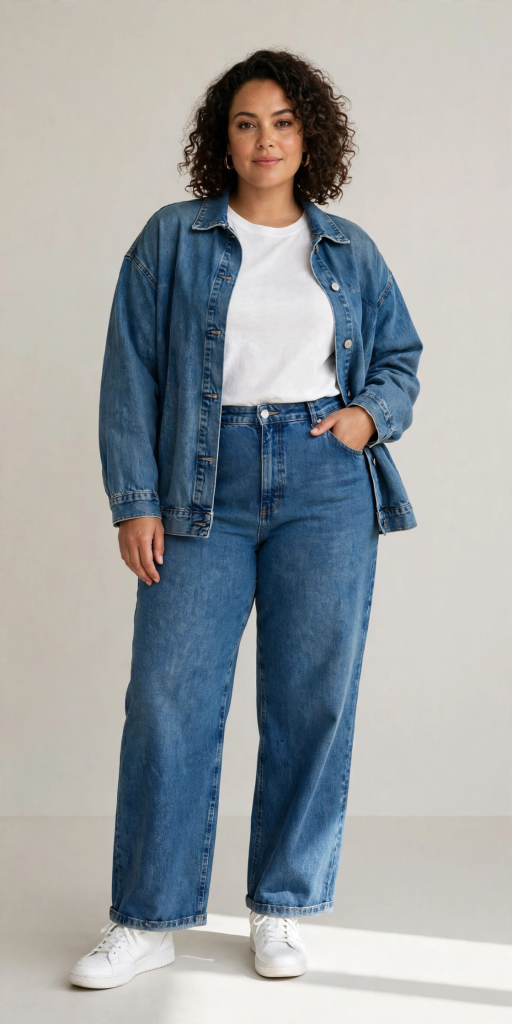
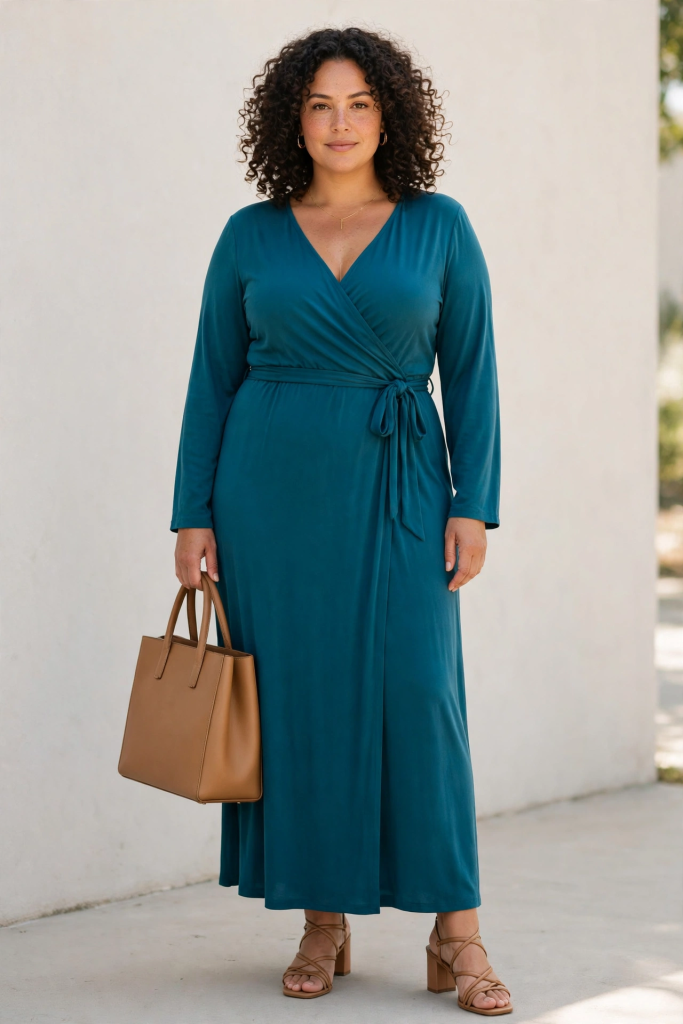
There is a reason high-waisted retro pants keep coming back. Done well, they do something few other trousers manage: they hold you in gently at the waist, give your legs a long, clean line, and pair with almost everything already hanging in your closet. The wide waistband, the pleats, the slightly longer rise — these are not costume details. They are practical design choices that happen to look wonderful on a plus-size figure.
Shopping for them, though, is a different story. A pair that looks perfect on a model can gap at the back waist, pull across the hips, or end at an awkward spot on the ankle once you try it on. The difference between a pair you reach for every week and a pair that sits unworn is rarely the brand or the price — it is a handful of fit details that are easy to check before you buy.
Rise and Waistband: Where the Pants Should Actually Sit
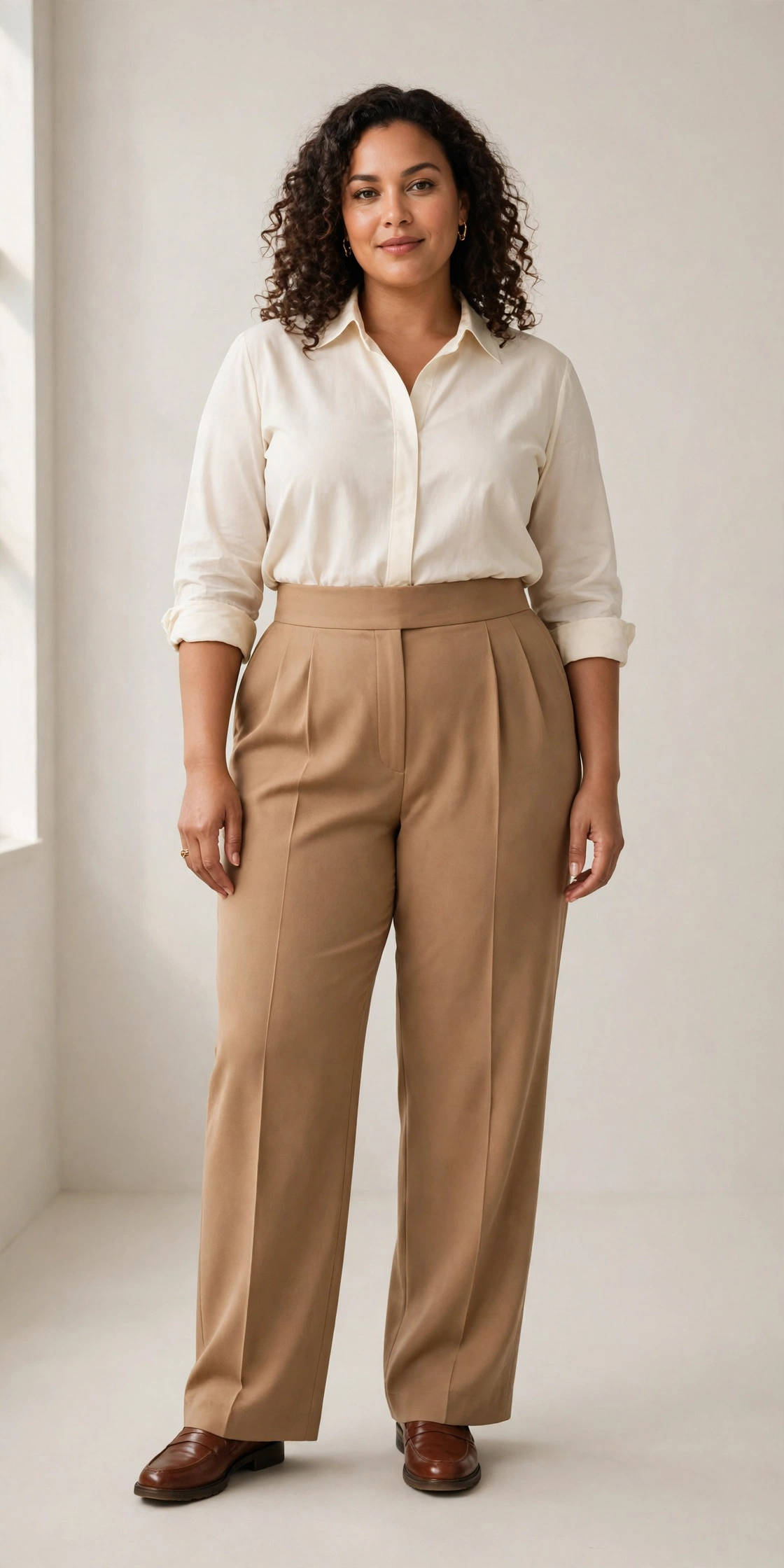
A true high rise sits at or just above your natural waist, roughly at your belly button or a little higher. Before you order, check the front-rise measurement in the size chart rather than trusting the word “high-waisted” in the product name, because brands use that label very differently. A rise of 11 to 13 inches usually lands in the right zone for most plus-size bodies, but your torso length matters more than any chart, so measure from your crotch seam to your natural waist while standing straight.
The waistband itself deserves just as much attention as the rise. Look for a wide, firm waistband — at least two inches — with a bit of structure to it, because a narrow elastic band tends to roll and dig in by midday. A contoured waistband, one that curves slightly higher at the back, is a small detail that solves the most common complaint of all: gaping at the back when you sit down. If you carry more softness around your middle, a waistband with a hidden bit of stretch or a side closure will feel far more comfortable than a rigid flat front. Try sitting, bending, and walking when you try a pair on, and notice whether the waistband stays put or starts migrating. A good pair should feel secure without you having to think about it.
Fabrics That Drape Instead of Cling
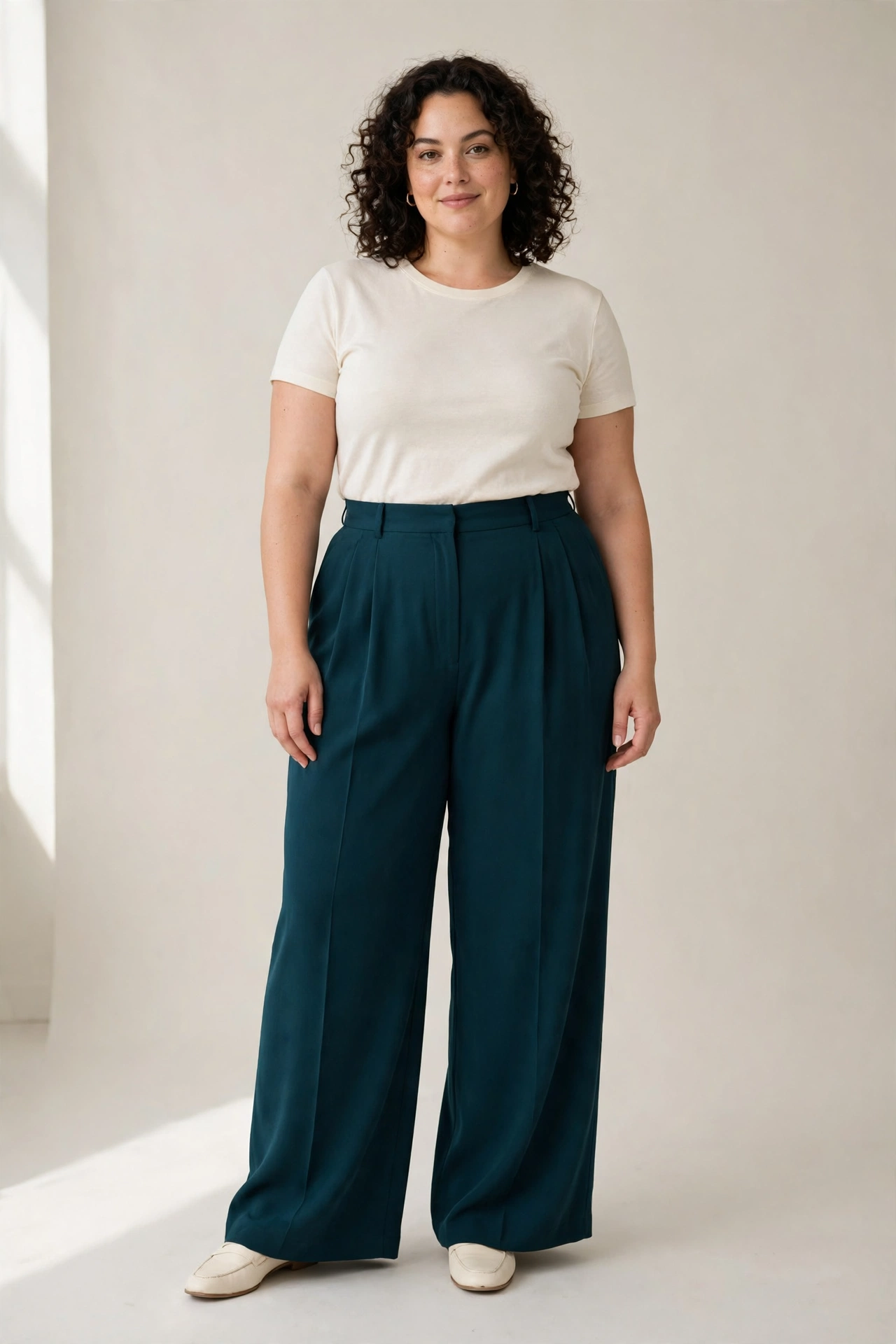
Fabric is where a pair of retro pants either earns its keep or lets you down. The goal is drape: fabric that hangs in a smooth line from the waist and skims over the hips and thighs without clinging to every curve or adding bulk. Wool crepe, rayon blends, Tencel, and mid-weight viscose are all strong choices, because they move with you and keep their shape through a long day. A touch of stretch, around two to five percent elastane, is usually a plus, giving the pants recovery so the knees do not bag out by evening.
Be cautious with very stiff cotton twill or heavy polyester, which can stand away from the body and add visual width, and with thin, shiny fabrics that highlight rather than smooth. If you are shopping online, read the fabric composition and look for words like “drapey,” “fluid,” or “soft hand.” When the pants arrive, hold the fabric up and let it hang: it should cascade rather than hold a shape. Also check how the fabric behaves at the thigh when you walk. If it pulls into diagonal lines across the front, the cut or the fabric weight is wrong for you, no matter how pretty the colour is.
Leg Shapes, From Wide-Leg to Tapered
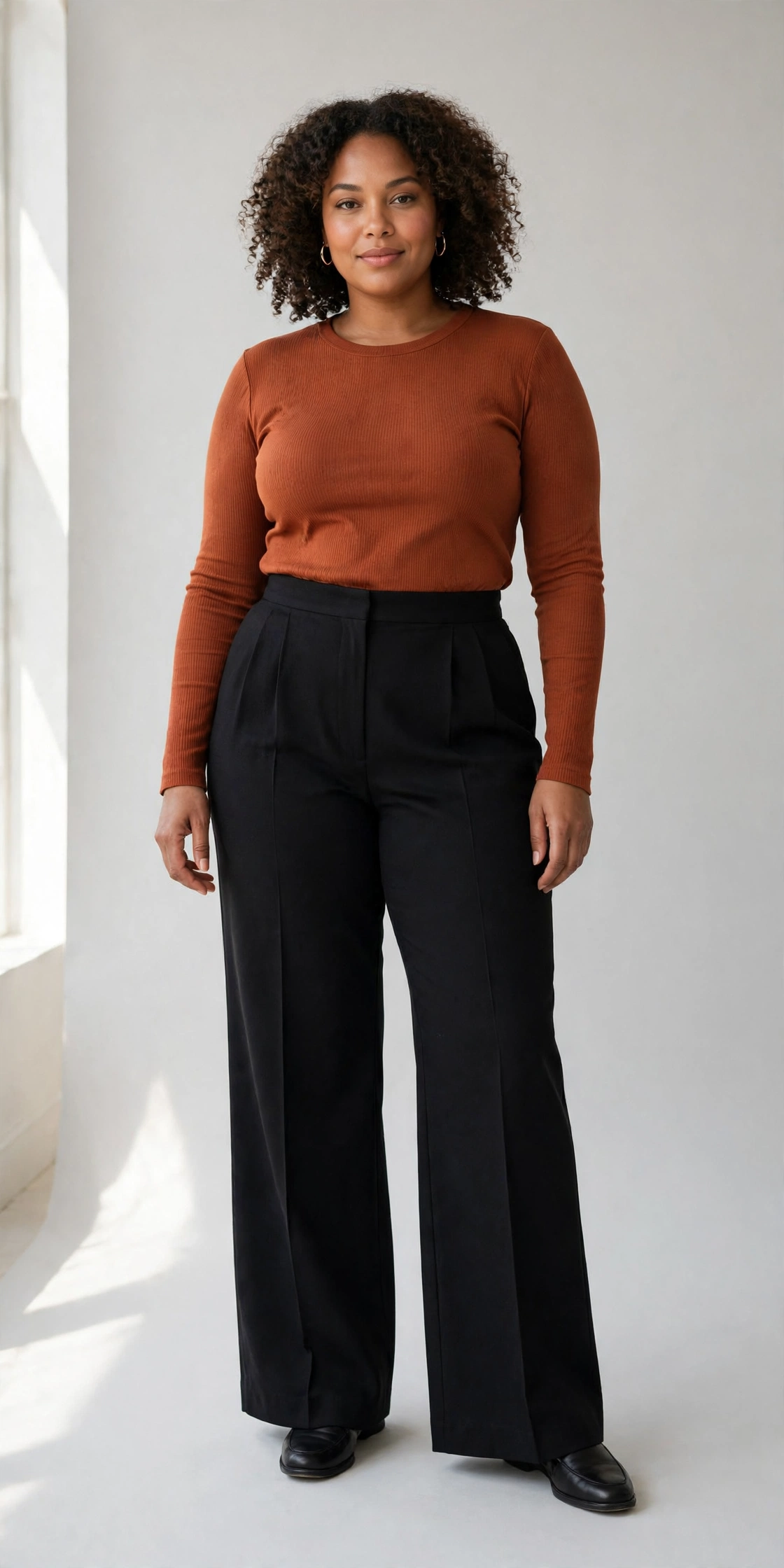
Retro pants come in several leg shapes, and each one changes the whole outfit. Wide-leg styles are the most forgiving and the most dramatic: they balance the hips, create a long line, and look wonderful with a tucked-in blouse. The trick is proportion. A wide leg should start widening from the hip or just below it, not from the knee, or the silhouette can look bottom-heavy. Straight-leg retro trousers are the most versatile of the bunch and the easiest to wear every day, sitting neatly over loafers, block heels, or smart sneakers.
Tapered and cigarette styles are the dressiest option, but they demand a careful fit through the calf and ankle — too tight and they pull, too loose and they lose their shape. If you are petite as well as plus-size, a cropped or ankle-length version of any of these shapes can work beautifully, as long as the hem ends at the slimmest part of your ankle rather than mid-calf. Whatever shape you choose, check the hem in a mirror from the side, not just the front. A clean, even hang with no bunching at the shoe is the sign of a leg shape that suits you.
Waist-to-Hip Ratio and Sizing: Reading the Chart Before You Order
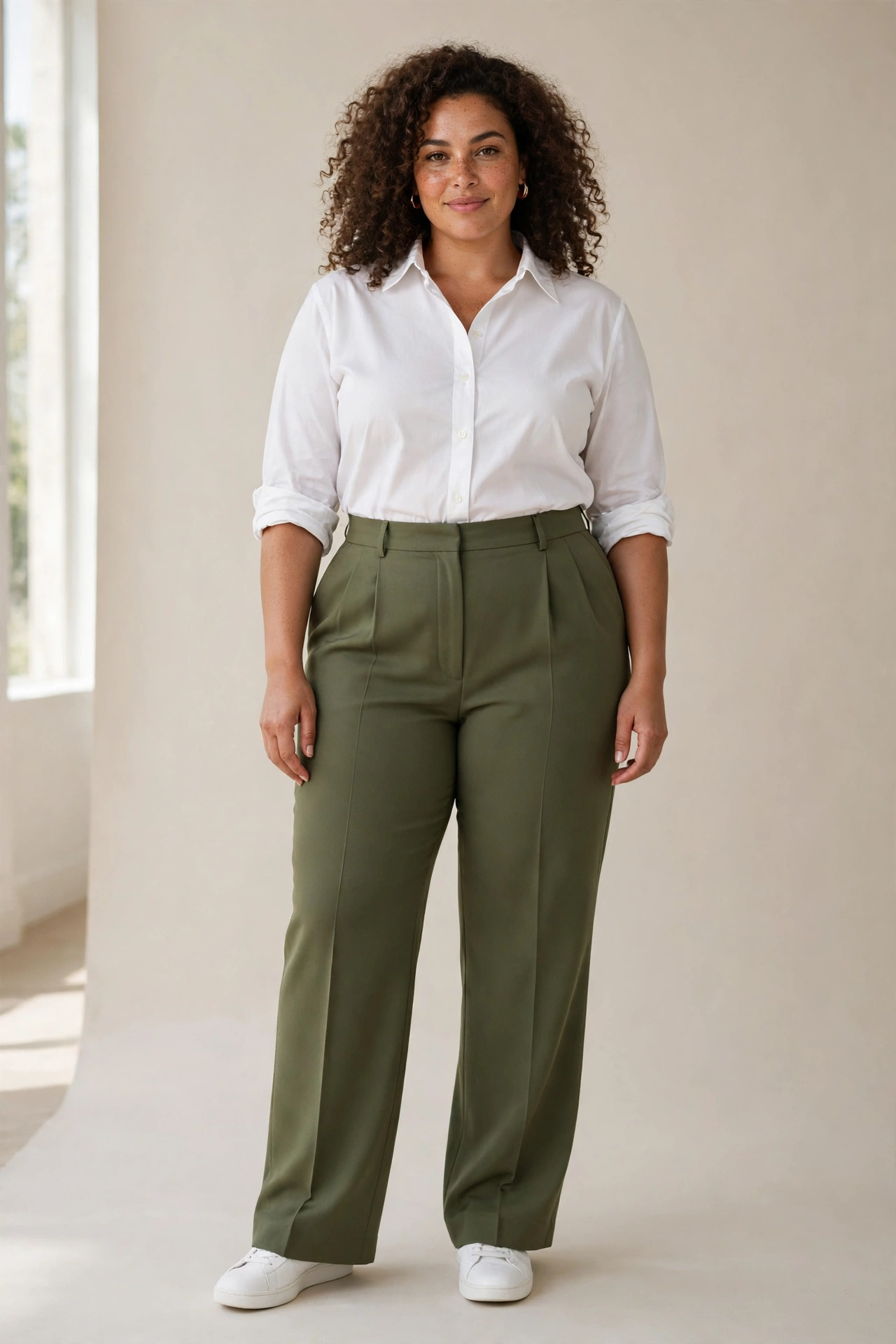
Most sizing frustration with retro pants comes down to one thing: your waist and your hips rarely belong to the same size on a brand’s chart. If your hips are two or more sizes larger than your waist, ordering your hip size and having the waist taken in is almost always the better move, since it is far easier to tailor a waistband than to let out a hip seam. Always measure yourself with a soft tape before ordering: natural waist, fullest part of the hip, and inseam, all while standing relaxed.
Compare those three numbers to the brand’s own garment measurements, not to a generic size chart, and pay attention to whether the brand lists the hip measurement at all. Brands that design specifically for plus-size bodies usually cut with a real waist-to-hip difference built in, while brands that simply scale up a straight-size pattern tend to run small in the hip and loose in the waist. Reviews from shoppers with a similar shape are worth their weight in gold here, especially when they mention whether they sized up or had alterations done. The right pair is the one that fits your three measurements, whatever the tag says.
Details Worth Checking Before You Buy
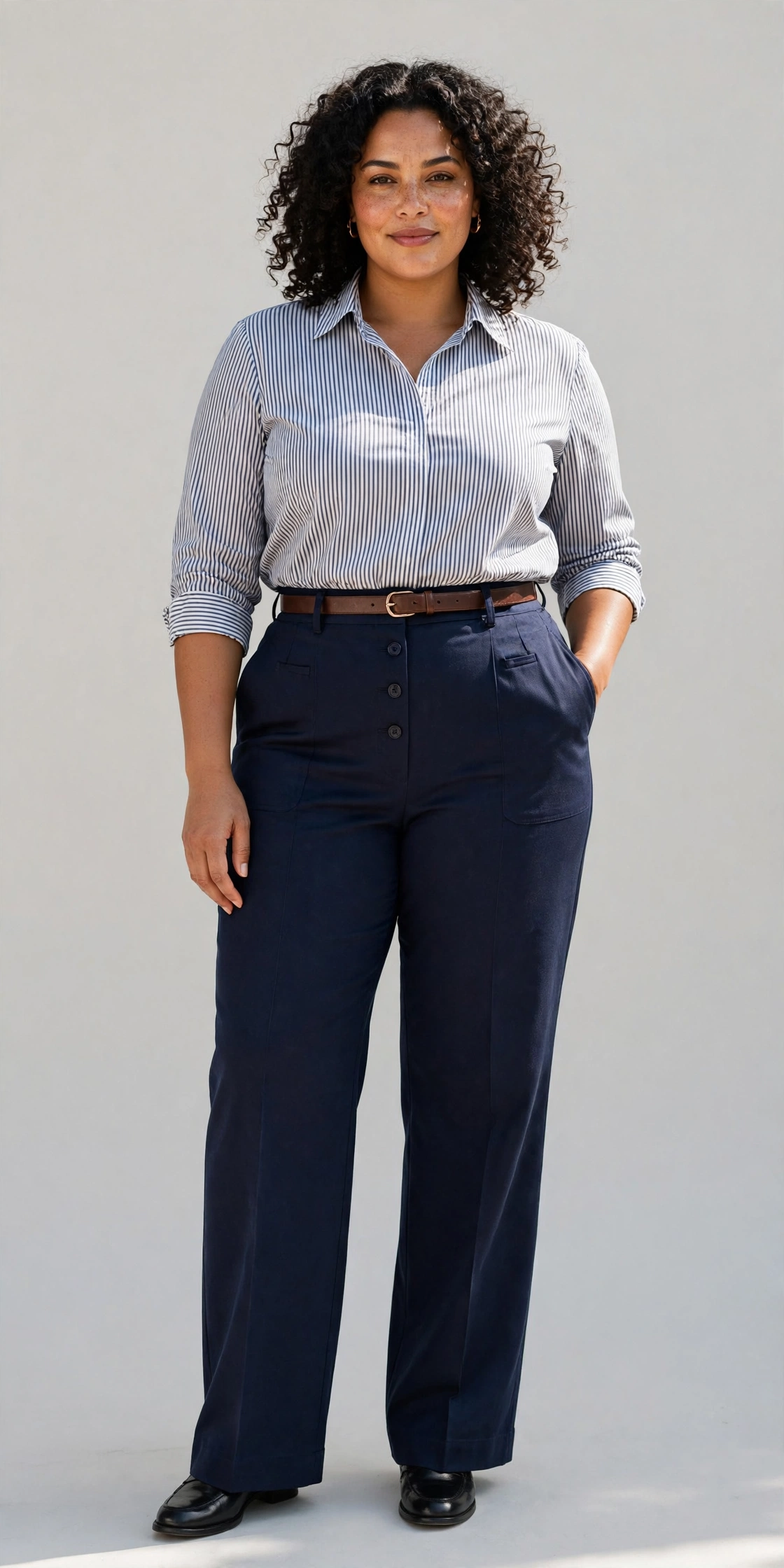
The small details on a pair of retro pants are what separate a thoughtful design from a careless one. Pockets are first on the list: deep, functional side pockets that lie flat are a gift, while shallow or fake pockets that gape open will spoil the line of the trousers and add bulk exactly where you do not want it. Look at the closure, too. A sturdy button fly or a hidden hook-and-bar with a flat front tends to sit smoother than a long exposed zip that can ripple across the stomach.
Check the pleats if the style has them. Single soft pleats that open as you move are flattering and comfortable; stiff, stitched-down pleats that stay closed can add width across the front. Turn the pants inside out, or zoom in on the product photos, and look at the finishing: lined waistbands, reinforced belt loops, and neatly finished seams all signal a pair built to last. If a listing hides these details in its photos, that is usually a sign to keep looking.
Styling One Pair Many Different Ways
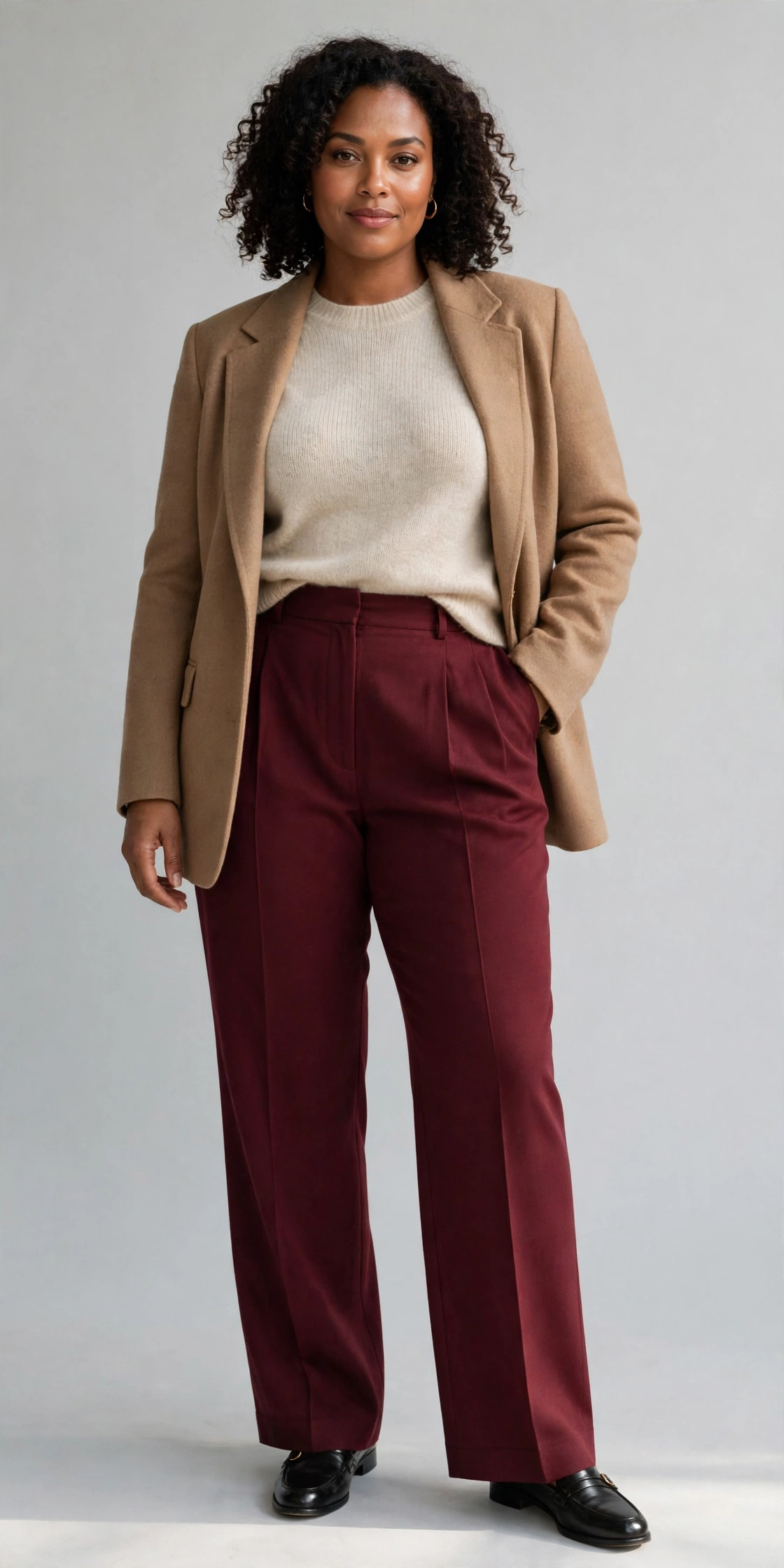
The best test of a pair of retro pants is how many outfits they can carry. Start with the simplest combination: the pants, a fitted top tucked in, and loafers or low block heels. That one formula alone covers workdays, lunches, and evenings out, because the high waist does the visual work of defining your shape. From there, a soft knit tucked in at the front gives a more relaxed feel, while a structured blazer worn open over the same pants instantly sharpens the whole look for a smarter occasion.
Accessories do a lot of quiet work here. A slim belt in a contrasting tone draws the eye to the waistband, a long necklace lengthens the torso, and pointed flats or heeled boots extend the leg line. Keep the top half slightly more fitted than the bottom half, and let the pants be the star rather than competing with a loud print on top. When one pair can move from a relaxed daytime look to a polished evening look with just a change of top and shoes, you have found a true wardrobe workhorse.
Capsule Wardrobe
A pair of high-waisted retro pants becomes even more useful when the rest of your closet is built around it. Think of three tops that tuck in cleanly: a crisp white shirt, a soft knit in a neutral tone, and a blouse in a colour you love. Add one structured layer, like a blazer or a long cardigan, one pair of comfortable block heels and one pair of loafers, and a simple belt. That small set covers most occasions without a crowded closet. Choose a trouser colour that plays well with what you already own — black, navy, camel, or olive are all easy anchors.
Style Principles
- Fit first, label second. Your measurements matter more than the size on the tag, so shop by numbers and ignore the letter on the label.
- Let the waistband do the work. A wide, well-placed waistband defines your shape, so keep tops tucked in and let it show.
- Balance the silhouette. Pair a fuller leg with a more fitted top, and a slimmer leg with a slightly looser layer, so nothing overwhelms the rest.
- Choose drape over stiffness. Fabric that falls smoothly will flatter you far more than fabric that holds its own shape.
- Buy for your real life. The best pair is the one you can sit, walk, and live in comfortably, not the one that only looks good standing still.
FAQ
What rise counts as high-waisted for plus-size pants?
A front rise of roughly 11 to 13 inches usually sits at or just above the natural waist on most plus-size bodies. Always check the brand’s own rise measurement, since the term is used loosely across brands.
Should I order my waist size or my hip size?
Order for your hips if the two differ, and have the waistband taken in if needed. It is much easier for a tailor to adjust a waistband than to add room through the hips and seat.
Are pleats flattering on a plus-size figure?
Soft, single pleats that open when you move can be very flattering, because they give room across the stomach without adding bulk. Avoid stiff, stitched-down pleats that stay closed and push the fabric outward.
What shoes work best with high-waisted retro pants?
Loafers, block heels, and pointed flats all work beautifully, since the high waist already lengthens the leg. With wide-leg styles, a slight heel helps the hem hang cleanly.
How do I stop the waistband from gaping at the back?
Look for a contoured waistband that curves higher at the back, or choose a style with a bit of stretch in the band. A slim belt can also close a small gap, and a tailor can adjust a larger one quickly and cheaply.
Can one pair really work for both casual and dressy occasions?
Yes. Change the top and the shoes — a knit and loafers for a relaxed day, a blouse, blazer, and heels for something smarter — and the same pants carry both looks with ease.
Conclusion
Shopping for plus-size high-waisted retro pants gets much simpler once you know what to check: a rise that truly reaches your natural waist, a wide waistband that stays put, fabric with a real drape, a leg shape that suits your proportions, and details built to last. Keep your measurements handy, read the size chart before you order, and try every pair sitting down as well as standing up. If this guide helped you, save it to your Pinterest board so you have the checklist ready next time you shop, and pin it for a friend who is hunting for her perfect pair too.