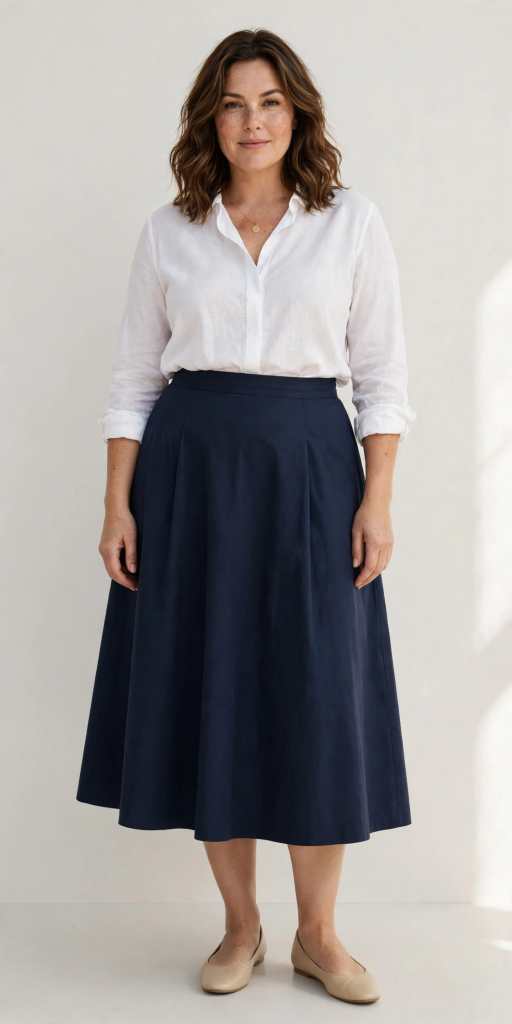
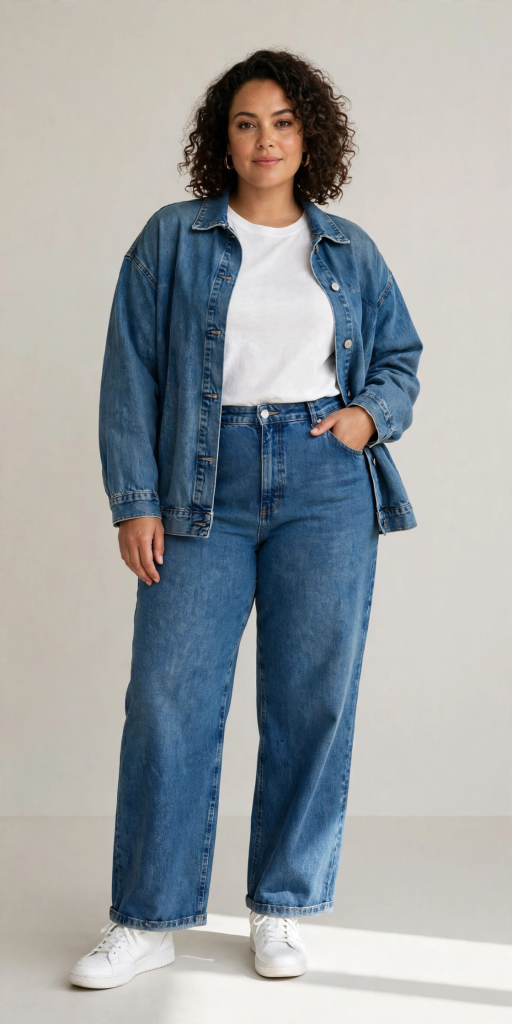
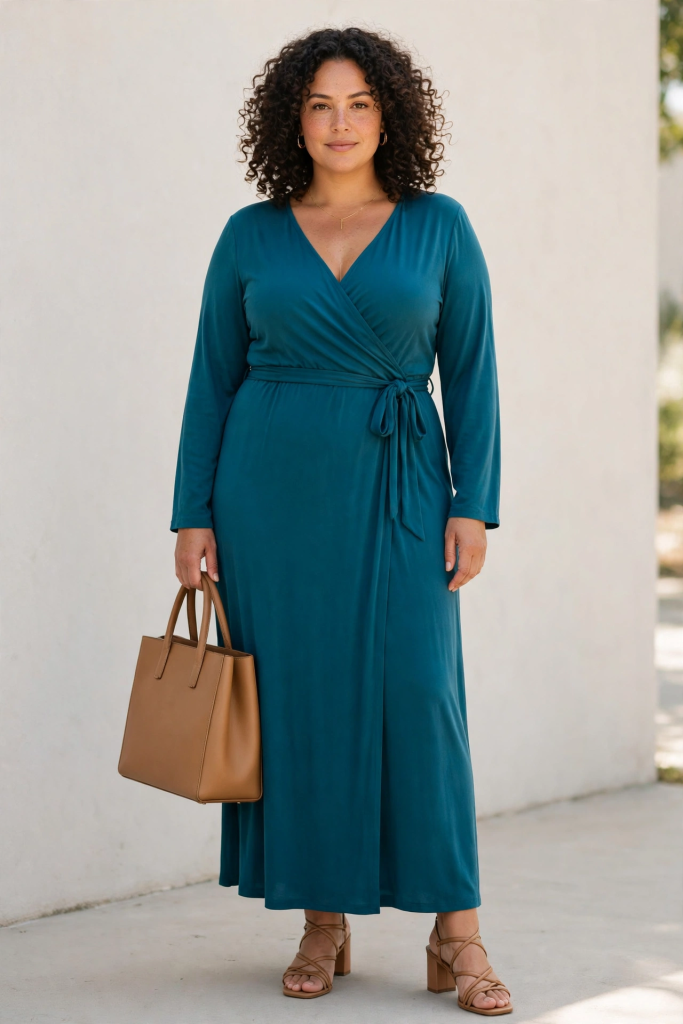
There is something deeply reassuring about vintage style. Every decade left behind silhouettes made for real women with curves, soft waists, and strong shoulders. Retro fashion is not about dressing up in a costume or squeezing into someone else’s idea of the past. It is about borrowing the best ideas from each era and making them work for your body right now.
The beauty of looking back is that you get to choose: the sparkle of the 1920s, the polish of the 1950s, the freedom of the 1970s, the bold colour of the 1980s. Each idea below comes with honest fit tips.
1. 1920s Flapper-Inspired Fringe Dress
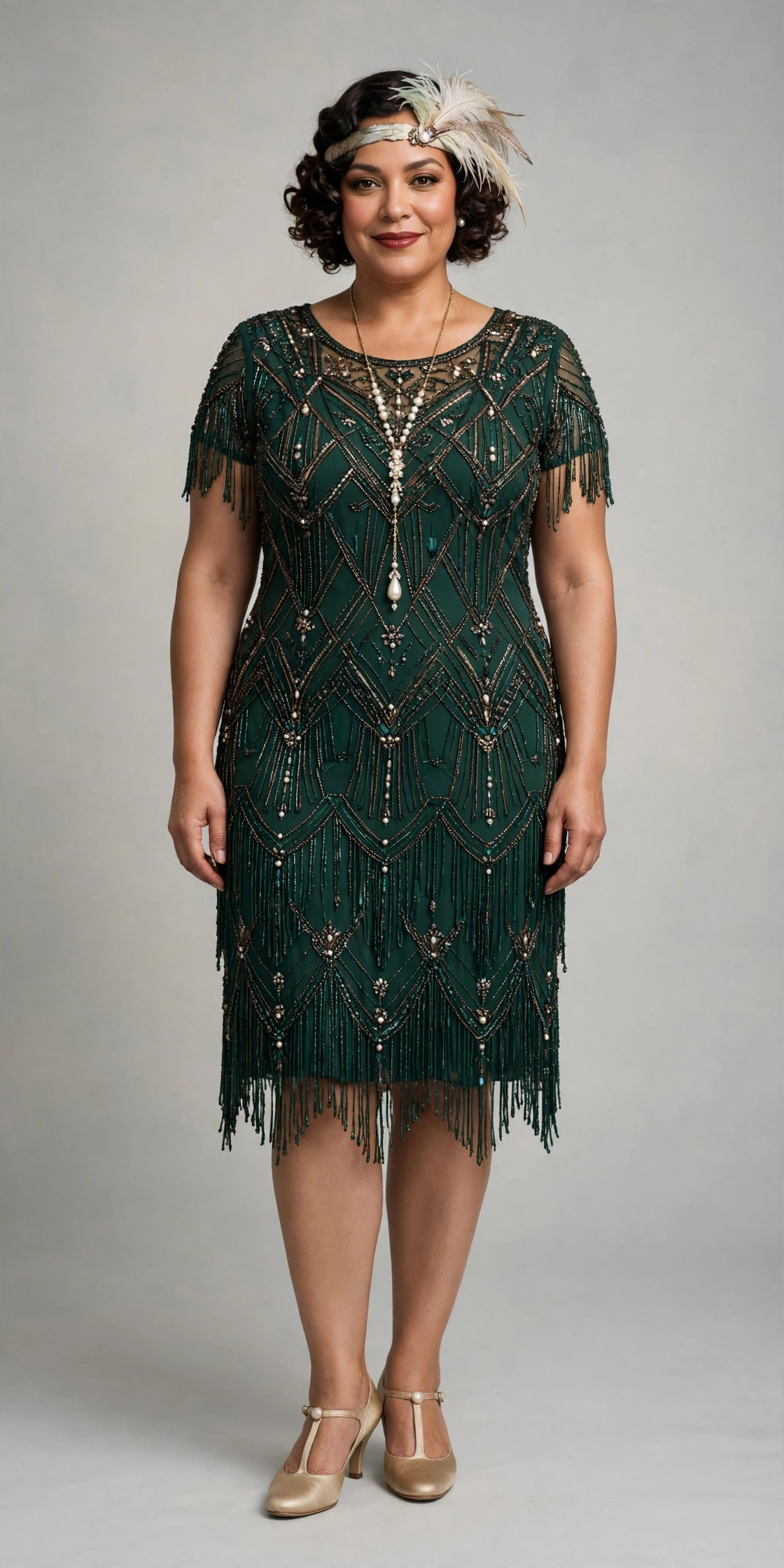
The 1920s gave us the dropped waist, the knee-skimming hem, and a whole lot of sparkle — and it translates beautifully to plus-size figures with the right construction. Look for a straight-cut dress with a beaded or fringed overlay rather than a stiff, boxy shift, so the fringe moves with you instead of standing away from your body. A V-neckline opens up the face, while a long pendant necklace draws the eye down the centre. Fit tip: pick a dress with a built-in slip lining that skims rather than clings, and let the hem hit just at or below the knee. Add a feathered headband for evening, or a cropped cardigan for dancing.
2. 1930s Bias-Cut Evening Gown
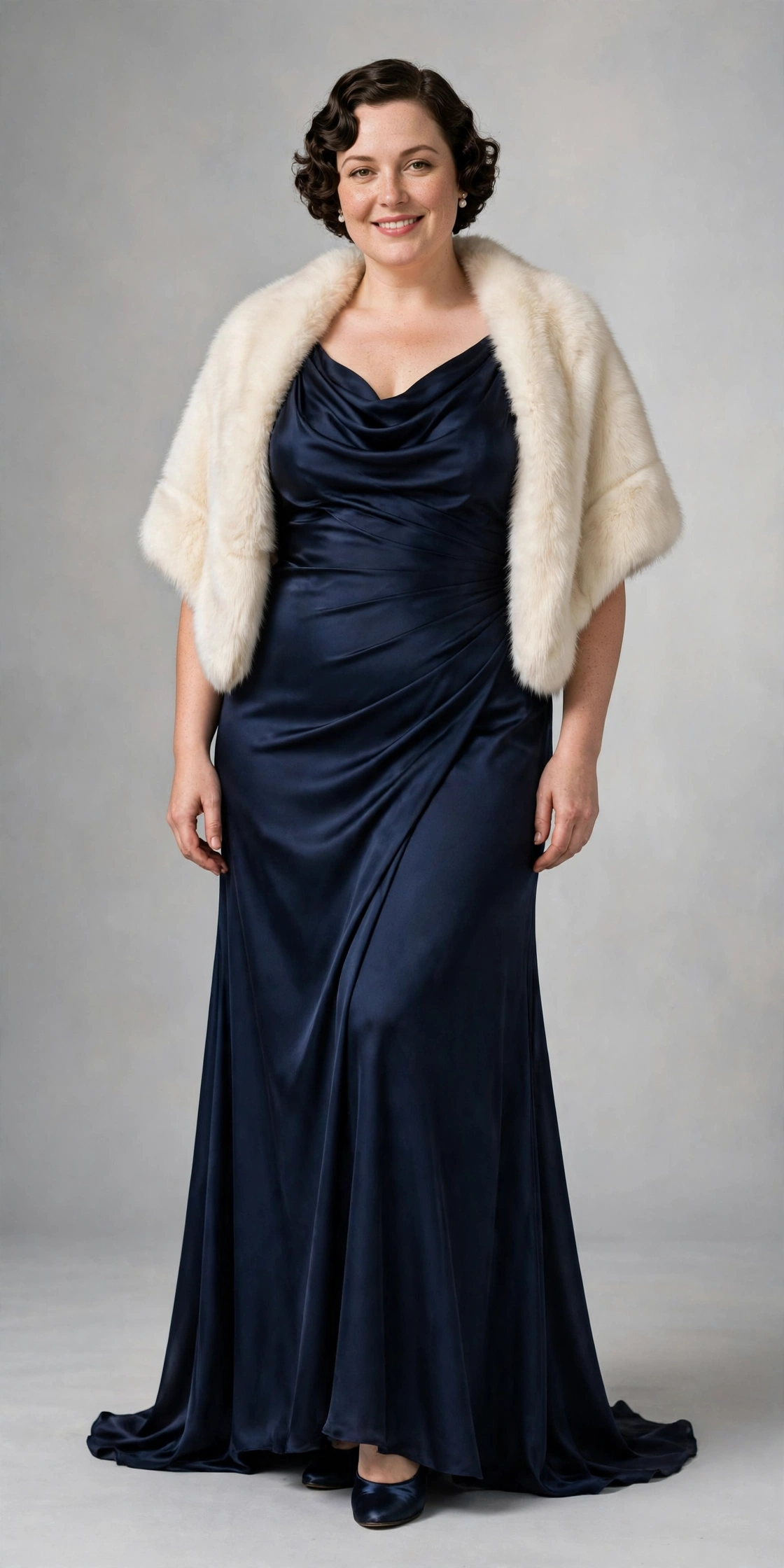
The 1930s bias cut is one of the kindest inventions in fashion history. Fabric cut on the diagonal drapes over curves like water, skimming waist and hips without squeezing. For a modern version, choose a floor-length or tea-length gown in satin, crepe, or good-quality jersey, with a cowl neckline that flatters the bust. Fit tip: look for gentle ruching at the waist and let the fabric settle on your body for a few minutes before you judge the fit. Add a faux-fur stole and keep jewellery simple. A soft wrap over the shoulders keeps the look graceful for cooler evenings.
3. 1940s Utility Shirt Dress
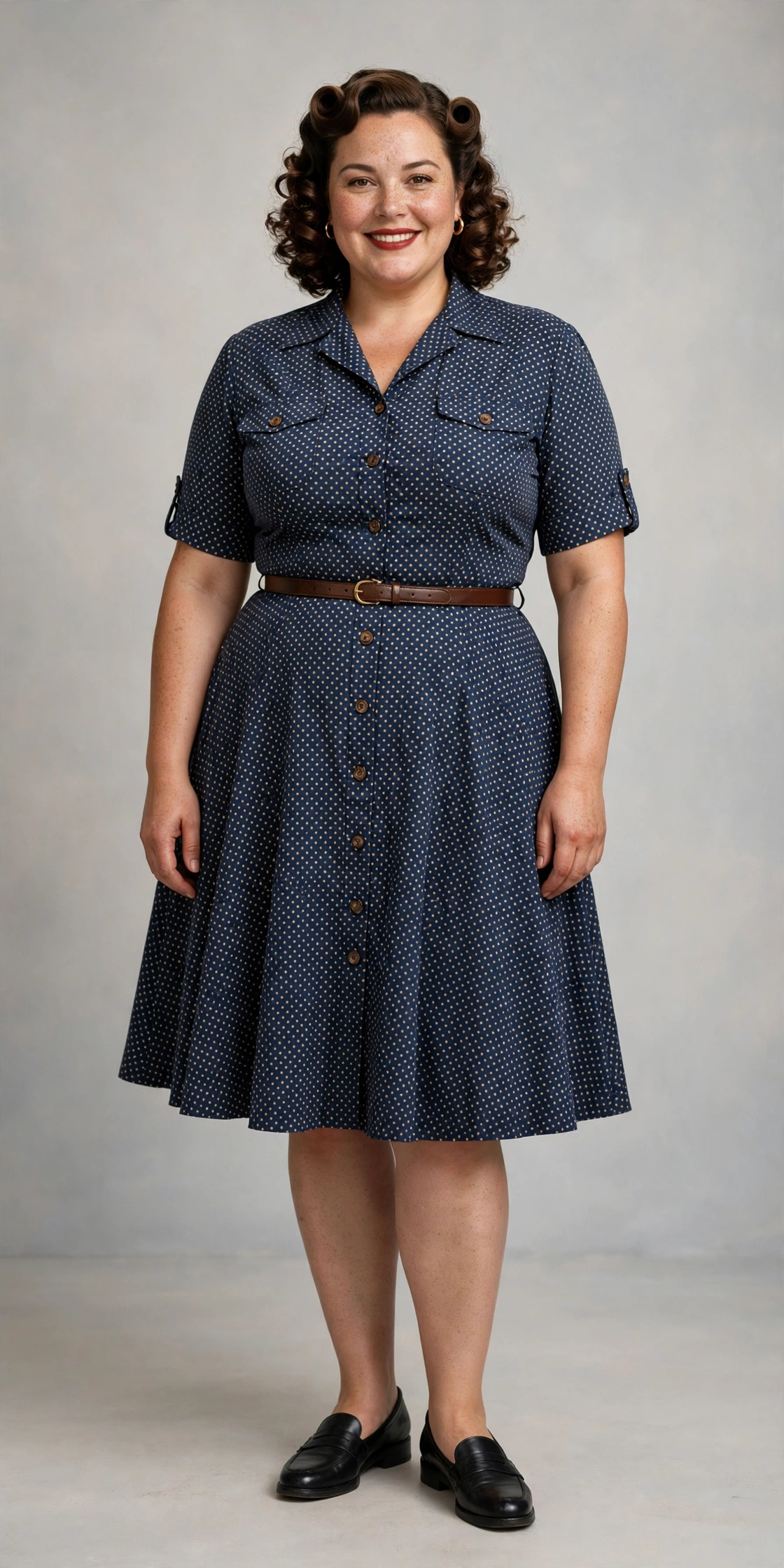
The 1940s shirt dress was built for women doing real things, and that practical spirit is exactly why it still works. Think a button-front dress with a pointed collar, a defined waist, and a skirt that flares just enough to move freely. In sturdy cotton, soft denim, or a subtle polka dot, it reads smart without trying too hard. Fit tip: the waist is everything here, so add a slim leather belt at your natural waist, and make sure the buttons lie flat across the bust — if they gape, size up and belt it in. Roll the sleeves to the elbow, add loafers, and it works for office or lunch.
4. 1950s Swing Dress with a Nipped Waist
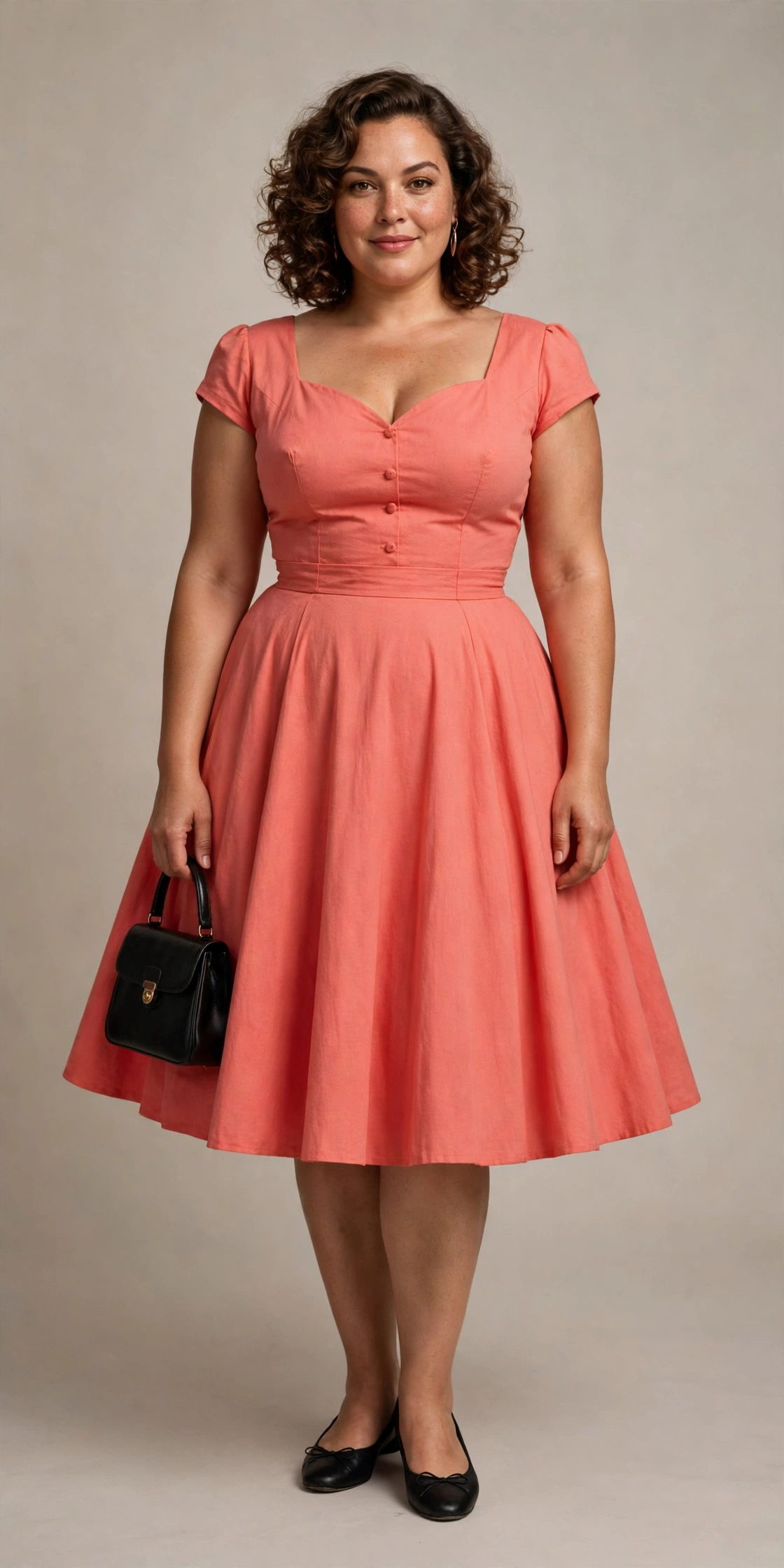
Nothing says classic femininity quite like a 1950s swing dress. The formula is simple: a fitted bodice, a defined waist, and a full skirt that swings when you walk. Look for a bodice with a sweetheart or portrait neckline, wide straps or short sleeves for comfortable arm coverage, and a skirt with enough fabric to flare without adding bulk at the waist. Fit tip: a petticoat is optional — a well-cut skirt holds its own shape, and a waistband at your natural waist gives the longest leg line. Ballet flats and red lipstick finish a joyful, never costumey look. For daytime, swap the heels for flats and the lipstick for a soft rose.
5. 1960s Mod Shift with Bold Colour
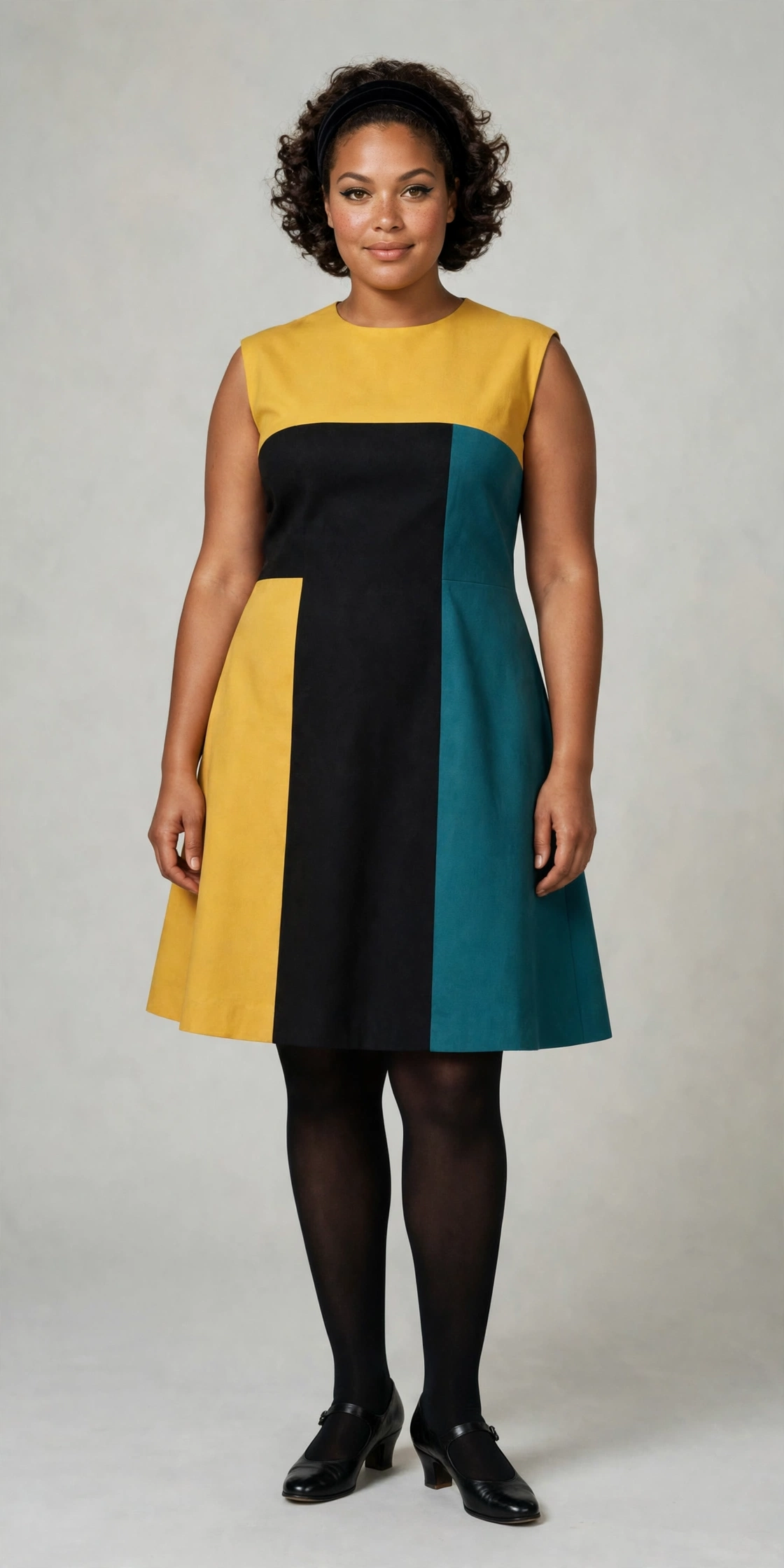
The 1960s mod look was a revolution in a dress: short hemlines, graphic colour, and a clean, straight silhouette that refused to fuss. For plus-size women, the trick is keeping the mod spirit in a cut that honours your shape. A shift with a slightly A-line shape — narrower at the shoulders, gently widening toward the hem — gives that graphic mod line without the boxy feeling of a true straight shift. Colour-blocking panels or a bold contrast collar add the mod punch. Fit tip: balance a shorter hem with opaque tights and Mary Janes. A matching headband and a structured mini bag keep the graphic look intentional.
6. Late-1960s Boho Maxi Dress
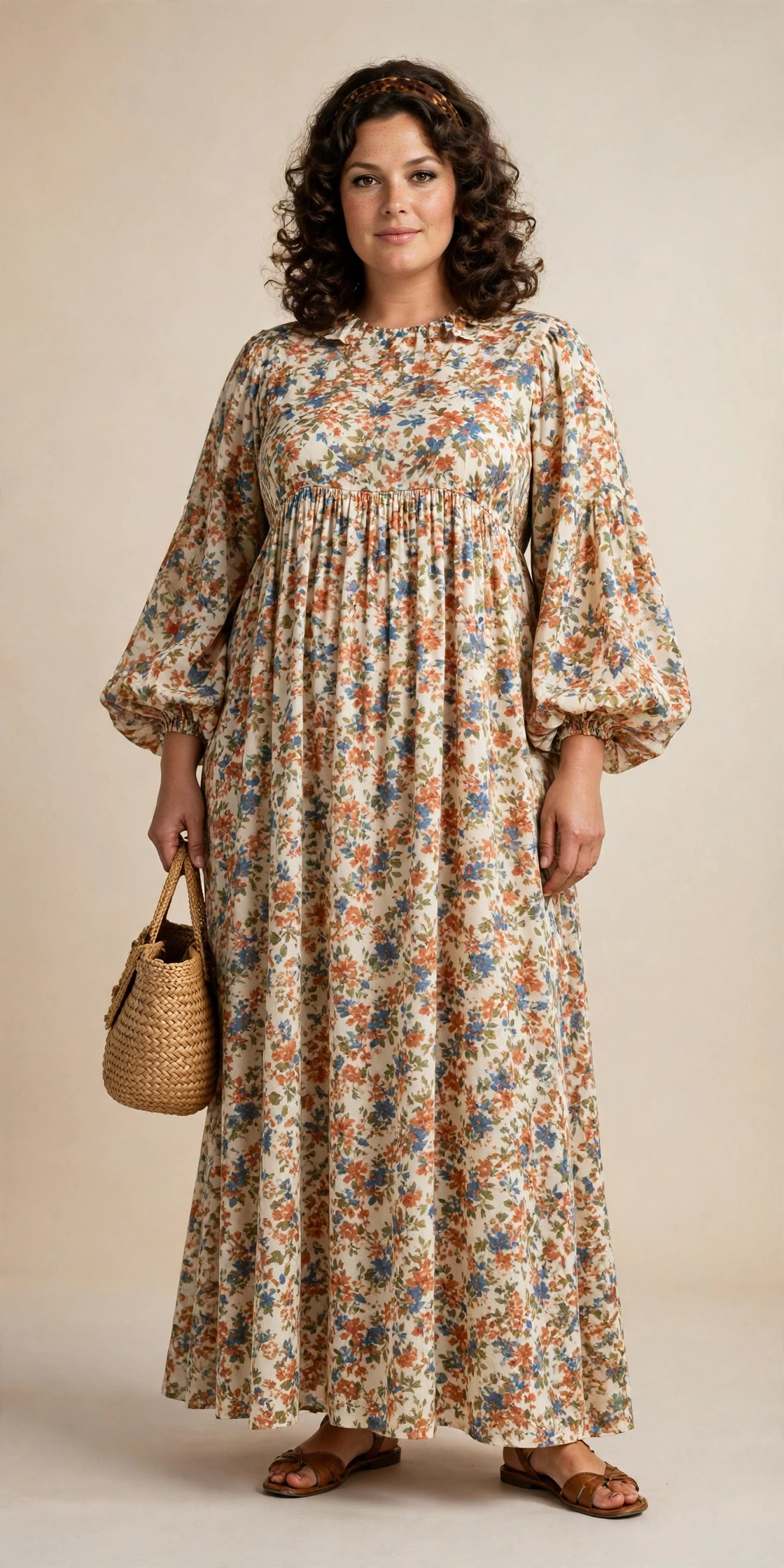
By the late 1960s, fashion had loosened up completely, and the boho maxi dress became the uniform of free spirits everywhere. Long, flowing, and gloriously comfortable, it is a gift for plus-size women: an empire waist or softly smocked bodice, a skirt that floats, and sleeves that billow just enough to feel romantic. Choose a floral or paisley print in warm, earthy tones, with a lined bodice so you feel supported. Fit tip: a maxi needs definition somewhere — an empire seam under the bust, a thin belt, or a V-neckline showing a little collarbone keeps it from looking shapeless. Flat sandals and a woven bag finish it.
7. 1970s Wide-Leg Jumpsuit and Wrap Top
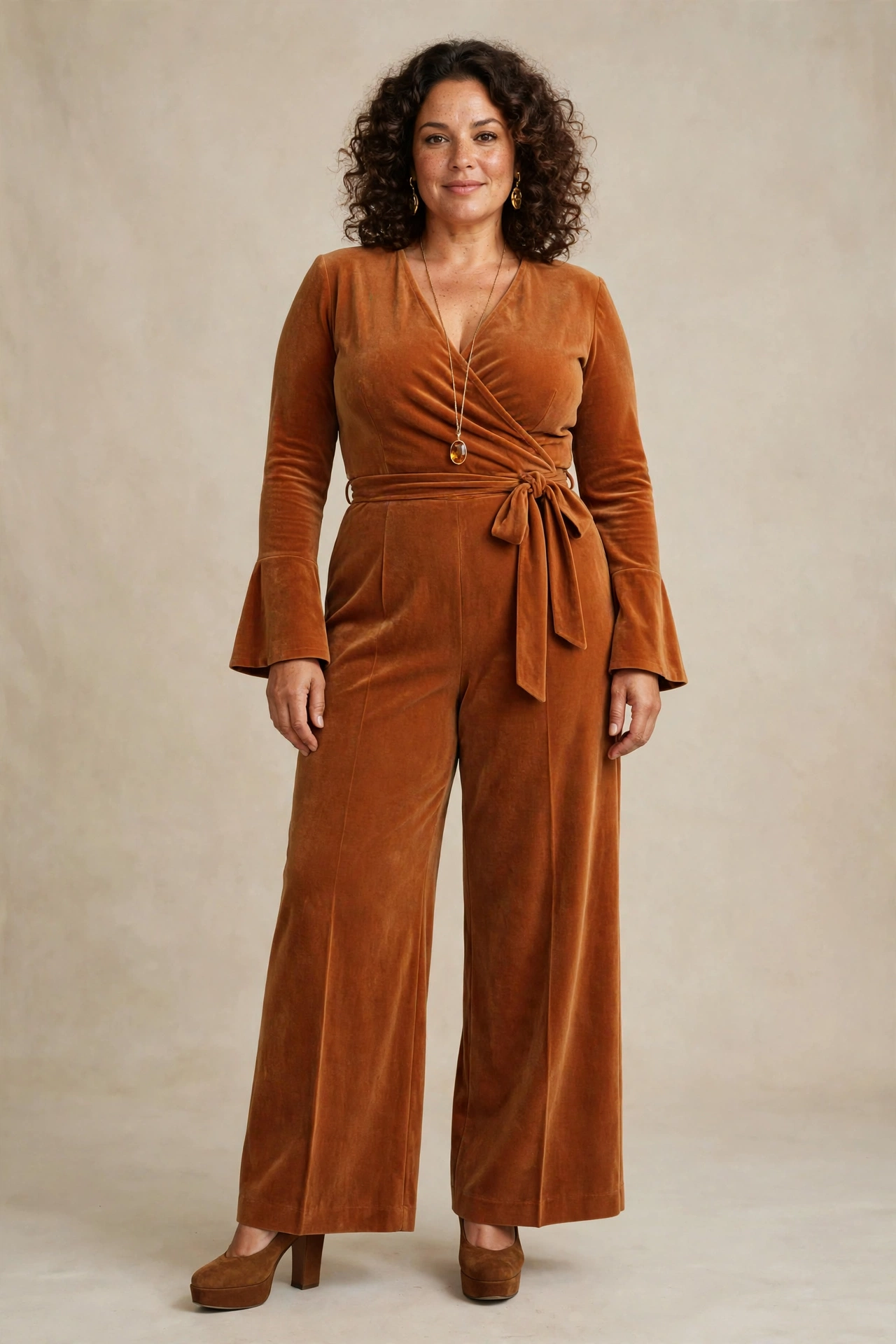
The 1970s understood the power of a long leg and a wrapped waist, and few outfits deliver both as generously as a wide-leg jumpsuit. A wrap-style bodice defines the bust and waist while wide legs balance the hips and make legs look endless, especially with a heeled shoe underneath. In soft jersey, flowing crepe, or lightweight denim, this one-piece outfit feels like a secret weapon. Fit tip: check the rise carefully — look for a bit of stretch and an adjustable wrap tie you can fasten exactly where you want it. A long pendant necklace completes it. A longline cardigan over the top turns it into an easy evening outfit.
8. 1980s Power Blouse and High-Waisted Trousers
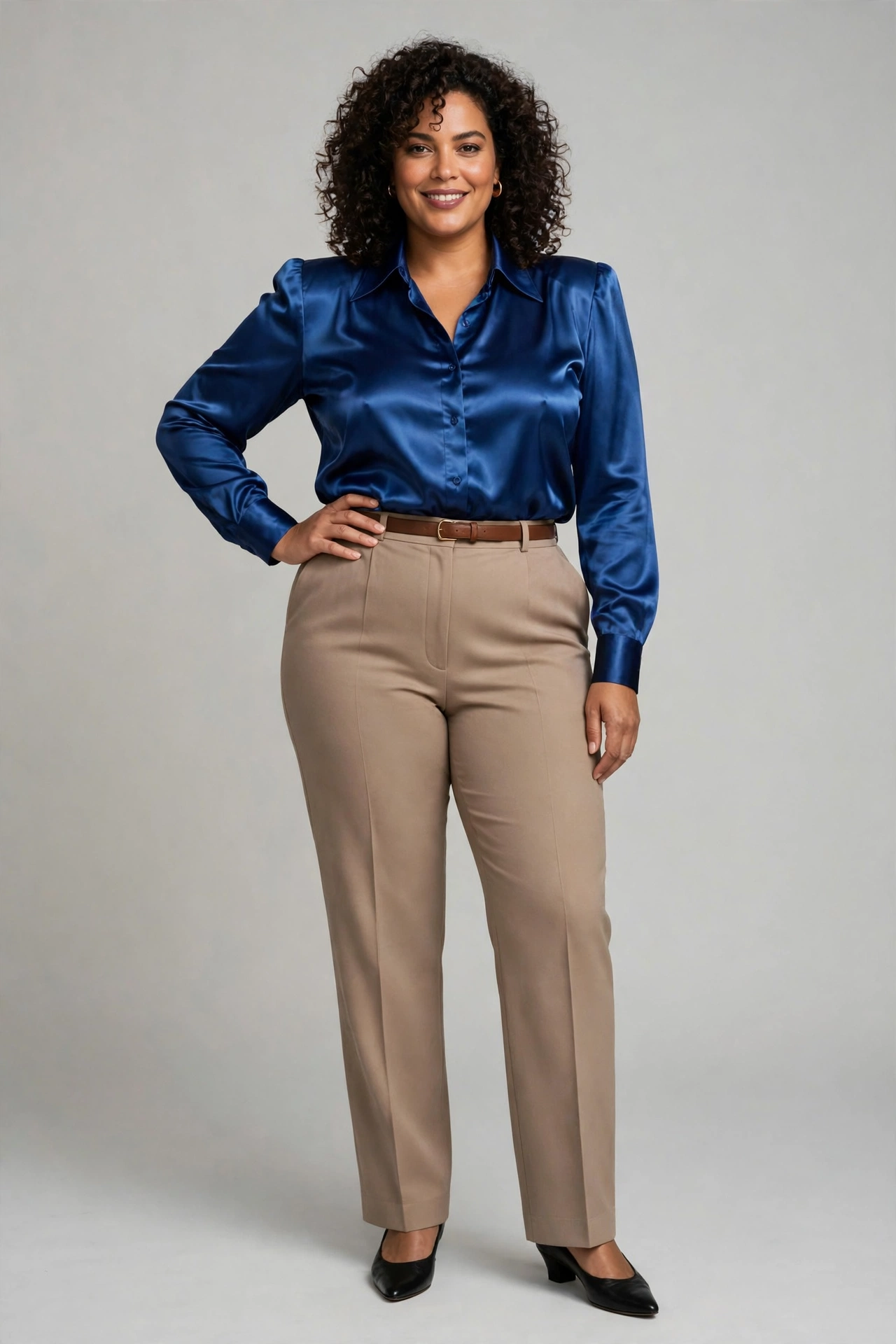
The 1980s get a bad reputation, but beneath the shoulder pads there was a genuinely useful idea: strong shoulders and a high waist create a confident, balanced silhouette. The modern way to wear it is softer — a blouse with a gentle shoulder line tucked into high-waisted, straight-leg trousers. A satin blouse in a jewel tone, trousers with a flat front and a bit of stretch, and a slim belt at the waist give you polish with presence. Fit tip: choose trousers with a wide, comfortable waistband rather than thin elastic, and tuck the blouse in fully so the waistline reads clearly. Pointed flats or a block heel finish it.
9. 1990s Slip Dress with a Cardigan
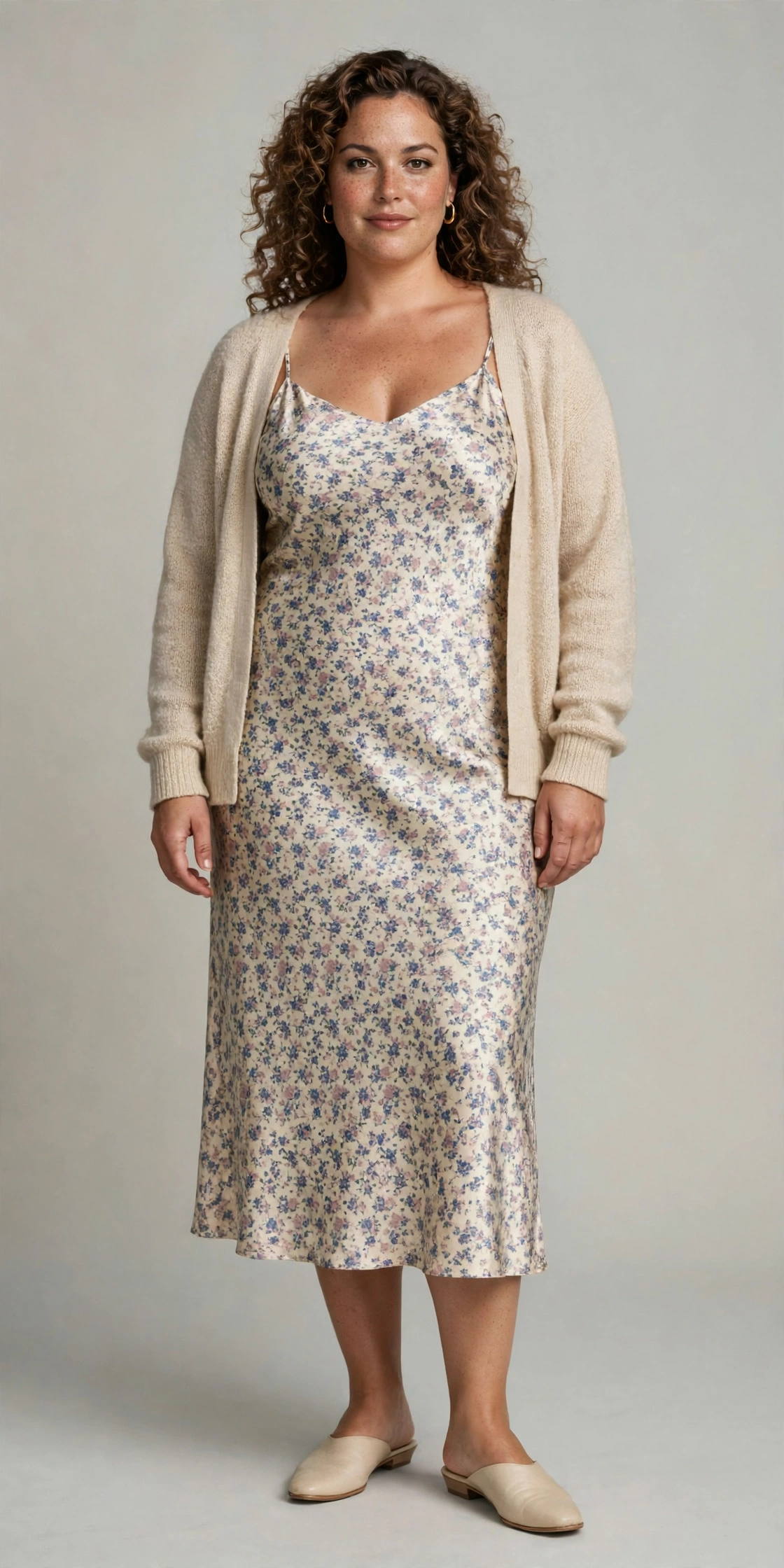
The 1990s slip dress is minimalism at its most wearable, and it is far more plus-size friendly than its reputation suggests. The secret is layering: a bias-cut slip dress in a midi length, worn with a soft hip-length cardigan or an oversized denim jacket, gives you the slinky line with coverage exactly where you want it. Choose a slip with adjustable straps and a lining that smooths without squeezing. Fit tip: the cardigan should hit at or just below the hip to keep proportions balanced, and chunky sandals or simple mules keep the 1990s mood without the wobble of a stiletto. It moves from day to evening with a change of shoes.
10. 2000s Bootcut Jeans and a Peasant Blouse
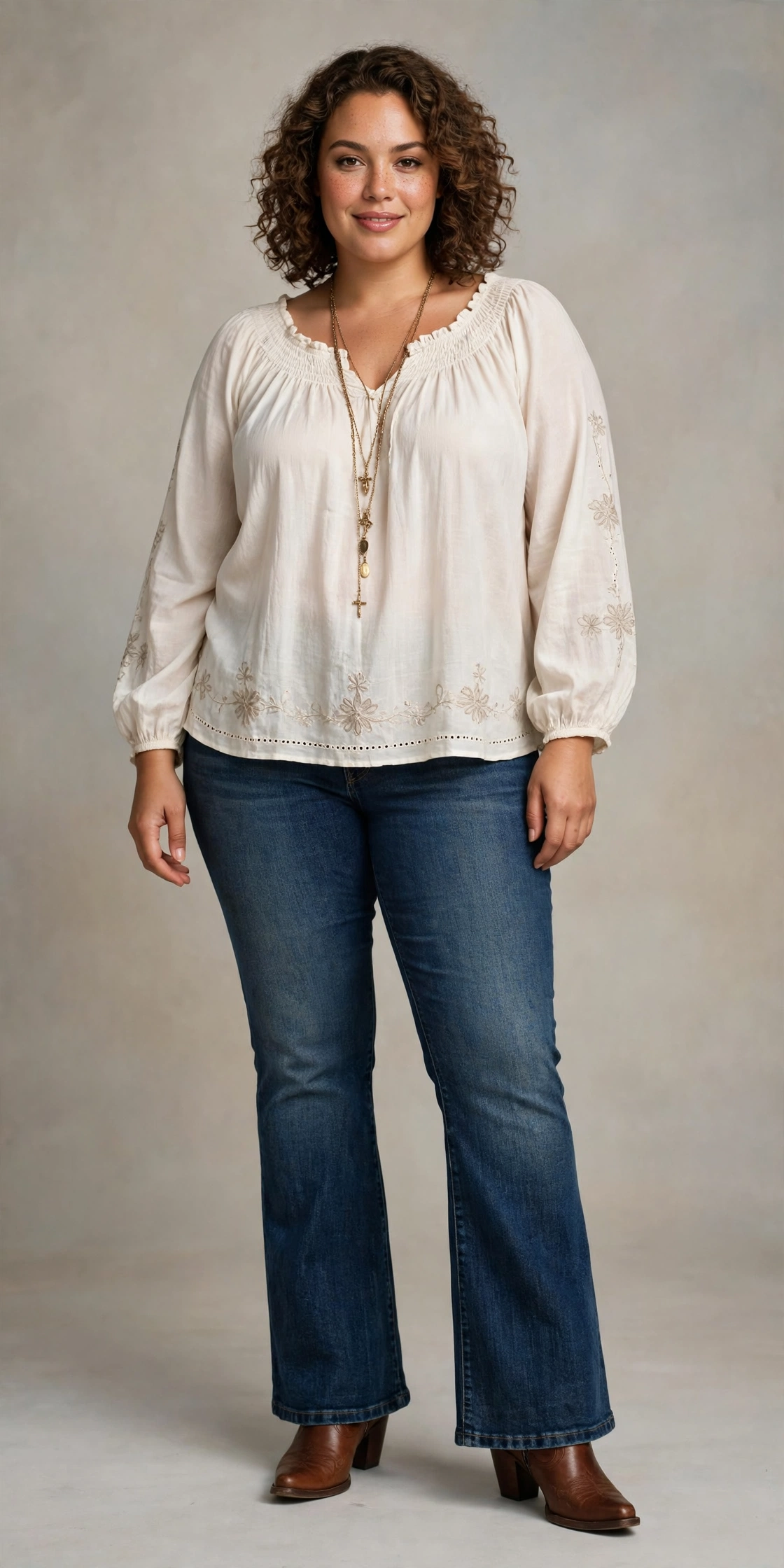
The early 2000s gave us the bootcut jean, and plus-size women have good reason to be grateful: a slight flare below the knee balances the hips and makes legs look long and even. Pair a dark-wash, mid-rise bootcut with a peasant blouse — soft gathers, a smocked or drawstring neckline, sleeves ending at the elbow or wrist — and you have a relaxed outfit with a vintage heart. Fit tip: the rise matters more than the brand, so look for a mid-rise that sits comfortably without digging in, and choose a blouse that ends at the hip rather than billowing past it, so your waistline stays visible. Add a long necklace and heeled boots.
11. 2010s Vintage-Revival Tea Dress
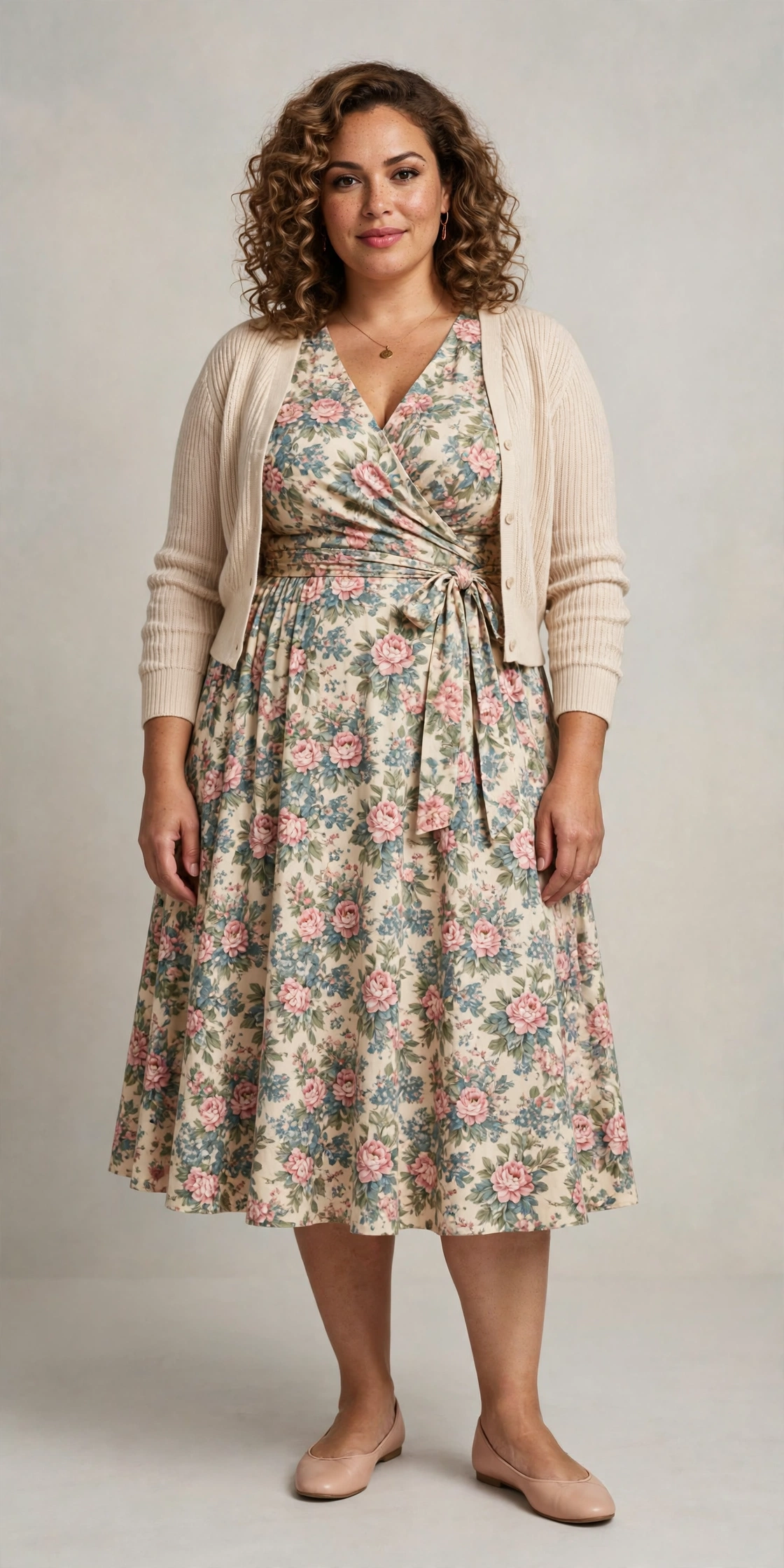
The 2010s brought vintage back into the mainstream, and the tea dress became the hero of that revival. Sitting below the knee, with a fitted bodice, a flared skirt, and prints nodding to the 1940s and 1950s, it is an easy, flattering shape for almost every plus-size figure. Look for a wrap or faux-wrap bodice, which adjusts to your bust beautifully, and a print scaled to your frame — medium florals or polka dots flatter more than tiny, busy prints. Fit tip: wear a supportive bra that lifts rather than flattens, and let the skirt fall freely rather than adding a stiff petticoat. A cropped cardigan and ballet flats complete it.
12. 2020s Modern Retro: Vintage Shapes, Today’s Fabrics
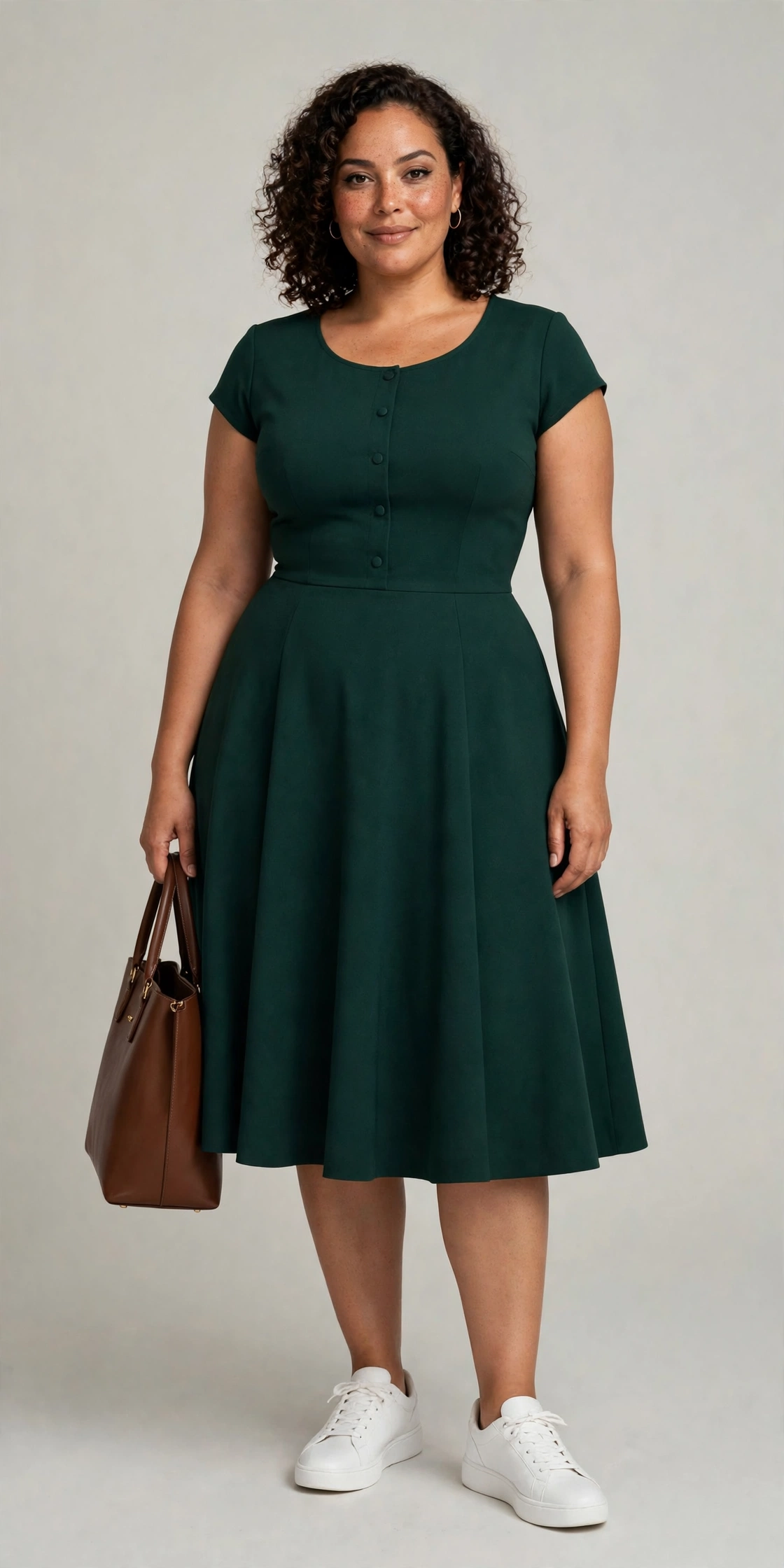
The newest take on retro is the most practical of all: vintage silhouettes made in modern fabrics with stretch, breathability, and real pockets. Think a 1950s-style fit-and-flare dress in wrinkle-resistant ponte knit, a 1970s wrap dress in cooling jersey, or a 1940s shirt dress in soft, machine-washable cotton. The shapes honour the past, but the fabrics forgive a long day and a life lived in motion. Fit tip: invest in fit over fashion rules — try the dress on, sit down in it, walk in it, reach above your head; if it stays comfortable through all of that, it is a keeper. Finish with clean sneakers, a leather tote, and one loved piece of jewellery.
Capsule Wardrobe
You do not need a separate wardrobe for every decade. A small retro capsule covers all twelve ideas: a wrap dress in a solid colour, a fit-and-flare dress in a print you love, high-waisted trousers, a dark-wash bootcut jean, a soft cardigan, and a denim jacket. Add a satin blouse, a peasant top, and a long skirt, and you can mix eras freely. Keep base pieces in flattering colours and let one vintage detail carry the era. Accessories do the rest. Buy less, choose well, wear everything often.
Style Principles
- Define one point, drape the rest. One defined point — waist, neckline, or shoulder — gives the eye a place to land.
- Fit beats era accuracy. A vintage-inspired dress that fits well always looks more authentic than a period-perfect piece that pulls or gapes.
- Let fabric do the work. Bias cuts, jersey, and ponte skim curves far more kindly than stiff fabrics.
- Scale your prints and details. Medium prints and proportionate accessories flatter a plus-size frame better than tiny busy patterns or oversized extras.
- Comfort is part of the style. If you cannot sit, walk, and dance in it, it is not the right dress, no matter how beautiful it looks on the hanger.
FAQ
Can plus-size women really wear vintage styles?
Absolutely. Many vintage silhouettes — wrap dresses, fit-and-flare shapes, bias cuts, empire waists — were designed around curves. Choose modern reproductions with better sizing and stretch.
Which decade is the most flattering for a plus-size figure?
The 1950s fit-and-flare and the 1970s wrap are the most universally flattering, because both define the waist and balance the hips. Still, the best decade is the one you feel most confident in.
How do I avoid looking like I am wearing a costume?
Wear one vintage element at a time: a retro dress with modern shoes, or a vintage blouse with contemporary jeans. Keep hair and accessories mostly current, and let one detail carry the retro mood.
Where should I shop for plus-size retro outfits?
Look for brands specialising in plus-size vintage reproductions, plus mainstream plus-size lines with retro-inspired collections. Check size charts against your own measurements, and favour shops with clear returns.
Can I mix decades in one outfit?
Yes — it often looks more personal than a head-to-toe single era. A 1950s skirt with a 1970s blouse, or a 1940s shirt dress with modern sneakers, feels inspired by the past without being trapped in it.
Conclusion
Retro style is not about going back in time. It is about recognising that women with curves have always been fashionable, and that every decade left us something worth wearing. Start with the era that makes you smile and the fit that feels like you. If this guide sparked an idea, save it to your Pinterest board and pin your favourite decade to share the inspiration.